
Health Benefits of Mixing Strawberries and Kale
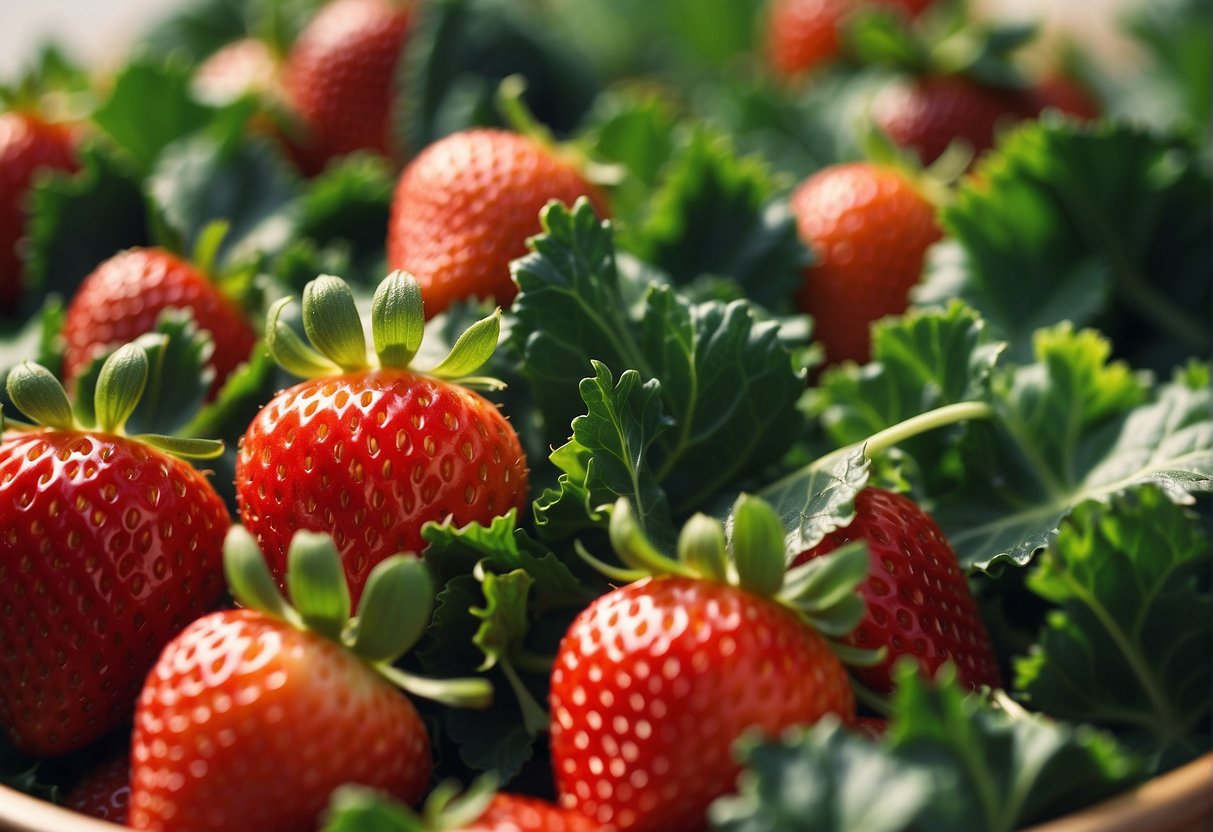
I’ve found that combining strawberries and kale is not just a treat for my taste buds, but also a powerhouse for nutrition. If you’re like me, interested in the perks of this blend, let’s dive right in!
Strawberries: These juicy red fruits are more than just delicious. They’re loaded with vitamin C which is great for my skin and immune system. Plus, they add a natural sweetness to my meals.
Kale: I like to call kale a nutritional superstar. It’s packed with vitamin A, vitamin C, and vitamin K, not to mention minerals like calcium and iron. Kale helps me maintain strong bones and a robust circulatory system.
| Nutrient | Strawberries | Kale |
|---|---|---|
| Fiber | High | High |
| Vitamins | C, K, Folate | A, C, K |
| Minerals | Potassium | Calcium, Iron |
When I mix these two together, I’m getting a cocktail of health benefits. The fiber in strawberries and kale aids my digestion and helps me feel full, leading to better weight management. They provide a mix of essential vitamins and potassium, supporting heart health and more.
One thing that’s great about this combo is that they complement each other’s flavors and benefits. For example, the healthy fats from a dressing or smoothie base can help my body absorb the vitamin A from kale more efficiently.
Incorporating strawberries and kale into my diet means I’m hitting some serious nutritional goals without compromising on taste. From vitamins to minerals, and the bounty of health benefits, this is one duo that definitely merits a regular appearance on my plate.
Culinary Tips for Combining Strawberries and Kale
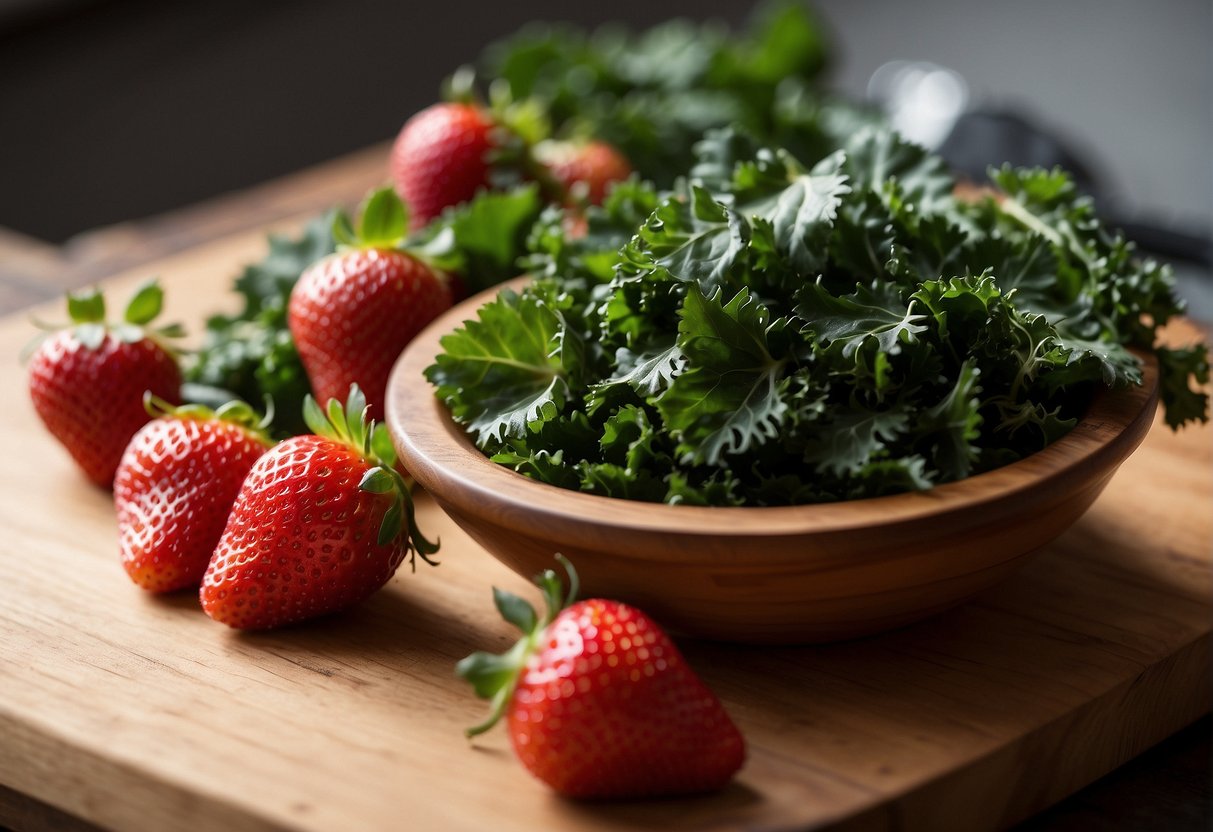
Exploring the unique blend of strawberries with kale can elevate salads and smoothies to new levels of flavor and nutrition. These combinations are not only visually appealing but also provide a powerhouse of vitamins and antioxidants.
Strawberry and Kale Salad Ideas
When it comes to creating a strawberry kale salad, I love the mix of sweet and earthy flavors. I begin with fresh ingredients, ensuring the kale is thoroughly washed and dried. Stripping the raw kale leaves away from the stem, I chop them into bite-sized pieces for ease of eating. Massaging the kale with a bit of olive oil softens it up, making it perfect for salads.
I then add sliced strawberries for a sweet contrast, and sprinkle in nuts like almonds for added crunch. A simple dressing made with lemon, honey, and olive oil brings everything together. For a twist, I sometimes toss in feta cheese or kiwi slices. It takes about 10 minutes for prep time, and no total time is needed since it’s ready to eat immediately. This salad serves as a quick and easy snack or as part of meal prep for the week.
Creating Delicious Smoothies
A strawberry kale smoothie is a wonderful healthy breakfast or refreshing treat any time of day. In my blender, I start with almond milk or another plant-based milk for a creamy base. Baby kale is my go-to for a milder taste, blending it with frozen strawberries to keep the drink cool without watering it down.
I usually keep it to about 5 ingredients, including some banana for sweetness and chia seeds or flax seeds for an extra hit of protein and fiber. For a kale smoothie recipe that’s extra filling, I add scoop of my favorite protein powder or peanut butter. If I’m in the mood for a tropical twist, mango or pineapple is fantastic. With just a few minutes of prep time, I’ve got a delicious smoothie—usually enough for two servings or one if I’m extra hungry.
Blending until smooth, I taste and adjust with ingredients like maple syrup or vanilla extract for extra flavor. The beauty of this smoothie is its versatility and the fact that it is made with healthy ingredients, so I can start my day right or replenish after a workout.
Kitchen Preparation Techniques
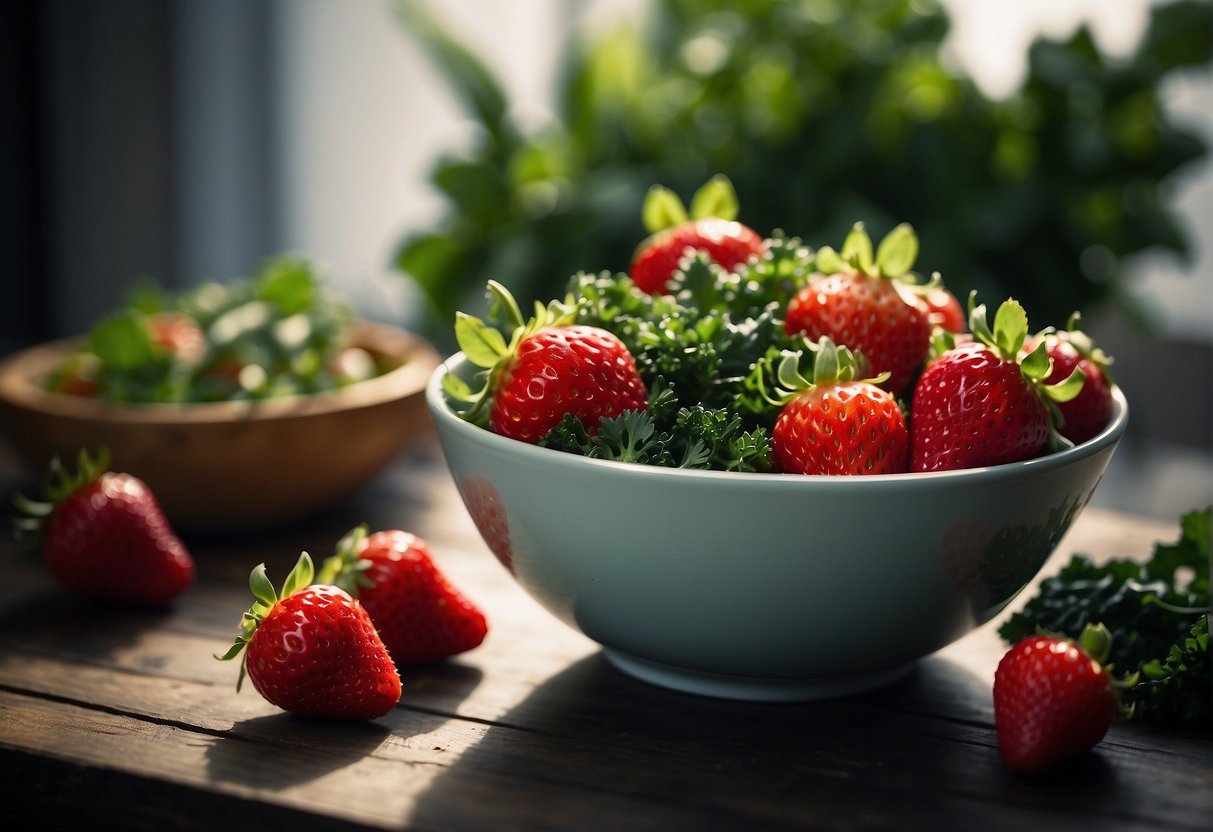
When I’m in the kitchen, I like to keep things efficient and the flavors spot-on, whether it’s for throwing together a sweet and slightly bitter taste of strawberries and kale into a smoothie or preparing them for storage.
Best Practices for Washing and Prepping
Before I begin, I always wash the strawberries and kale under cold running water. Kale tends to harbor some dirt and grit in its curly leaves, so I pay extra attention to those nooks and crannies. For the strawberries, I use a gentle touch to remove any unwanted debris without bruising the delicate fruit, and I find that it’s usually best to hull them after washing.
- Kale:
- Rinse thoroughly.
- Remove stems and chop if necessary.
- Strawberries:
- Rinse gently.
- Hull and slice as preferred.
Prep Time: I’ve found it typically takes me around 5-10 minutes to prep these ingredients. It’s a small investment for fresh and healthy ingredients that’ll make my smoothies shine.
Optimizing Storage for Freshness
To make sure my strawberries and kale stay as fresh as the day I bought them, I follow a few simple steps. I learnt that moisture is the enemy, so I pat them dry before storing to prevent them from getting soggy. I keep my strawberries in a single layer on a paper towel in an airtight container, and I store my kale in a separate airtight bag with a paper towel to absorb excess moisture.
- Strawberries:
- Dry thoroughly.
- Refrigerate in an airtight container with a paper towel layer.
- Kale:
- Dry thoroughly.
- Refrigerate in an airtight bag with a paper towel.
If I know I can’t use them right away, I’ll freeze the strawberries and kale on a baking sheet before transferring them to freezer bags, ensuring each berry and leaf freezes individually. This trick helps keep them from forming clumps, making it easier for me to grab just the right amount for my next healthy smoothie blend.
Nutritional Information and Diet Compatibility
When I whip up a green smoothie, I often toss in both strawberries and kale for a health-packed punch. Strawberries aren’t just sweet and delicious; they’re also low in calories and full of vitamin C. A cup of these red beauties gives me about 46 calories and a whopping 141% of my daily vitamin C needs. Kale, on the other hand, is a nutrient-dense veggie that provides loads of vitamins A, C, and K, not to mention it’s a good source of calcium and iron.
Here’s a quick breakdown of what you get from each:
| Nutrient | Strawberries (per 1 cup) | Kale (per 1 cup) |
|---|---|---|
| Calories | 46 | 33 |
| Protein | 1g | 3g |
| Fiber | 3g | 2.5g |
| Vitamin A | 1% of DV | 206% of DV |
| Vitamin C | 141% of DV | 134% of DV |
| Calcium | 2% of DV | 9% of DV |
| Iron | 3% of DV | 6% of DV |
If I’m aiming for a smoothie that’s a bit more filling, I’ll add some Greek yogurt for protein, or chia seeds for fiber and healthy fats. The great part about these seeds is that they’re pretty much flavorless but add a great texture and are a powerhouse of nutrients. If I’m feeling fancy, I’ll throw in a banana for potassium and creaminess, or a handful of blueberries for extra antioxidants.
For folks following special diets, kale and strawberries are both fantastic options. They fit into vegan, gluten-free, and plant-based diets beautifully. Adding plant-based milk like almond milk can keep things vegan-friendly while a drizzle of honey adds natural sweetness without any artificial sugars.
I love that these ingredients not only give me essential nutrients but are also super versatile. Whether it’s a strawberry smoothie for a refreshing treat or a green smoothie for an energy boost, combining kale and strawberries is definitely a go-to for anyone looking to make a nutrient-rich drink that tastes great too.
Seasonal and Creative Recipe Variations
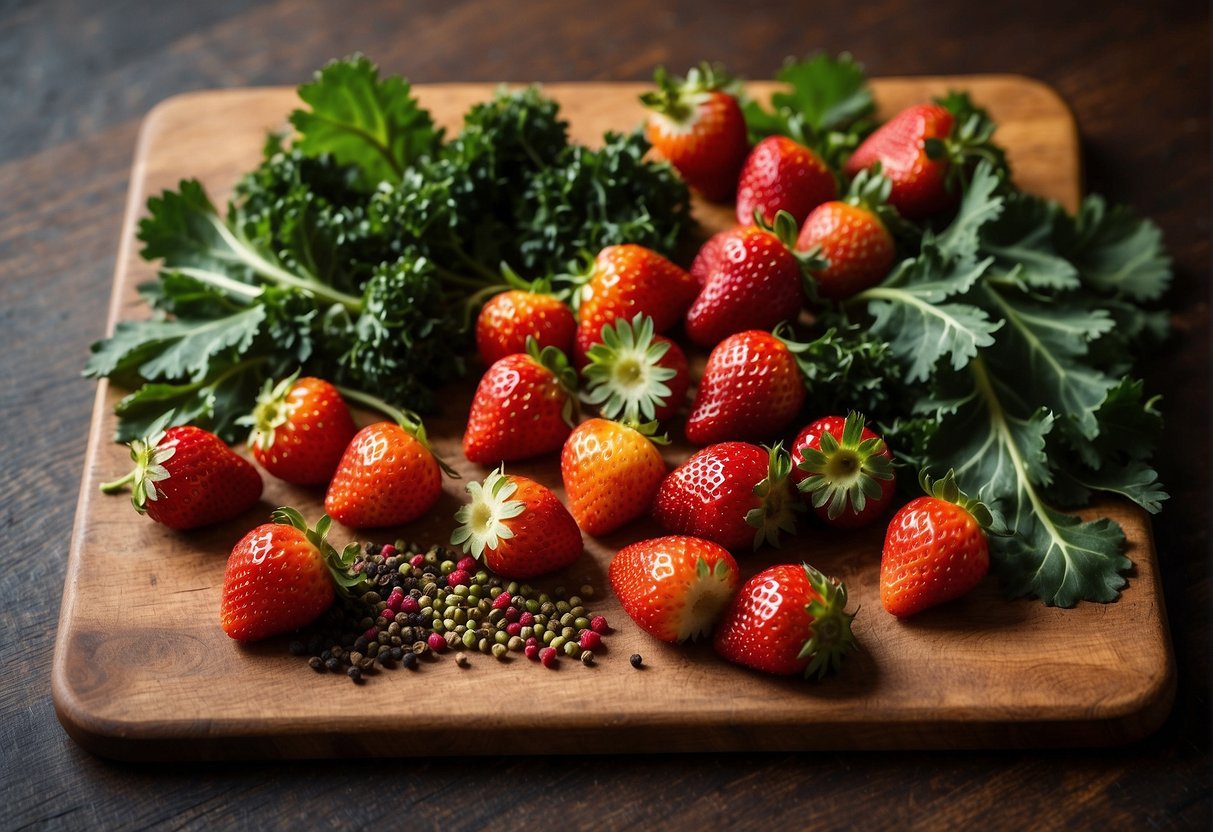
Mixing strawberries and kale can be a delightful experience, especially when you play around with seasonal produce and creative add-ins. Here I’ll explore how you can tailor your recipes to the time of year and your personal taste preferences.
Summer Refreshers and Salad Toppings
During the summer, I love to make a strawberry kale salad with the freshest ingredients. It’s quick, easy, and absolutely refreshing. For a simple yet satisfying summer salad, I’ll start with baby kale and ripe strawberries, then I usually add a citrusy zest with a homemade lemon or lime dressing. It’s light, which makes it perfect for those hot summer days.
Here’s a quick table of my favorite summer salad toppings:
| Fruit | Nuts/Seeds | Cheese | Extras |
|---|---|---|---|
| Avocado | Sunflower seeds | Feta | Fresh sage |
| Blackberries | Pumpkin seeds | Pecorino | A pinch of salt |
| Berries | Almonds | Goat cheese | Lemon zest |
Adding chunks of avocado or a handful of blackberries can bring a new level of flavor to your classic kale and strawberry mix. Toss in some crunchy sunflower seeds or pumpkin seeds for texture. And if you’re feeling fancy, sprigs of sage provide an earthy note that complements the salad’s freshness.
Adding Exciting Mix-Ins
When it comes to mix-ins, the more the merrier is my philosophy. For a heartier twist, I go for nuts like walnuts, pecans, or almonds. They’re not only healthy but add that much-needed crunch to every bite. Venturing beyond salads, I sometimes whip up a kale smoothie for breakfast, using frozen strawberries to keep it cold and give it a slushy consistency.
For a quick smoothie recipe, blend together:
- A handful of kale
- A cup of frozen strawberries
- A ripe banana for natural sweetness
- A splash of almond milk or water
This blend gives me a light and nutritious start to my day—it’s seriously a no-hassle breakfast that packs in the healthy ingredients. Plus, you can always throw in a scoop of protein powder for an extra boost. Whether you’re creating a summer salad to share or a personal kale smoothie to start your day, there’s a whole world of possibilities when you mix in these vibrant and sustaining ingredients.
Frequently Asked Questions
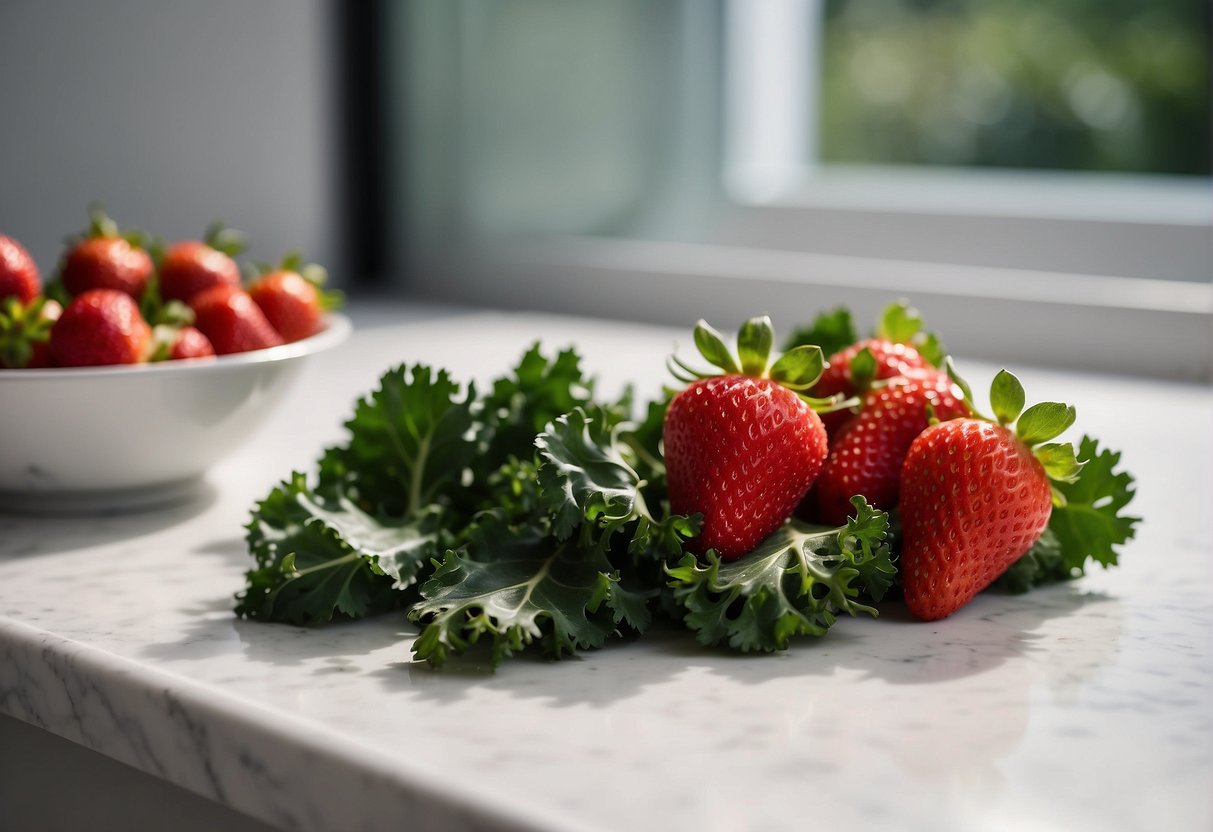
When I mix strawberries and kale, I’m looking to create a nutritious powerhouse of a smoothie. I get asked a lot about the specifics of combining these two ingredients, so let’s look at some common questions.
What are the health benefits of combining strawberries and kale in a smoothie?
Combining strawberries with kale in a smoothie provides a rich blend of vitamins, antioxidants, and fiber. This nutritious treat is not just delicious, but also boosts my immune system and supports heart health.
Can blending strawberries with kale help in weight loss efforts?
Absolutely, blending strawberries with kale can be a great addition to weight loss efforts since both ingredients are low in calories and high in fiber, which can help keep me feeling full longer. Plus, the natural sweetness of strawberries satisfies my sugar cravings without the calorie overload.
Are there any advantages to making a strawberry and kale smoothie without adding yogurt?
Yes, making a strawberry and kale smoothie without yogurt can be advantageous for those who are lactose intolerant or following a vegan diet. Additionally, it cuts down on added fats and sugars, which is perfect for a lighter smoothie option.
What nutrients do you get from a smoothie made with strawberry, banana, and kale?
A smoothie made with strawberry, banana, and kale is a fantastic source of Vitamin C, potassium, and Vitamin K. It’s an energy-boosting drink that supports bone health and aids in digestion thanks to the banana’s dietary fiber.
Why might someone choose to add kale to their fruit smoothies?
I might choose to add kale to my fruit smoothies to increase my intake of greens without compromising on taste. Kale’s mild flavor is easily masked by sweet fruits, making it a sneaky way to include more nutrients like vitamins A, C, and K in my diet.
Between spinach and kale, which is more popular for use in smoothies and why?
There’s been a debate, but kale often comes out on top due to its robust nutritional profile. While spinach is popular, kale packs more vitamin C and can offer a thicker texture to smoothies, which I find keeps me full for longer.