
Health Benefits of Combining Spinach and Chia Seeds
When I blend spinach and chia seeds together in my diet, I’m not just enjoying a tasty combination; I’m also tapping into a powerhouse duo that packs a nutritional punch and aids in my health and weight management efforts.
Nutritional Profile of Spinach and Chia Seeds
Spinach is an incredibly nutrient-rich vegetable. It’s low in calories yet high in vitamins and minerals. When I eat spinach, I’m getting a significant amount of vitamin C, vitamin K, folic acid, iron, and calcium – all of which play crucial roles in the functioning of my body. Additionally, spinach is a good source of packed fiber and protein, which can help me feel full and satisfied.
Chia seeds, on the other hand, are an excellent source of omega-3 fatty acids, which contribute to the maintenance of heart health. They’re also high in fiber and protein and contain a healthy lineup of minerals such as calcium, magnesium, and iron. Chia seeds have become one of my go-to ingredients because they’re incredibly versatile and brimming with antioxidants.
| Nutrient | Spinach | Chia Seeds |
|---|---|---|
| Calories | Low | Moderate |
| Protein | Moderate | High |
| Fiber | High | High |
| Omega-3 Fatty Acids | – | High |
| Vitamins | Vitamin C, K | – |
| Minerals | Calcium, Iron | Calcium, Magnesium, Iron |
| Antioxidants | High | High |
Role in Disease Prevention and Weight Management
I’ve found that incorporating both spinach and chia seeds into my diet plays a role in disease prevention and managing my weight. The fiber in spinach and chia seeds can help lower my blood pressure and improve my heart health, potentially reducing the risk of heart disease. I also appreciate how the fiber helps with digestive health and keeps me feeling fuller for longer periods, which supports my weight loss goals.
Spinach is packed with antioxidants that can combat oxidative stress and reduce the risk of chronic diseases. Meanwhile, the omega-3s in chia seeds are known for their anti-inflammatory properties, which further bolster my body’s defenses against ailments.
By making a habit of having these two foods together, I’m ensuring that my body gets a good blend of nutrients that contribute to a healthier me.
Incorporating Spinach and Chia Seeds into Your Diet
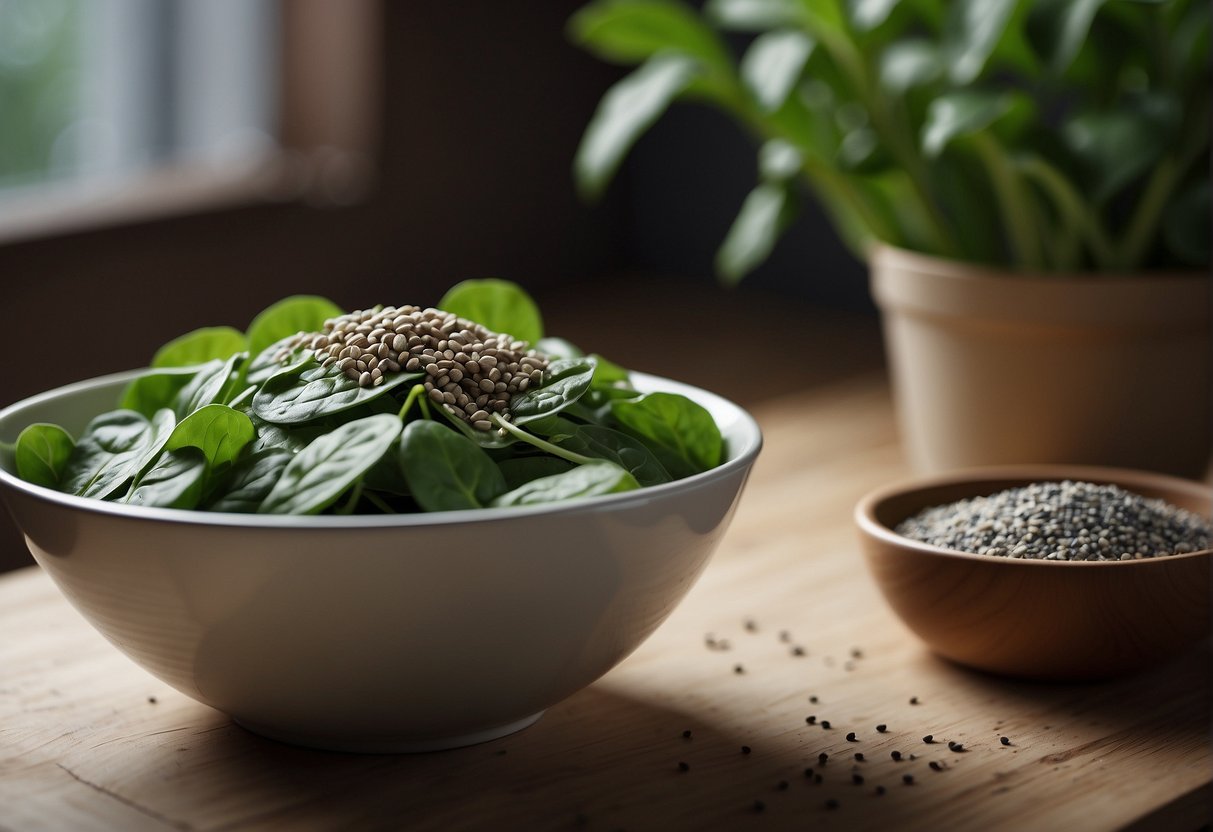
Integrating both spinach and chia seeds into cuisine not only enhances your meals with added nutrients but also offers a variety of textures and flavors. My kitchen experiments have revealed many delightful ways to include these superfoods in everyday dining.
Recipe Ideas and Cooking Tips
- Salads: I love tossing baby spinach with a medley of berries such as strawberries and blueberries, then sprinkling chia seeds on top for crunch. A simple vinaigrette brings it all together.
- Spinach-based Pesto: Swapping basil with spinach and adding chia seeds give a nutritional twist to traditional pesto. Works great with whole grain pasta or as a spread on whole-grain bread.
- Baking: Mixing ground chia seeds into flour when making pancakes, muffins, or cakes can bump up the fiber content.
- Meatballs and Burgers: Chia seeds mixed into the meat add thickness and nutrition. This also works with plant-based protein options for a vegan take.
- Homemade Snack Bars: Combine oats, nut butter, chia seeds, and chopped nuts. Press the mixture into a tray, refrigerate until firm, and cut into bars.
Smoothies and Drinks
- Blueberry Spinach Smoothie: Blend a handful of spinach with blueberries, a banana, and almond milk. Chia seeds add texture and are a powerhouse of nutrients.
- Chia Seed Pudding: Mix chia seeds with soy milk or orange juice, let sit overnight, and in the morning, I have a pudding that’s perfect with fresh fruit and nuts.
- Protein-rich Drinks: After workouts, I blend spinach with vegan or dairy-free protein powder, Greek yogurt, and fruit like mango or strawberries for a recovery drink.
Incorporating spinach and chia seeds into your meals is simpler than you might think. Whether you’re stirring them into a smoothie, tossing them into a salad, or baking them into treats, these ingredients not only boost the nutrition of your dishes but also bring new flavors and textures to your table.
Best Practices for Preparing and Storing
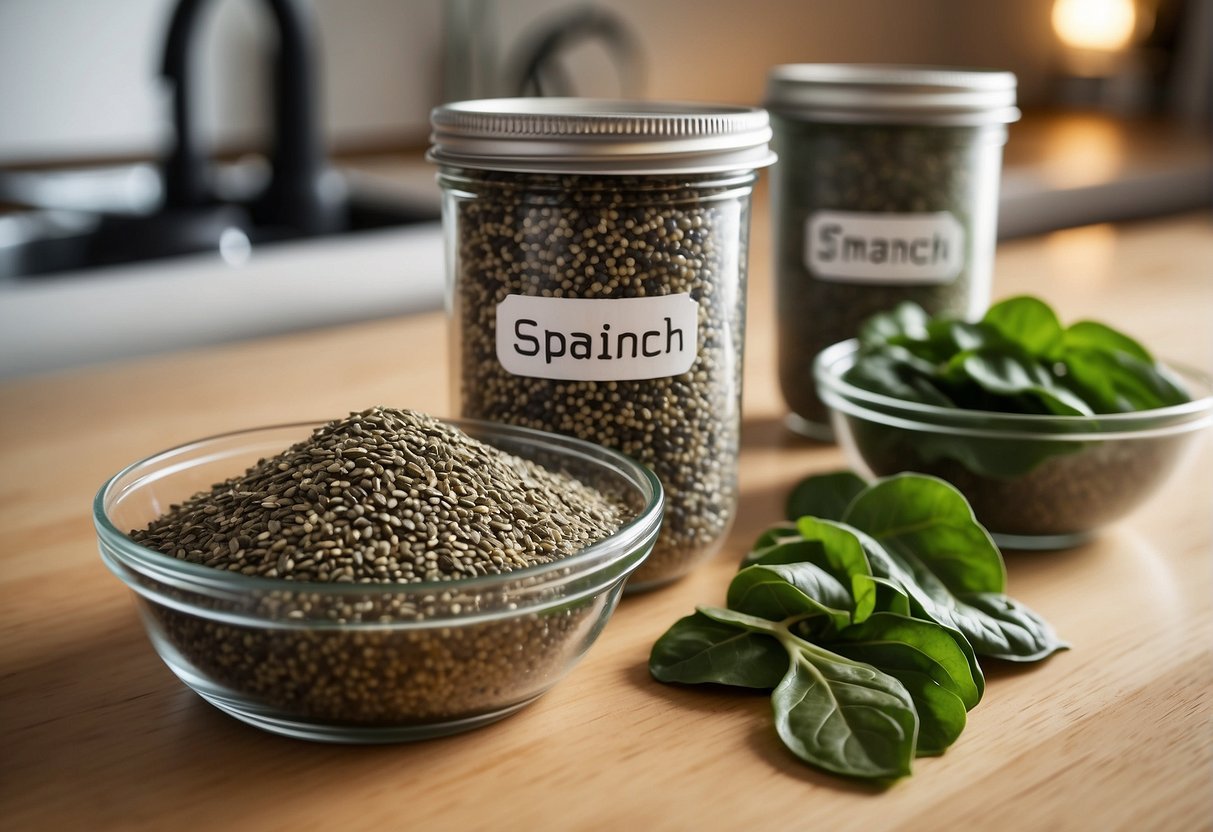
When mixing spinach and chia seeds, it’s crucial to know how to prep them right and store them to retain their nutrients. Below, I’ll cover the importance of soaking chia seeds and how to properly freeze spinach for maximum freshness.
Soaking Chia Seeds and Freezing Spinach
Soaking chia seeds is a game-changer for digestibility and texture. I always start by soaking my chia seeds in water or coconut milk for at least 20 minutes before mixing them with spinach—this lets them swell up and become gelatinous, perfect for smoothies. Also, I often throw in some frozen fruit like pineapple or blueberries to add a sweet twist.
When I prepare spinach for freezing, I blanch it first to preserve the color, nutrients, and flavor. Once blanched, I quickly cool the leaves in ice water, then drain them thoroughly. I pack my spinach in airtight containers or freezer bags, squeezing out as much air as possible to avoid freezer burn. This method keeps spinach ready-to-use for smoothies with my Vitamix—handy for a quick nutritious blend!
Shelf Life and Optimal Storage Conditions
Chia seeds are pretty robust; they have a generous shelf life if stored correctly. To ensure my chia seeds last a long time, I follow these steps:
- Keep them in an airtight container to protect them from moisture and air.
- Store the container in a cool, dark place—a kitchen cabinet away from the stove or a fridge works great.
For my spinach, freezing is the way to go for long-term storage. My spinach stays good in the freezer for up to 10 months, which is ideal. I make sure my freezer is at a consistent temperature to preserve the leafy greens’ manganese content and other nutrients. Adding a label with the freezing date helps me track how long they’ve been stored.
Regular honey or syrup can be substituted with healthier sweeteners if preferred. I tend not to add sweeteners to my mix since the natural sugars from the frozen pineapple and frozen blueberries usually do the trick.
Understanding Nutritional Synergy
When I throw together ingredients for my healthy smoothies, I aim for a mix that goes beyond just good taste. Nutritional synergy is my goal – that magical interaction of components that leads to enhanced health benefits. Take my favorite spinach chia seed smoothie for example. Here’s why it’s a powerhouse combo for my body.
Spinach is a superfood packed with nutrients but low in calories, so it provides me with essential vitamins without loading up on energy intake. Meanwhile, chia seeds bring a whole bunch to the table. They’re an excellent source of fiber and omega-3 fatty acids, which sound like a dream team for my heart health and digestion.
| Spinach Benefits | Chia Seeds Benefits |
|---|---|
| Low calories | High fiber |
| Rich in vitamins | Omega-3 fatty acids |
| Versatile veggie | Healthy fats |
Mixing them into one drink means I get a combo that satisfies hunger (thanks to the fiber) and fights inflammation (shoutout to omega-3s). Most importantly, I don’t just gulp down nutrients; the synergy ensures I absorb more goodness. For anyone who’s into customization, tossing these two into any spinach smoothie recipe creates a base that’s both robust and adaptable.
Let’s not forget the role of fat in the absorption of fat-soluble vitamins. Chia seeds have that covered with their healthy fats, making sure that the iron and calcium in the spinach don’t go to waste. So when I blend these two, I’m not just making a smoothie – I’m creating a nutrient delivery system that’s deliciously efficient.
Frequently Asked Questions
Let’s dive into some commonly asked questions I get about chia seeds, especially when they’re mixed into our favorite leafy greens for smoothies.
How can you incorporate chia seeds into a weight loss smoothie?
I often add chia seeds directly to the blender when making my weight loss smoothies. They’re not only high in fiber but also help thicken the smoothie, making it more satisfying without adding excess calories.
What are the health benefits of adding chia seeds to your diet?
Adding chia seeds to your diet boosts fiber intake, provides omega-3 fatty acids, and includes important minerals like calcium and magnesium. They’re also known for their hydration capabilities, which is great for overall health.
What role do chia seeds play when added to smoothies?
In smoothies, chia seeds act as natural thickeners and can help with satiety. Their ability to absorb water and form a gel-like consistency adds volume and texture to your drink.
Can you blend chia seeds with kale in a smoothie?
Absolutely! I love blending chia seeds with kale as they both pack a punch of nutrients. The chia seeds don’t alter the taste, so the kale’s flavor can still shine through.
Is it better to blend or soak chia seeds for a smoothie?
I’ve done both, but soaking chia seeds can make them easier to digest and helps prevent stomach upset. If short on time, blending them directly works fine, but for texture and easier absorption, soaking is the way to go.
What’s the ideal amount of chia seeds to consume in a day?
I stick to the recommended daily amount of about 15-20 grams for adults. It’s important not to overdo it, as chia seeds are very absorbent and can expand in your stomach.