
Health and Nutrition Considerations
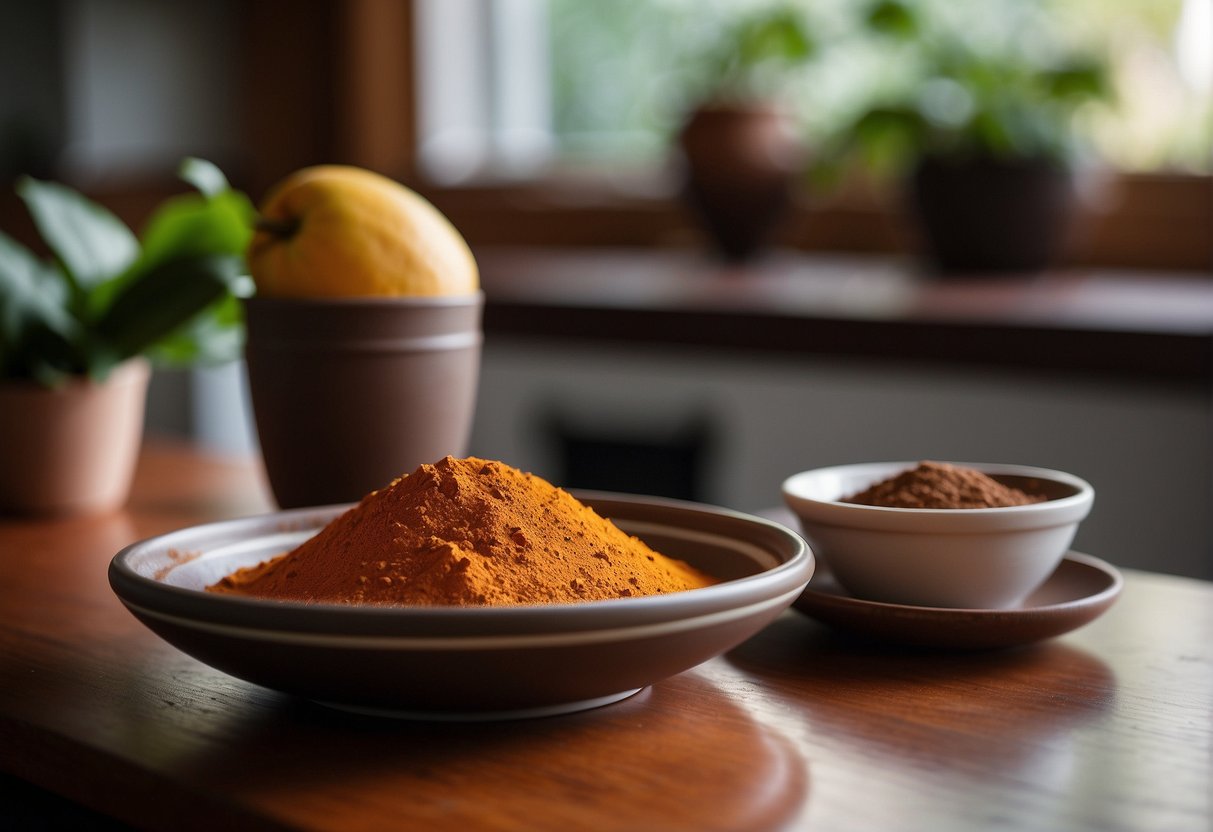
When I mix mango with cocoa powder, I consider not only the unique flavor combination but also the impact on my health and nutrition. Let’s break down what this blend means in terms of calories, macronutrients, and vitamins, which are crucial for balanced health.
Caloric Content and Weight Management
Mingling mango and cocoa powder can affect my daily caloric intake. Mangoes are naturally sweet and provide energy primarily in the form of sugar, contributing to their calorie content. For instance, a cup of mango chunks is roughly 99 calories. Cocoa powder, on the other hand, is lower in calories but can be quite dense. Just one tablespoon could add around 12 calories from primarily carbohydrates and protein, with a negligible amount of fat.
Macronutrient Balance
Mangos are a carbohydrate-heavy fruit, featuring sugar for quick energy. Cocoa powder introduces a different set of macronutrients, such as fiber and protein, implying a balance between instant energy and satiety. Cocoa is praised for a decomposable ratio of fats, including saturated and monounsaturated fats, with minimal trans fat and cholesterol. It’s a pairing that combines simple carbohydrates from the fruit with complex ones from the cocoa, along with a modest protein bump.
Vitamins and Antioxidant Properties
Both mango and cocoa are powerhouses for vitamins and antioxidants. Mangoes are bursting with vitamin C, necessary for my immune system, and they also provide vitamin A for good vision. Cocoa is outstanding for its flavanol content—these are the compounds responsible for its antioxidant properties. Notably, antioxidants assist in neutralizing free radicals, potentially lowering the risk of some diseases. Additionally, cocoa brings a sprinkle of minerals like magnesium and a good quantity of iron, making this combo a nutrient-dense choice for my diet.
Mixing and Cooking Techniques
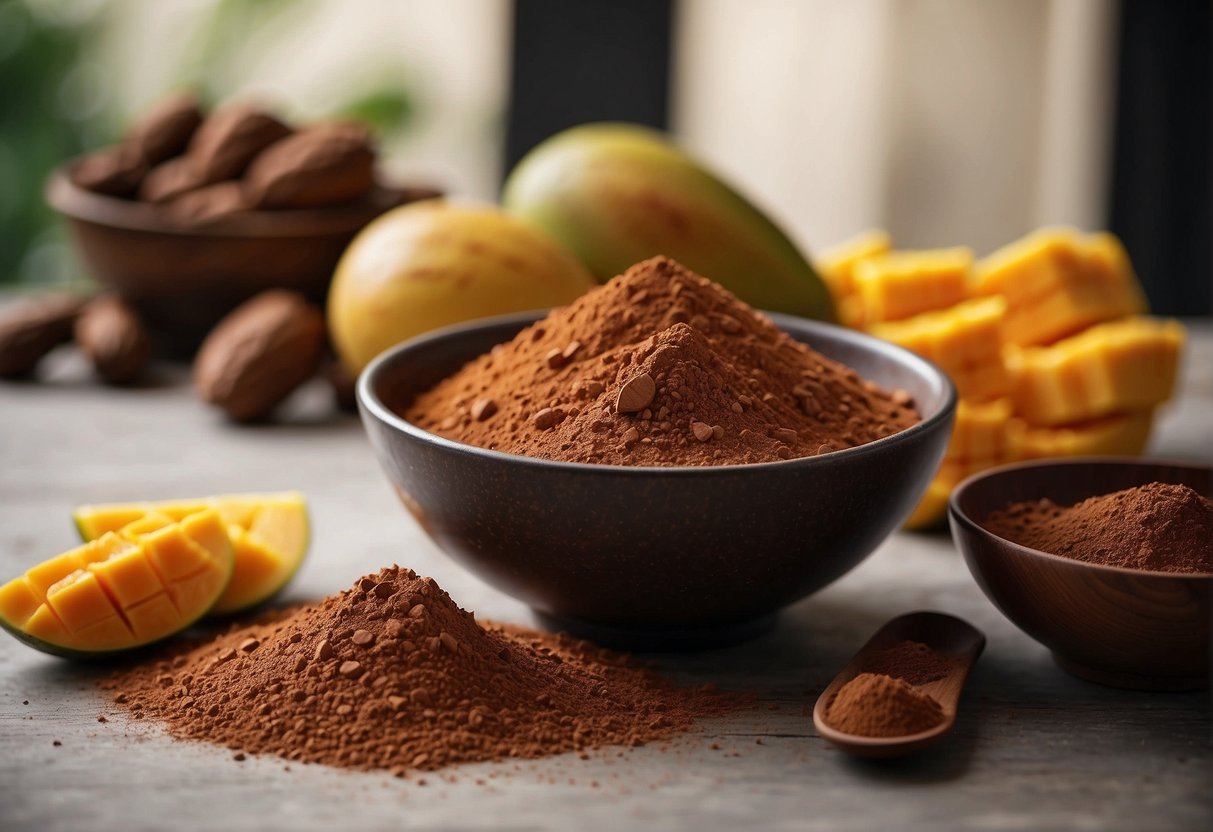
When I’m in the kitchen combining flavors, I find that the secret to a successful dish lies in mastering the blend of tastes and textures. It’s all about getting the balance right, particularly when working with distinctive flavors such as mango and cocoa powder.
Integrating Mango and Cocoa Powder into Recipes
To incorporate mango and cocoa powder into recipes, I start by considering the final flavor profile I’m aiming for. I often mix unsweetened cocoa powder with a fat like butter or sweet almond oil to enrich the chocolate notes. As for the mango, I prefer using fresh mango puree to capture its vibrant taste. When I mix these into batter or a dessert base that includes flour, baking powder, and some milk, I ensure everything is at room temperature to avoid shocking the mixture. Using a whisk or a blender, I strive for a homogenous mix, adding dry ingredients to wet ingredients gradually to prevent clumping.
Texture and Consistency Control
For the texture, it’s key to achieve the right thickness. While mixing, if the batter or sauce feels too thick, a splash of milk can help thin it down. Conversely, if the mixture is too runny, a bit more cocoa powder or a banana can make it thicker. It’s essential to mix gently but thoroughly—overmixing can cause baked goods to rise improperly or become dense. A light hand helps maintain the airiness and moist texture that many doughs and batters require.
Cooking Methods and Heat Treatment
With mangoes and cocoa powder, I’ve learned that heat treatment can make or break a dish. When I’m making hot cocoa or chocolate milk, I gently heat the milk before whisking in the cocoa powder to ensure it dissolves completely. If I’m baking, I always preheat my oven to the correct temperature so my creations bake evenly. When using cocoa powder, remember to cool or chill it after mixing it with hot liquid, as advised on The Spruce Eats. Additionally, for items like vegan treats that don’t go in the oven, I use a freeze technique to set the final product.
DIY Mango-Cocoa Skincare
Crafting your own mango-cocoa skincare products is a satisfying way to pamper your skin with natural, nourishing ingredients like mango butter and cocoa butter. You’ll experience the benefits of anti-inflammatory properties and antioxidants that can help maintain healthy, moisturized skin.
Homemade Body Butters and Scrubs
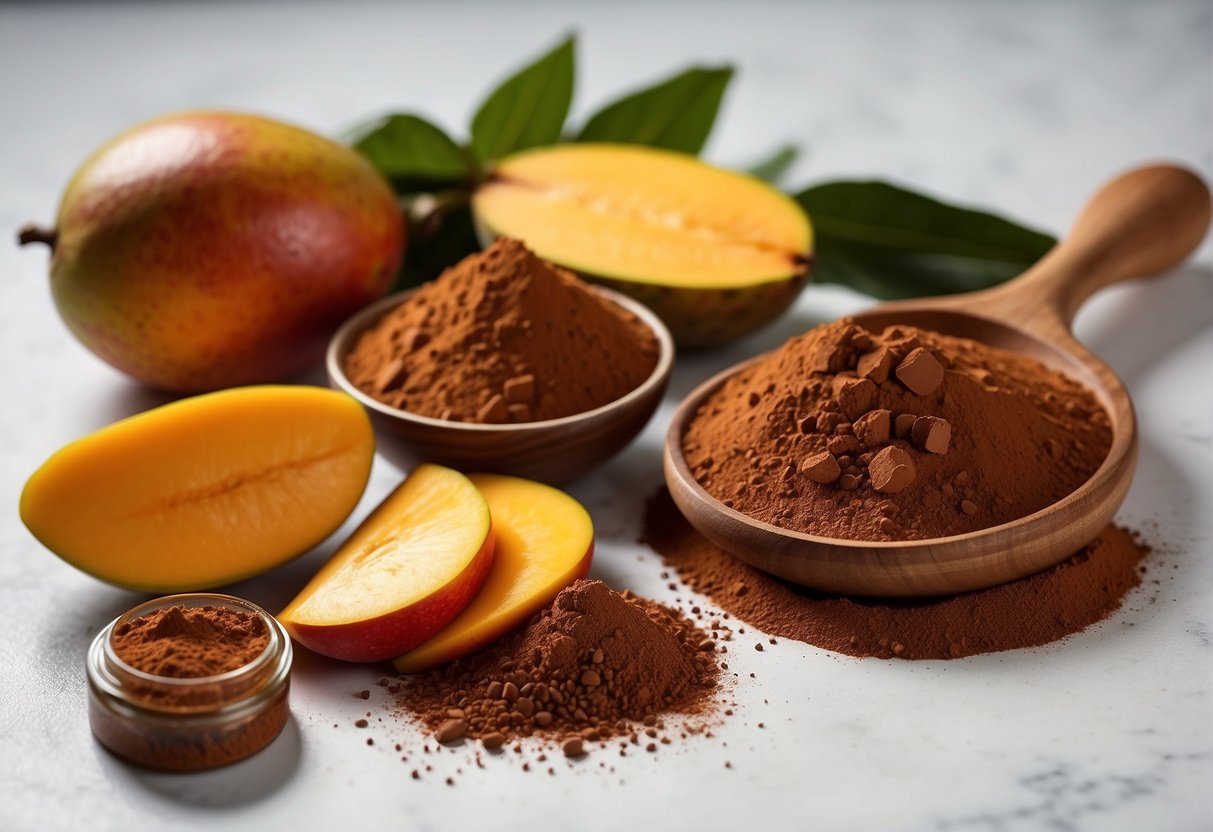
When I make my homemade body butters, I like to start with a base of mango butter and cocoa butter. These two fats work brilliantly together, as they’re both rich in nourishing properties and create a creamy texture that your skin will love. I combine them with a carrier oil—like almond oil or jojoba oil—to enhance the butter’s spreadability and add more nutrients. The process usually involves gently melting the butters and oils using a double boiler to preserve their natural benefits.
Once melted, I let the mixture cool slightly and then whip it up to achieve a light, fluffy whipped body butter that’s a joy to apply. If I’m making a scrub, I’ll mix in some fine sugar to help exfoliate the skin. To store my creations, I use an airtight container to keep them fresh and effective for longer.
Ingredients:
- 1/2 cup mango butter
- 1/2 cup cocoa butter
- 1/2 cup carrier oil (such as almond or jojoba oil)
- Optional: Essential oils like lavender or geranium for scent
Instructions:
- Melt the butters in a double boiler.
- Cool the mixture for a few minutes.
- Whip until light and fluffy.
- Add essential oils if desired, and transfer to an airtight container.
Balancing Aromas and Health Benefits
When it comes to adding essential oils to my skincare recipes, I always aim for a balance between alluring aromas and health benefits. For instance, the soothing scents of lavender, geranium, or frankincense can turn your skincare routine into a therapeutic experience. Additionally, essential oils can extend the skin benefits of your products—some have properties that can assist in calming skin irritation or promoting skin health.
However, it’s important to note that some oils, particularly citrus oils, can make the skin photosensitive. So, I’m careful to choose essential oils that complement the nourishing properties of the base butters but won’t cause any unnecessary skin reactions.
Remember, when adding mica for color or cornstarch or arrowroot powder for thickness, add these incrementally and test the consistency frequently. Your homemade skincare should be as personalized as your signature—it’s all about finding what works for you and your skin.
Dietary Considerations and Substitutions
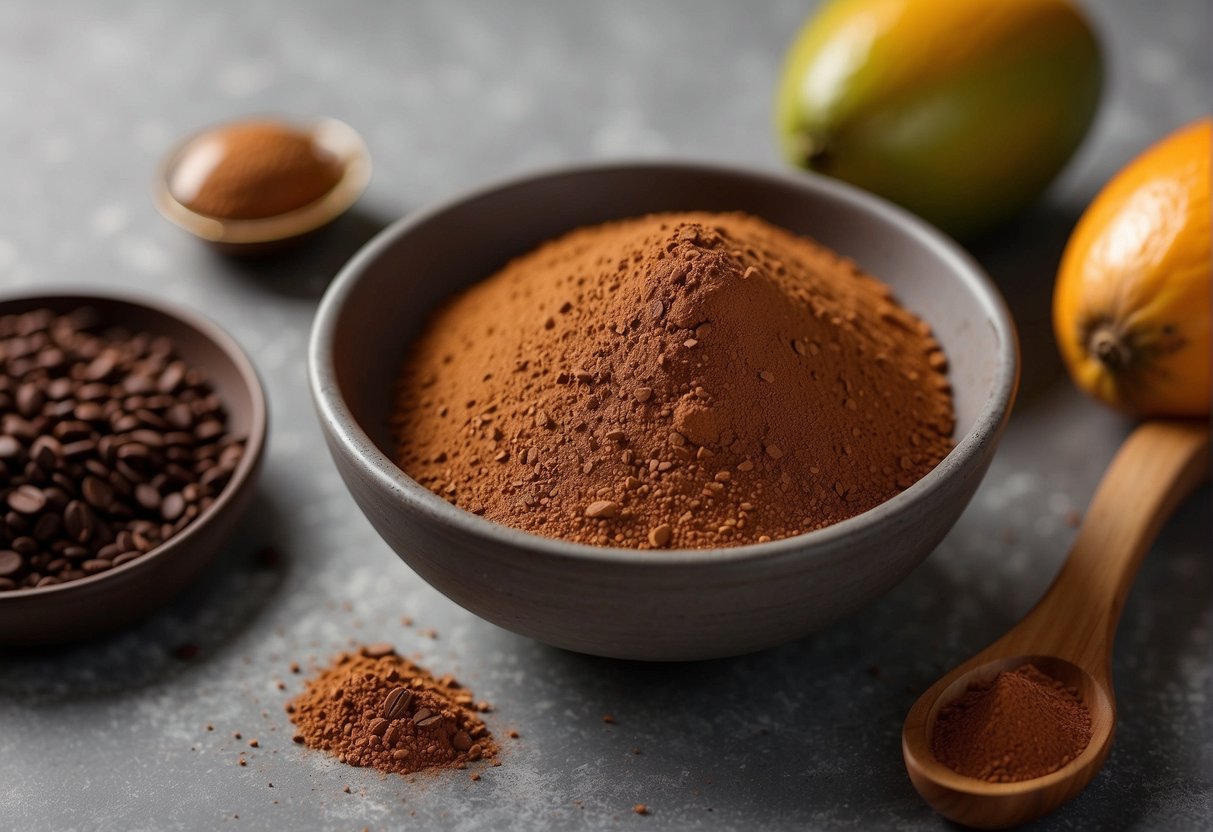
When mixing mango and cocoa powder, I take care to consider various dietary needs, whether they’re related to allergies, plant-based preferences, or simply a need for substitutes in the kitchen.
Addressing Food Allergies and Sensitivities
For those with food allergies or sensitivities, it’s important to scrutinize every ingredient. If I’m baking and need cocoa powder, but someone has an allergy, carob powder is a great alternative as it’s naturally sweet and free from caffeine and theobromine found in cocoa; it also happens to be gluten-free. As for a base ingredient like all-purpose flour, I swap in a gluten-free alternative to suit celiac or gluten-sensitive pals. For eggs which can be both an allergen and a dietary sensitivity, using egg whites or a “flax egg” (1 tablespoon ground flaxseed mixed with 3 tablespoons of water) is my go-to option.
Vegan and Non-Dairy Alternatives
Now, if I’m catering to my vegan friends or anyone avoiding dairy, I need to ditch ingredients like eggs and dairy milk. In my mango and cocoa recipes, I typically replace dairy milk with almond milk or another dairy-free alternative. Instead of using butter, I opt for oils or vegan butters—making sure they are low in saturated fat. And when a recipe calls for egg, using a substitute like the flax egg mentioned above works a charm. Sweeteners like brown sugar are typically vegan, but I always check the packaging to ensure it’s free from animal-derived processing agents. As for baking soda, it’s already vegan, but it’s key to combine it with an acid like vinegar or lemon juice to activate it when I’m not using traditional eggs.
In this way, I can create mouthwatering treats that consider everyone’s dietary requirements, and my kitchen becomes an inclusive space for all who wander in.
Frequently Asked Questions
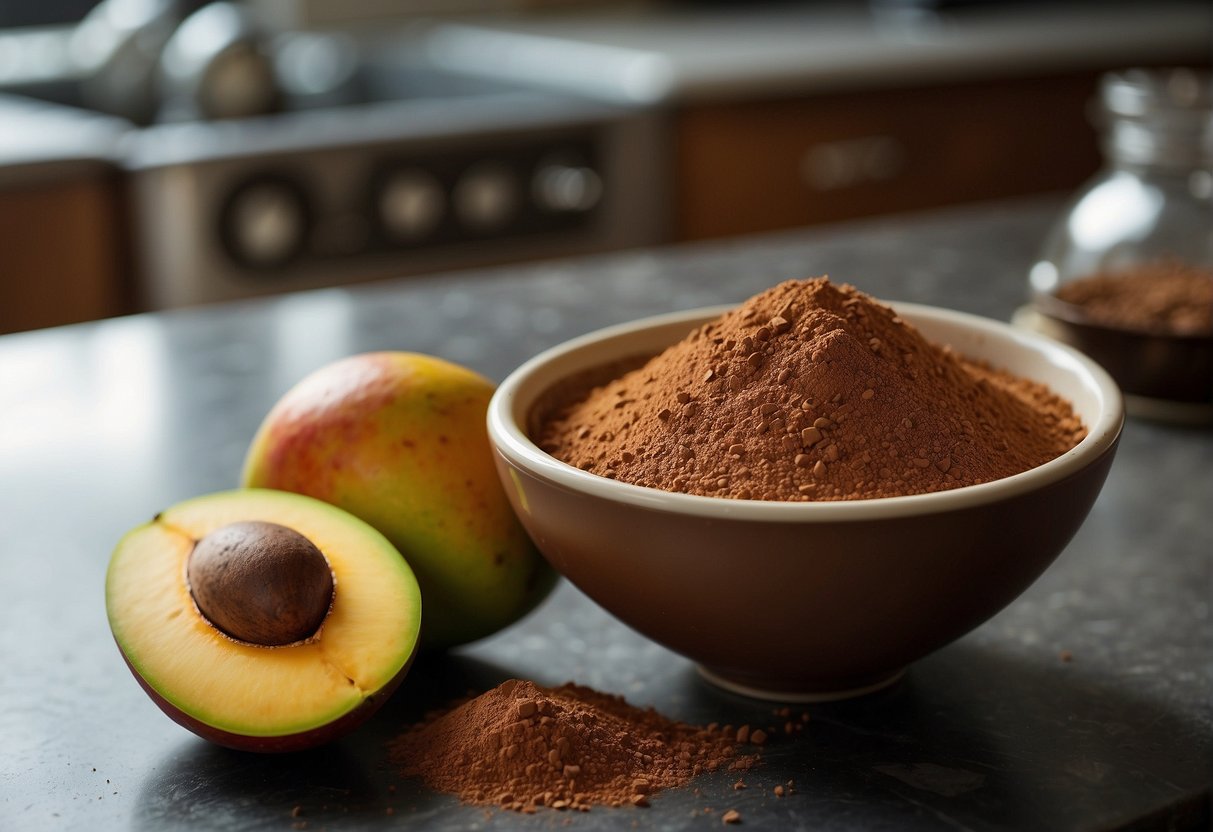
When playing with the delightful combo of mango and cocoa powder, I like to keep things fresh and exciting. Here’s the scoop on how you can blend these two in your kitchen adventures.
What are some tasty recipes for a mango and chocolate cake?
I stumbled upon this scrumptious Mango Kalakand which can be transformed into a chocolate delight by stirring in a tablespoon of cocoa powder. Just sweeten it up with a bit more sugar to balance the cocoa’s rich flavor.
How do you make a chocolate mango milkshake?
For a creamy chocolate mango milkshake, blend ripe mangoes, a few scoops of chocolate ice cream, and a splash of milk. Add a hint of cocoa powder if you want a deeper chocolate taste. It’s like summer and dessert had a delicious baby!
Any tips for combining mango with milk chocolate in desserts?
When using milk chocolate, make sure the mango is the star by keeping chocolate as a subtle enhancer. A milk chocolate drizzle over mango slices or cubes does wonders without overpowering the fruit’s tropical taste.
Can I add mango to my chocolate protein smoothie?
Absolutely! Toss in some frozen mango chunks to your regular chocolate protein shake for a tropical twist. It’ll add natural sweetness and a vitamin C kick to your post-workout treat.
What other fruits complement chocolate protein powder?
Bananas and berries work great with chocolate protein powder, offering a sweet and tangy contrast. But don’t overlook avocado; its creamy texture pairs well with the smooth notes of chocolate.
How do I pair mango and chocolate in a dessert?
Think of mango and chocolate as a couple that enjoys each other’s company. Create layers in your desserts, like a chocolate biscuit base with a mango cheesecake topping. Or fold mango puree into a chocolate mousse for a fruit-infused wonder.