
Yogurt and Lemon Basics
When I whip up a snack, two ingredients I often reach for are yogurt and lemon. They’re not just refreshingly tangy but packed with nutrients that are good for my health. Yogurt is a creamy delight loaded with protein and calcium, while lemons are bursting with vitamin C, helping keep my immune system strong.
Health Benefits
Greek yogurt has become a staple in my fridge thanks to its high protein content and rich texture. It’s not only a powerhouse in calcium and vitamin D, but it also supports my digestion due to its probiotics. Adding a squeeze of lemon juice introduces a zesty flavor and boosts my intake of vitamin C. This combo isn’t just tasty; it helps maintain the pH balance and fortify the immune system.
- Greek Yogurt: Rich in protein and calcium; good for digestion.
- Lemon: High in vitamin C; benefits immune health.
Culinary Uses
I love to get creative in the kitchen by merging yogurt and lemon, both of which are versatile in culinary applications. I carefully mix lemon juice into yogurt to avoid curdling; the acidic nature can change the texture if not done properly. This can enhance sweet and savory dishes alike, giving them a pleasant tang while incorporating vital nutrients.
Yogurt and Lemon Recipes
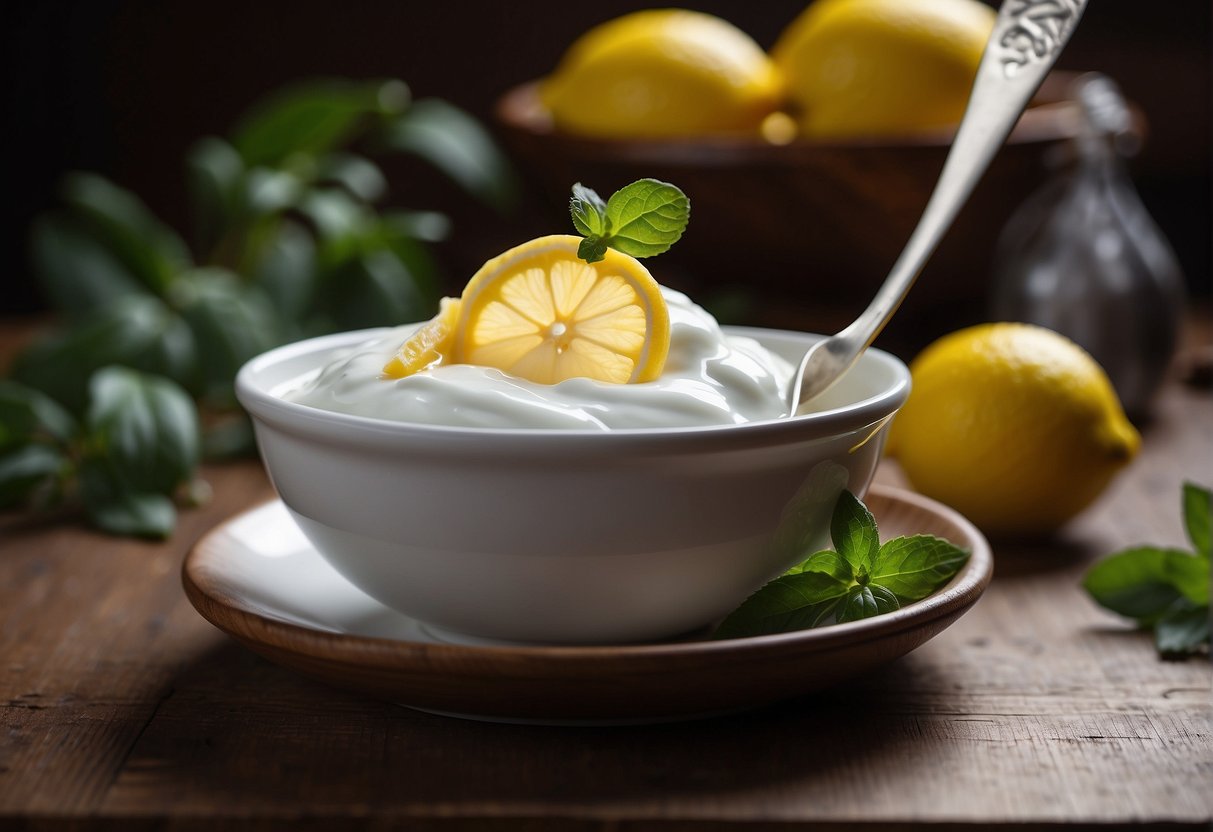
I’ve whipped up some refreshing yogurt and lemon recipes that’ll make your taste buds dance. Here’s how you can combine the tangy zest of lemons with the creamy texture of yogurt to create delicious treats ranging from cakes to smoothies.
Lemon Yogurt Cake Preparation
For a simple yet delightful Lemon Yogurt Cake, I start by preheating my oven to 350°F and greasing my loaf or bundt pan. Then, I whisk together all-purpose flour, baking powder, and a pinch of salt. I take another bowl to mix sugar and grated lemon zest, to which I add plain yogurt, olive oil, eggs, and vanilla extract. I combine the dry and wet ingredients, pour the batter into the pan, and bake until a toothpick comes out clean. A glaze made with powdered sugar and fresh lemon juice tops it off perfectly.
Smoothies and Marinades
Lemon and yogurt are stars in the world of smoothies and marinades. I typically add a splash of fresh lemon juice to my yogurt-based smoothies for that tart flavor boost. As for marinades, I mix plain yogurt with lemon juice, olive oil, and herbs. My secret? It tenderizes the meat wonderfully and adds a zesty kick.
Desserts Variations
Don’t stop at cakes. I often get creative and stir lemon juice into plain yogurt for an easy dessert topped with honey and fresh berries. Or, if I’m feeling fancy, I’ll make a creamy lemon yogurt mousse. Just remember, the citric acid in lemon can cause yogurt to curdle, so I make sure to add the lemon juice gradually and not too much. For batch desserts, I choose a sturdy pound cake or layered parfait with that lovely lemon yogurt combination to impress my friends.
Tips and Techniques

When I mix lemon juice with yogurt, I focus on two primary goals: avoiding the pitfalls of curdling and amplifying the delicious flavors and smooth textures that come when it’s done right.
Avoiding Common Mistakes
To prevent curdling, which can happen when the acidic lemon juice reacts with the proteins in yogurt, I’ve found that gently folding in the lemon juice is key. Pro Tip: Mix no more than a teaspoon of lemon juice per cup of yogurt to maintain a creamy texture without separation. Additionally, if I’m using lemon in a marinade with yogurt, I make sure to keep the marinating time short to prevent the proteins in the meat from breaking down too much.
Adding a pinch of salt can help balance the flavors without impacting texture. If I’m baking, I always check my desserts on a wire rack to ensure they cool properly, which helps maintain the perfect texture. And I use vegetable oil instead of butter when I want a lighter lemon glaze that doesn’t harden upon cooling.
Enhancing Flavor and Texture
For a burst of flavor, I like to add berries like raspberries or grapefruit pieces into the yogurt, complementing the tanginess of the lemon. Desserts and parfaits benefit from a touch of lemon zest, which adds a punch without extra liquid.
I’ve learned that sour cream can enhance both the richness and the texture of lemon yogurt dips or dressings. For smoothies, always blend the yogurt and lemon juice first to achieve a smooth, homogenous texture before adding in other ingredients.
And finally, for those interested, I often include nutrition information and affiliate links to my favorite brands within the recipes, helping others find the best products for their lemon recipes.
Pairings and Serving Ideas

When I mix lemon with yogurt, I think about balancing flavors and textures while keeping an eye on the nutritional value. Here’s how I like to pair ingredients and present them for maximum enjoyment.
Complementary Ingredients
- Berries: I find that fresh berries, like strawberries and raspberries, add a juicy burst of sweetness that complements the tartness of the lemon yogurt.
- Honey: A drizzle of honey can bring all the flavors together with its natural sweetness.
- Vanilla: Just a dash of vanilla can add depth to the yogurt’s flavor profile.
- Nuts & Seeds: For some crunch, I toss in a handful of almonds or chia seeds.
- Olive Oil: A light swirl can enhance the mouthfeel, especially if I’m using the yogurt as a dressing or dip.
Presentation Tips
- Parfait Layering: I alternate layers of lemon yogurt with fruits and granola to create an eye-pleasing parfait.
- Individual Slices: When serving cake or pie, a dollop of lemon yogurt on top of individual slices brings a creamy tang.
- Dressing: I blend the yogurt with lemon and olive oil, perfect for drizzling over salads.
- Dips: Mixing in finely chopped herbs with the yogurt creates a refreshing dip for veggies.
- Garnish: A few berries or a mint leaf on top add a pop of color.
Frequently Asked Questions

Lemon can add a refreshing zest to plain yogurt, but it’s important to mix them properly to avoid curdling. Below, I’ve answered some common questions about combining these two versatile ingredients in your kitchen.
How do you incorporate lemon into a yogurt recipe?
I usually start by adding a small amount of lemon juice to avoid altering the texture drastically. For each cup of yogurt used, a teaspoon of lemon juice is a good rule of thumb to start with.
Is it possible to prevent curdling when mixing lemon with yogurt?
Yes, it’s possible. To prevent curdling, I mix the lemon juice gradually and ensure the yogurt isn’t too cold; room temperature works best. Patience is key here!
What are the benefits of adding lemon to my yogurt?
Lemon not only imparts a bright flavor but also increases the nutritional value of the yogurt with additional vitamin C and digestive benefits.
Can I make a tangy sauce for fish or chicken using yogurt and lemon?
Certainly! I like to mix lemon juice with yogurt at a lower ratio and add some herbs and spices to create a delicious sauce that complements seafood or poultry beautifully.
How can I transform plain yogurt into a lemon-flavored one?
I suggest stirring in lemon zest along with the lemon juice to plain yogurt. Sweetening the mixture with honey or agave syrup can also enhance the lemony flavor.
Are there any lemon yogurt brands recommended for specific recipes?
While I frequently make my own, there are brands that offer lemon-flavored yogurt which can be a convenient option for recipes. Always taste and adjust the lemon intensity according to your recipe’s needs.