
Health Benefits of Blueberries and Yogurt
When I mix blueberries with yogurt, I’m not just making a tasty snack; I’m also providing my body with a range of nutrients that are beneficial for both metabolism and overall health. Let’s take a closer look at what this combination has to offer.
Nutritional Content and Daily Values
Blueberries are a nutrient-dense fruit packed with vitamins, minerals, and antioxidants. Particularly, they’re high in vitamin C and vitamin K. Having them with yogurt, which is rich in protein and calcium, turns my snack into a powerhouse of nutrition. Here’s a quick rundown:
- Blueberries: High in fiber and phytonutrients with strong antioxidant capacity.
- Yogurt: Offers a good amount of protein, essential for muscle repair and growth, while being relatively low in fat.
I make sure to pick yogurts that are low in added sugars to maintain a heart-healthy diet and maximize the health benefits.
Boosting Metabolism and Health
The fiber in blueberries, combined with the probiotics in yogurt, can improve my digestion and boost my metabolism. This duo promotes a healthy balance of gut bacteria, which is essential for a robust metabolic health.
The antioxidants in blueberries, such as anthocyanins, have been linked to a reduced risk of certain health conditions. Additionally, the calcium in yogurt is vital for bone health and the protein helps manage hunger levels, which can assist in maintaining a healthy weight.
By regularly including blueberries and yogurt in my diet, I’m supporting my body’s natural functions and contributing to my overall well-being.
Making Your Own Blueberry Yogurt
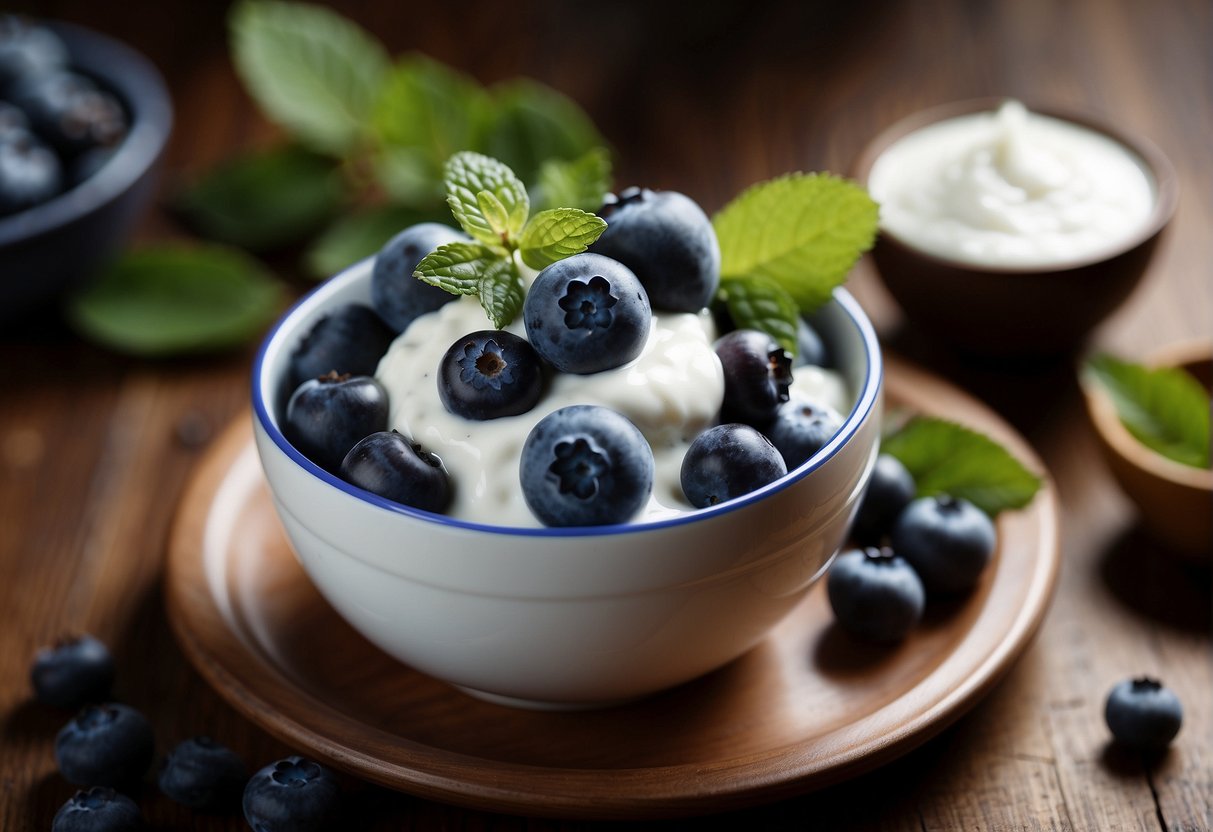
Creating homemade blueberry yogurt is a rewarding process that allows me to customize the taste and nutrition to my liking. It’s a fantastic blend of simple ingredients and easy techniques that come together for a tasty snack or breakfast option.
Choosing Ingredients
I always start with high-quality plain yogurt as my base—Greek yogurt works great for a creamier texture. For the fruit, frozen blueberries are convenient and available year-round, but fresh work just as well when in season. The type of sweetener is up to personal preference; honey, maple syrup, or a sugar alternative can do the trick. Sometimes I’ll add a dash of vanilla extract for a subtle flavor enhancement.
Preparation Techniques
For the actual making of my homemade blueberry yogurt, I’ve found two effective methods: the microwave and the stovetop.
-
Microwave Method:
- Combine frozen blueberries and a sweetener in a microwave-safe bowl.
- Heat on high until the berries are thawed and juicy.
- Mix the warm blueberry mixture into the yogurt.
-
Stovetop Method:
- Simmer blueberries with a bit of water until soft.
- If using a sweetener like honey or syrup, stir it in as the berries cook.
- Let the mixture cool slightly before folding into the yogurt.
These techniques are straightforward in my instructions and don’t take much of my total time—usually, the prep time sits around 10 minutes.
Nutrition Label Insights
When I make my homemade blueberry yogurt, paying attention to the nutrition information helps me stay on track with my dietary goals.
| Nutrition Fact | Approximate Value (per serving) |
|---|---|
| Calories | 150 kcal |
| Protein | 10 g |
| Carbohydrates | 22 g |
| Fat | 4 g |
| Fiber | 2 g |
I can easily adjust the nutrition information by changing the type of yogurt or sweetener. For example, swapping in a low-fat yogurt or a natural sweetener like stevia can lower the calorie count if that’s my goal. If I’m aiming for a vegan option, I can opt for coconut or almond-based yogurts.
Making homemade blueberry yogurt is as easy as pie (or should I say, as easy as yogurt), and it grants me the freedom to tweak it exactly how I like. It’s a simple, fulfilling way to start my day or perk up my afternoon.
For more detailed information or specific recipes, you can refer to the pages on Creative Nourish and Healthy Little Foodies.
Customizing Your Yogurt Bowl
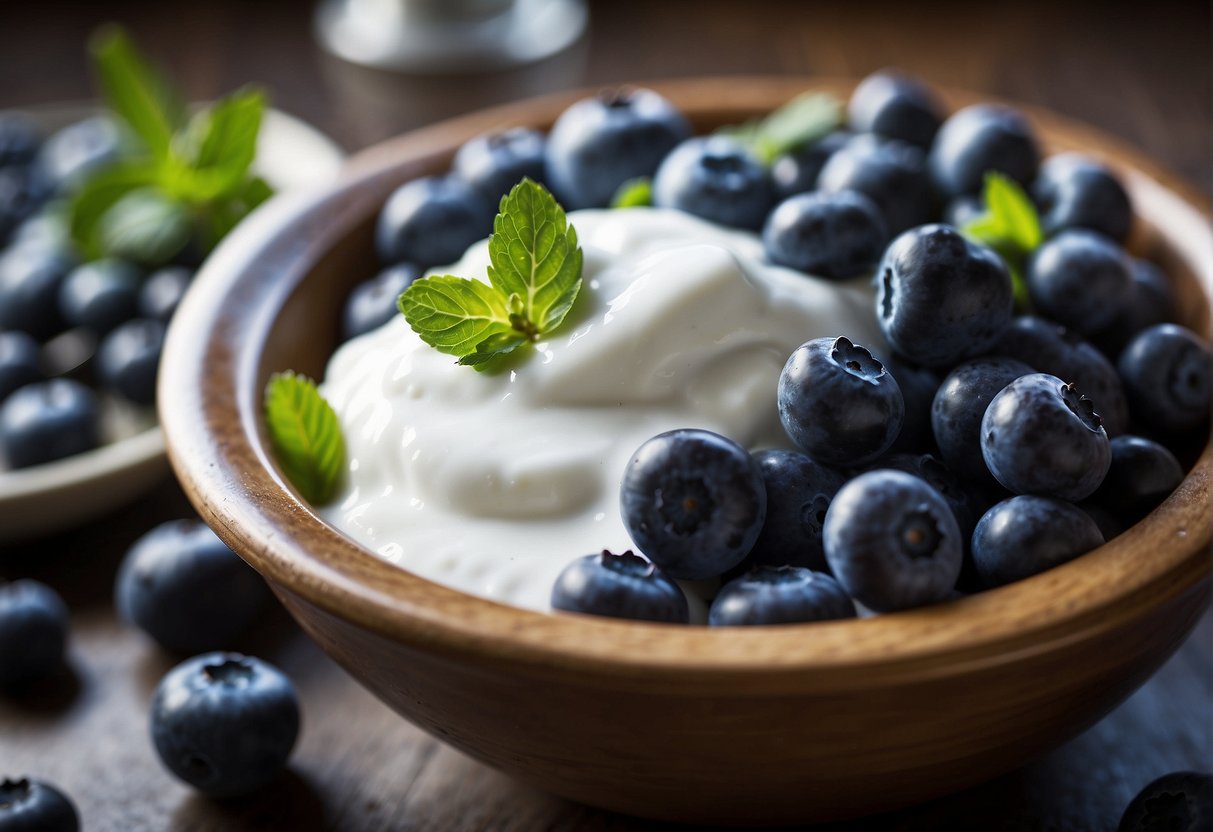
When I’m whipping up a yogurt bowl, I love the freedom to play around with different flavors and textures. It’s a canvas for creativity, whether it’s for a quick breakfast or a satisfying dessert. Let me share a couple of tips to make your yogurt bowl standout.
Fruit and Berries Varieties
For me, berries are the star of any yogurt bowl. I often toss in fresh blueberries and sliced strawberries for natural sweetness and a pop of color. When I want a more indulgent mixture, a mixed berry yogurt base elevates the dish with a richer taste. The key is to mix and match to find what tantalizes your taste buds. Don’t be afraid to try various combinations; apricots or peaches can add a delightful twist.
Toppings and Add-Ins
Let’s talk crunch and extra flavor. I sprinkle a handful of granola for that satisfying texture. Nuts like almonds, pistachios, or pecans add a nutty flavor and are perfect for a boost of energy. Sometimes, I’m in the mood for something more experimental, so I might add a dash of cinnamon or a drizzle of honey. It’s all about creating a balance in flavors and textures to suit your palate. Remember, there’s no one-size-fits-all serving size; adjust the servings according to how hungry you are or how many are joining you for this delightful treat.
Nutritional Considerations
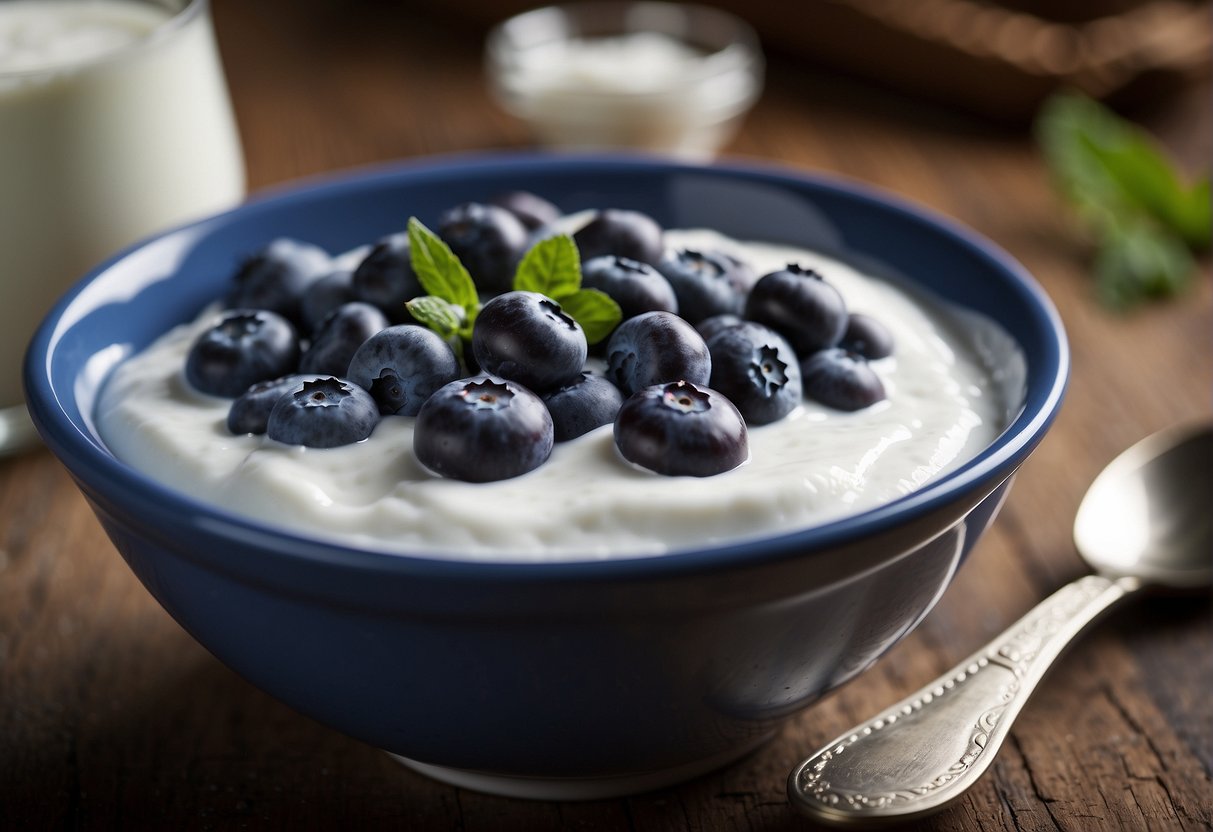
When I mix blueberries with yogurt, I create a combo packed with nutrients that’s hard to beat. Blueberries are like little nutritional powerhouses. They’re low in calories but high in fiber, vitamin C, vitamin K, and manganese. Plus, they have one of the highest antioxidant capacities among all fruits and veggies.
Yogurt, especially the Greek variety, is a fantastic source of protein and provides a good chunk of my daily calcium needs. It’s also rich in potassium and B vitamins. It’s crucial to check nutrition labels because some yogurts can have a lot of added sugars, which I try to avoid. Choosing plain yogurt is often the best bet.
Here’s a quick look at what a cup of this combo might offer:
| Nutrient | Approximate Amount |
|---|---|
| Calories | 150-200 kcal |
| Carbohydrates | 20-25g |
| Dietary Fiber | 3-4g |
| Protein | 10-20g |
| Fat | 0-5g (low in saturated fat) |
| Calcium | 10-20% of Daily Value |
| Potassium | 5-10% of Daily Value |
Now, if someone’s on a special diet or managing things like sodium, cholesterol, or a condition requiring a heart-healthy diet, it’s key to tailor the snack to those needs. Plain Greek yogurt has less sodium, and by chomping down on uncultured fresh blueberries instead of ones in syrups or jams, I keep my sugar intake in check.
For folks with specific medical reasons requiring adjustments in their diet, it’s always smart to have a chat with a registered dietitian or primary care provider before making any big changes. These pros follow Food and Drug Administration (FDA) guidelines and can help make sure everything aligns with my calorie needs and nutrient absorption without blowing past the percent daily value recommendations of various nutrients.
Research and Expert Opinions
When I look into combining blueberries and yogurt, I find that the marriage of these two foods is not only delicious but potentially healthful, too. According to a piece on NutritionFacts.org, it’s important to consider how the antioxidant capacity of blueberries might interact with dairy. Some studies imply that dairy could interfere with the absorption of blueberries’ anthocyanins, which play a part in protecting against oxidative stress.
In a double-blind trial, one might expect a placebo-controlled clinical trial to clearly demonstrate the clinical efficacy of such a nutritious combo. But it’s a mixed bag. Over at Dr. Ann Wellness, they discuss a study suggesting that the fiber in blueberries, along with the probiotics in yogurt, can positively influence gut bacteria and reduce inflammation. These findings give me hope for the interventional studies that may further illuminate the potential synergistic effects.
Vitamins and minerals are also in the mix. While one might worry about diminishing benefits when combining these foods, PubMed highlights that the duo could provide potential prebiotic and probiotic effects.
For precise science on the quantities of vitamins or other nutrients involved, I’d make sure to consult an ingredient database like ESHA Research, which meticulously tracks nutritional content. This kind of database can be a real treasure when I’m digging into the nitty-gritty details of food components.
So, while I’m not swooping in with a definitive “yes” or “no” to the blueberry-yogurt quandary, it seems clear to me that there’s enough evidence in favor of this tasty tandem to keep it on my personal menu.
Frequently Asked Questions
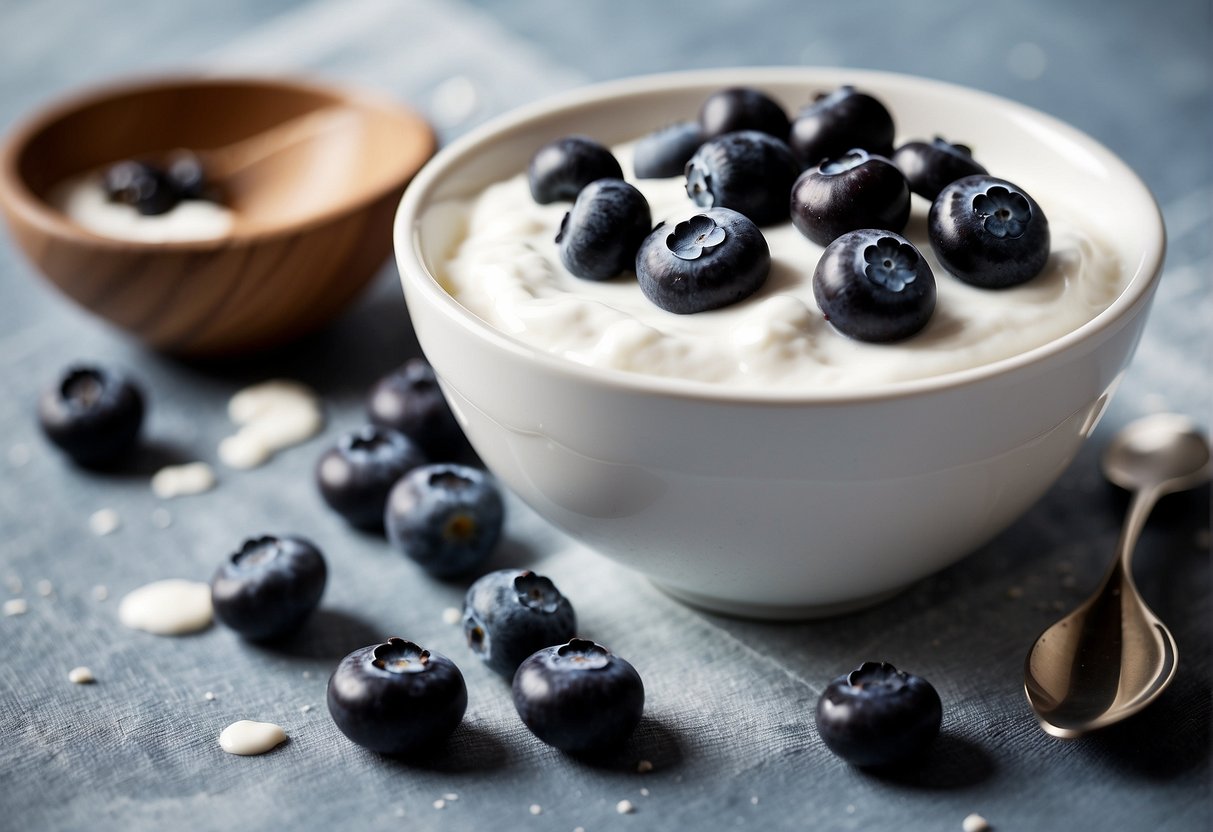
I’m frequently asked about the various aspects of blending blueberries with yogurt. Here are some of the most common questions and accurate, to-the-point answers based on current knowledge and resources.
What are the benefits of adding blueberries to yogurt?
Adding blueberries to yogurt combines the antioxidants and vitamins from the fruit with the probiotics from yogurt, making for a nutrient-rich snack or meal component.
How do you make homemade blueberry yogurt?
To make homemade blueberry yogurt, I blend fresh blueberries then stir the puree into plain yogurt. It’s simple and allows for controlling the amount and type of sweeteners used.
Are there any health advantages to eating Greek yogurt with blueberries?
Yes, combining Greek yogurt with blueberries creates a meal rich in protein, calcium from the Greek yogurt, and antioxidants from the blueberries, supporting overall health.
What’s the calorie count for Greek yogurt with blueberries?
Typically, a cup of Greek yogurt with half a cup of blueberries would be roughly 190 calories. However, this can vary based on the fat content of the yogurt and any added sweeteners.
Can you use blueberries and yogurt as a breakfast option?
Absolutely, mixing blueberries and yogurt creates a healthy breakfast option, providing essential nutrients to start the day with sustained energy.
What other ingredients pair well with blueberries in a yogurt mix?
I’ve found that ingredients like honey, granola, and nuts complement blueberries in a yogurt mix, offering extra flavors and textures.