
Blueberry and Almond Milk Basics
When I whip up a morning smoothie or look for a refreshing drink, combining blueberries and almond milk is a go-to choice for me. Blueberries are a powerhouse of nutrients, bursting with fiber and Vitamin C, making them a fantastic fruit to include in my diet. I love how their sweet and tangy flavor jazzes up the creamy, nuttiness of almond milk.
Speaking of almond milk, it’s a dairy-free alternative that’s low in fat and carbohydrates but still provides a decent amount of calcium and Vitamin E. I tend to reach for the unsweetened variety to keep my sugar intake in check. This combo not only tastes great but also gives me a nutrient boost without loading up on calories.
Nutritional Content of Blueberries:
- Vitamin C: Essential for my immune system.
- Fiber: Keeps digestion on track.
Nutritional Profile of Almond Milk (Unsweetened):
- Protein: Not as much as cow’s milk, but it’s there.
- Calcium: Often fortified to help me meet my daily needs.
- Vitamin E: Great for my skin health.
Here’s a quick look at what I get in a cup of unsweetened almond milk:
- Calories: Around 30-50
- Fat: Around 2.5g
- Carbohydrates: 1-2g
- Protein: 1g
In contrast, a cup of blueberries offers me:
- Calories: Roughly 85
- Fiber: 3.6g
- Sugar: 15g (But it’s all-natural!)
- Vitamin C: About 24% of my daily value
Together, they make for a filling, guilt-free snack that keeps my energy levels steady. Plus, they’re super simple to mix together for a quick smoothie or shake.
Recipe Variations and Ingredients
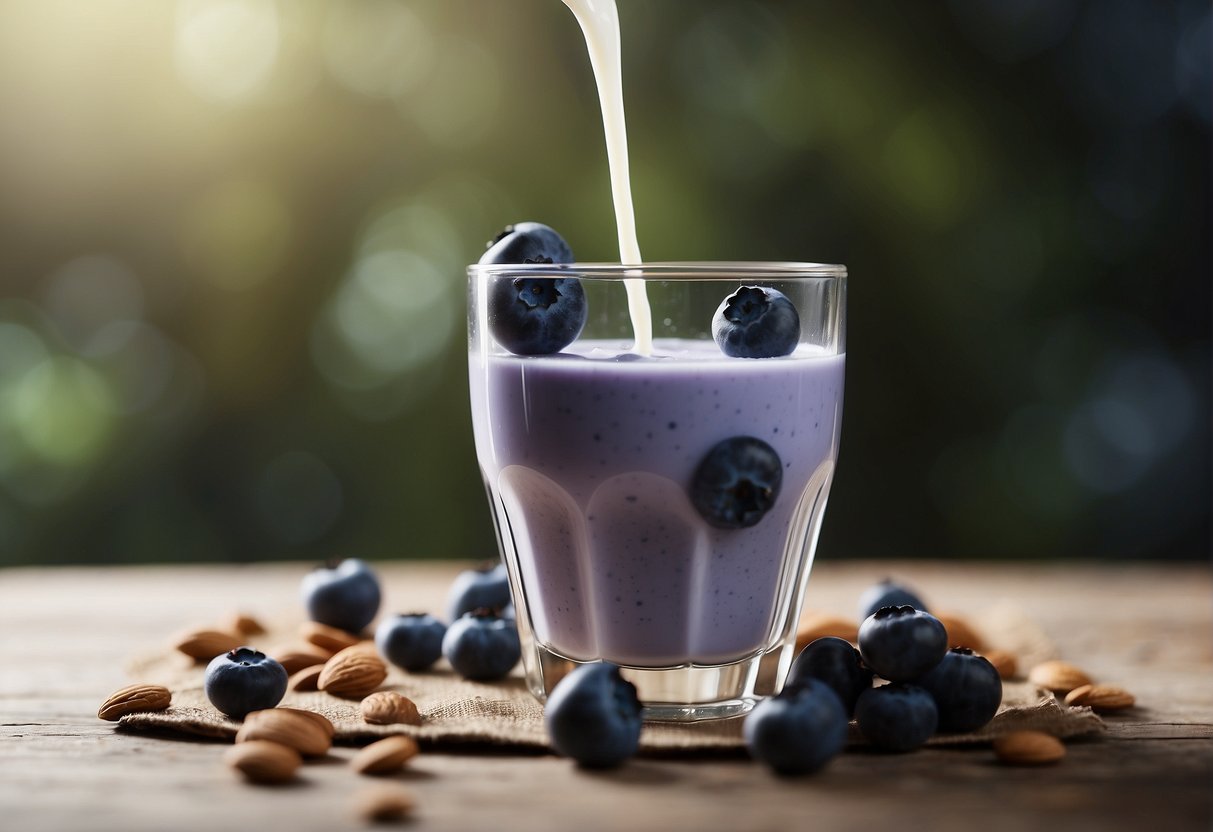
When crafting a blueberry almond milk smoothie, the variety of ingredients you can mix and match is nearly endless. Let’s explore some tasty combinations from the quintessential classics to the plant-based alternatives and dazzling add-ins.
Traditional Blueberry Almond Milk Smoothie
For a classic Blueberry Almond Milk Smoothie, my go-to recipe starts with a cup of frozen blueberries and a cup of unsweetened almond milk. I sometimes add half a frozen banana for creaminess and a touch of natural sweetness. A dollop of almond butter or Greek yogurt can add richness and protein, while a dash of maple syrup is perfect for extra sweetness if needed.
- Ingredients:
- 1 cup frozen blueberries
- 1 cup unsweetened almond milk
- 1/2 frozen banana (optional)
- 1 tablespoon almond butter or Greek yogurt (optional)
- Maple syrup to taste (optional)
Vegan and Plant-Based Options
If I’m crafting a Vegan and Plant-Based Smoothie, I’ll swap out the Greek yogurt for chia seeds or flax seeds to get a boost of omega-3s without compromising the creamy texture. Using vanilla almond milk instead of unsweetened almond milk can also enhance flavor. Protein powders are great here too, especially if you’re looking for a post-workout refuel.
- Ingredients:
- 1 cup frozen blueberries
- 1 cup vanilla almond milk or any plant-based milk like coconut, oat, soy, or rice milk
- 1 tablespoon chia seeds or flax seeds
- Plant-based protein powder (optional)
Creative Add-Ins
My favorite part of making smoothies is getting creative with Add-Ins. Kale or spinach can turn my blueberry almond milk concoction into a nutrient-dense green smoothie without overshadowing the fruit flavors. For texture, coconut flakes or rolled oats add a pleasant surprise, while a scoop of sunbutter or cashew butter introduces a nutty profile.
- Ingredients:
- 1 cup frozen blueberries
- Additional berries like raspberries or blackberries
- Leafy greens: a handful of baby spinach or kale
- 1 tablespoon sunbutter, cashew butter, or coconut flakes
- Ice cubes for a frostier texture (optional)
Preparation and Cooking Tips
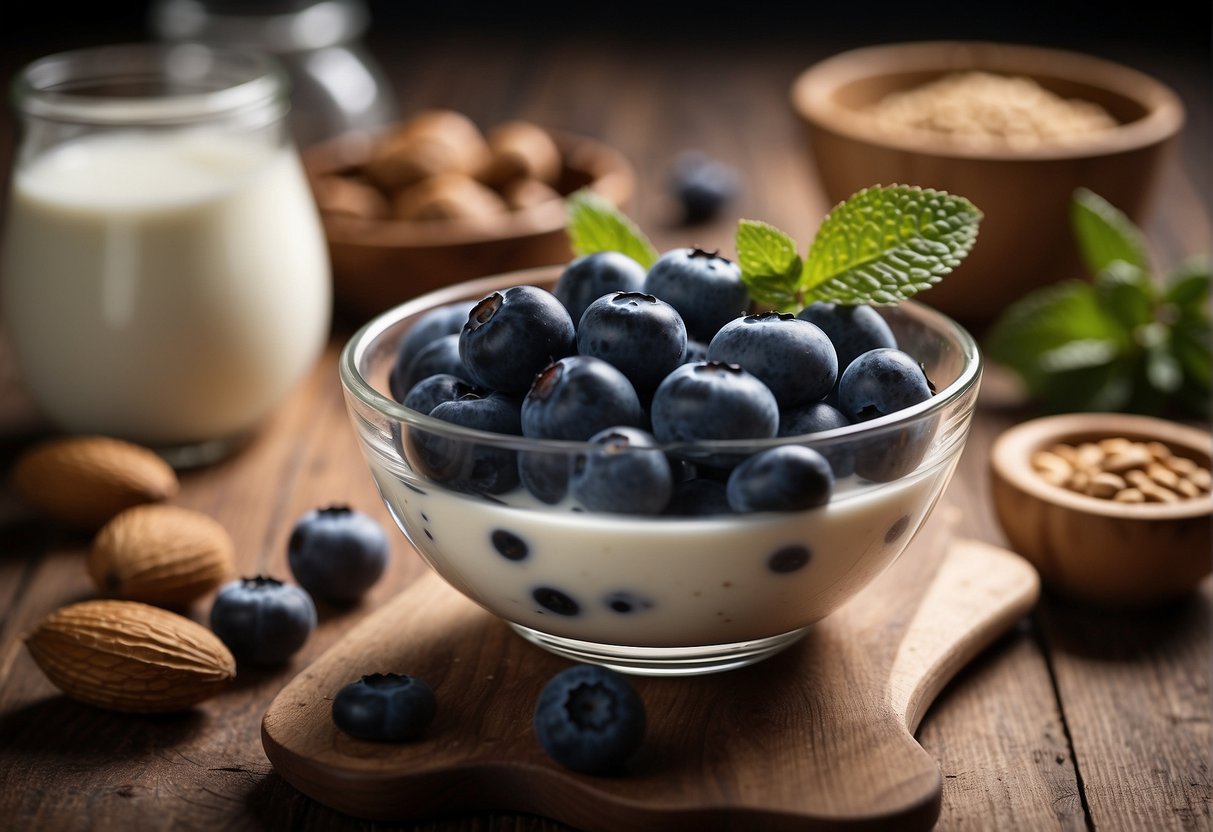
When I mix blueberries and almond milk to create smoothies or frozen treats, I’ve found a few tricks that ensure a great texture and flavor. If you’re anything like me, you’ll appreciate these straightforward tips for getting that perfect blend and serving it up just right. Now, let’s dive into some specifics.
Blending Techniques for Smooth Consistency
In my kitchen, achieving a smooth consistency is all about the blend. I start by adding the liquid first—this helps the blender blades move freely. For that velvety smooth texture, I use my Vitamix because it’s powerful and reliable. I’ll throw in my blueberries (fresh or frozen) with almond milk, and often a frozen banana to thicken the mix. Here’s a quick tip: start blending at a low speed and gradually move to a higher setting to ensure everything’s fully combined without overworking your blender.
Serving Suggestions
I love serving my blueberry and almond milk blends in a chilled glass, just to keep things cool and refreshing. To elevate my drink, I might add a sprig of mint or a swirl of honey. If it’s a smoothie bowl I’m after, I’ll pour it into a bowl and top it off with some bold granola, a few extra blueberries, and a drizzle of almond butter. Trust me, these little touches make all the difference.
Storage Solutions
When it comes to storage, smoothies are best enjoyed right away, but if I need to, I’ll keep them in an airtight container for up to 24 hours in the fridge. If you’ve prepped too much, pour the extra into an ice cube tray and freeze. Later, these blueberry-almond milk cubes can be popped right back into the blender—talk about a quick and easy smoothie hack! For longer storage, mix all your ingredients except the liquid in a freezer bag, label it with the prep time and total time, then freeze. When you’re ready, dump it in your blender, add almond milk, and you’re good to go.
Nutritional Breakdown
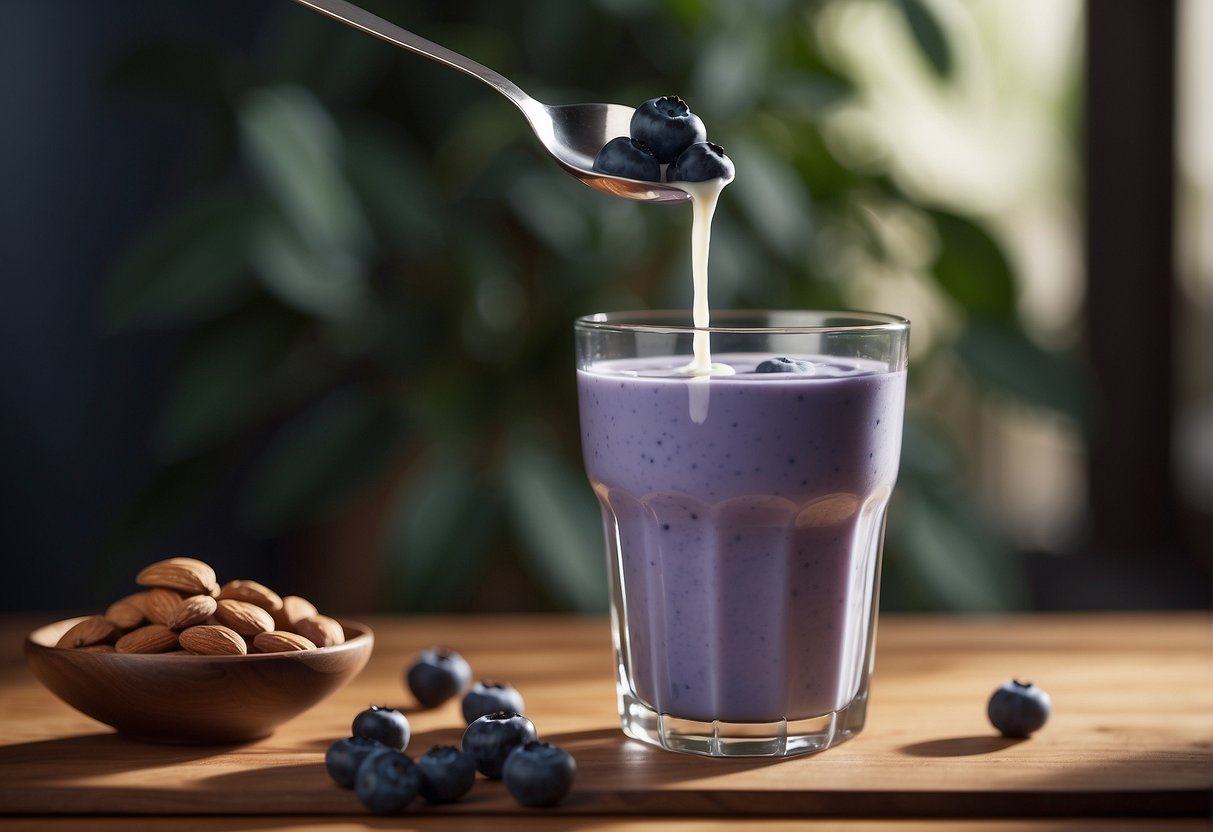
When I mix blueberries with almond milk, I’m creating a nutritious beverage that’s both refreshing and healthful. Blueberries are famously nutrient-dense, often labeled as a superfood due to their high levels of antioxidants, vitamins, and fiber. They are especially known for their vitamin C and potassium content, with the bonus of being relatively low in calories.
Almond milk complements these berries nicely as it’s a dairy-free, plant-based milk alternative that’s friendly for those following a gluten-free, paleo, or vegetarian diet. It’s typically lower in calories than cow’s milk and doesn’t contain cholesterol. What’s more, almond milk can be a good source of vitamin E and is often fortified with calcium and vitamin D.
Here’s a breakdown of their nutritional profile when combined:
Blueberries (1 cup)
- Calories: 84 kcal
- Protein: 1.1 g
- Fiber: 3.6 g
- Sodium: 1 mg
- Potassium: 114 mg
- Antioxidants: High (particularly anthocyanins)
Almond Milk (1 cup, unsweetened)
- Calories: 30-50 kcal (varies by brand)
- Protein: 1 g
- Fiber: 0-1 g
- Fat:
- Monounsaturated fat: 0.6 g
- Polyunsaturated fat: 0.2 g
- Vitamin E: 50% of the RDI
Striking a balance between low-calorie intake and a considerable energy boost, this blend provides me with essential nutrients while also harnessing the health benefits of blueberries. It’s a wholesome choice for a quick snack or part of a balanced breakfast.
Occasions for Blueberry and Almond Milk Smoothies
Blueberry and almond milk smoothies are versatile enough for any part of my day. Whether I’m looking for a quick morning meal, a boost after exercise, or a sweet treat without the guilt, mixing blueberries and almond milk definitely has me covered.
Breakfast Boost
I often kick off my mornings with a blueberry smoothie as a healthy breakfast option. It’s simple to blend up and packed with antioxidants — a real plus to get me going. Tossing in some oats or a spoonful of almond butter gives me that extra energy boost to start my day strong.
Post-Workout Snacks
After hitting the gym, I need a snack that’ll help me recover, and a blueberry smoothie hits the spot. Blueberries are antioxidant-rich, and when mixed with almond milk, they create a refreshing, protein-packed drink that’s just right for muscle recovery.
Healthy Desserts
For me, dessert also needs to be guilt-free occasionally. That’s where a blueberry smoothie bowl for lunch or a nutrient-packed snack enters the scene. I make it thicker by adding less almond milk and more frozen blueberries, then top it with a sprinkle of chia seeds — it’s like ice cream, but healthier!
Frequently Asked Questions
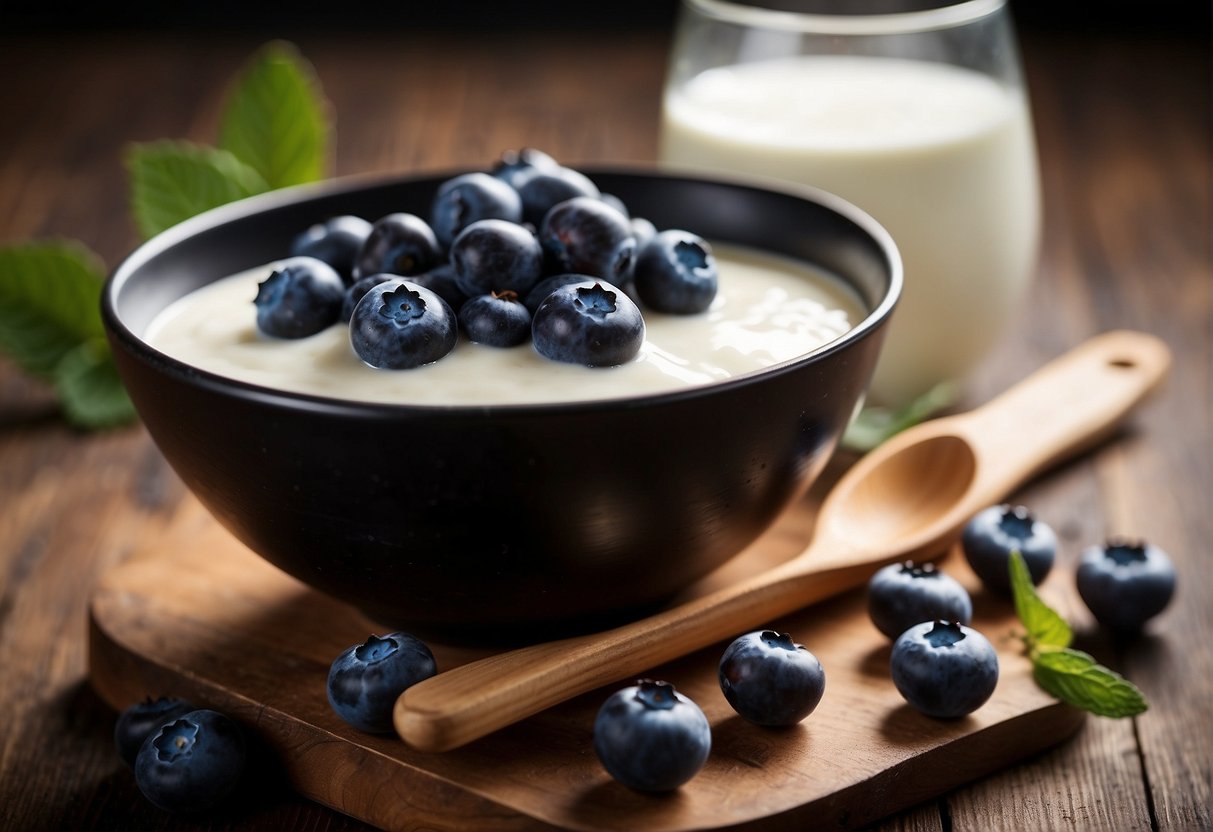
I’ve gathered common questions about mixing blueberries and almond milk, especially when making smoothies. Here, I’ll give you clear, straightforward answers based on reliable information and personal experience.
What are the health benefits of a blueberry almond milk smoothie?
Blueberries are known for their high antioxidant content, which supports the immune system and overall health. Almond milk provides a dairy-free alternative rich in vitamin E, and together, they make a nutrient-packed smoothie.
How do you make a blueberry almond milk smoothie without banana?
Easily! Just combine blueberries, almond milk, a bit of sweetener like honey if desired, and ice in a blender. Blend until smooth for a creamy banana-free blueberry smoothie.
Can almond milk smoothies help with weight loss?
Almond milk is generally lower in calories than regular dairy milk, which can be a plus for weight management. When combined with low-calorie fruits like blueberries, almond milk smoothies can be a smart choice for weight loss when part of a balanced diet.
What’s the calorie count in a blueberry almond milk smoothie?
The calorie count can vary, but a basic smoothie with just blueberries and almond milk typically has around 150-250 calories per serving, depending on the quantities used. It’s a relatively low-calorie option that doesn’t skimp on flavor.
Does almond milk or regular milk make a better smoothie base?
That depends on personal preference and dietary needs. Almond milk is dairy-free and usually lower in calories, while regular milk is higher in protein. Both can create a delicious smoothie base, so it’s really about what works best for you.
Why might blueberries cause almond milk to curdle?
Acidity in blueberries can sometimes react with the almond milk and cause it to curdle. This is more likely if the almond milk is at room temperature. To prevent this, use cold almond milk and consume the smoothie immediately after blending.