
Health Benefits and Nutritional Value
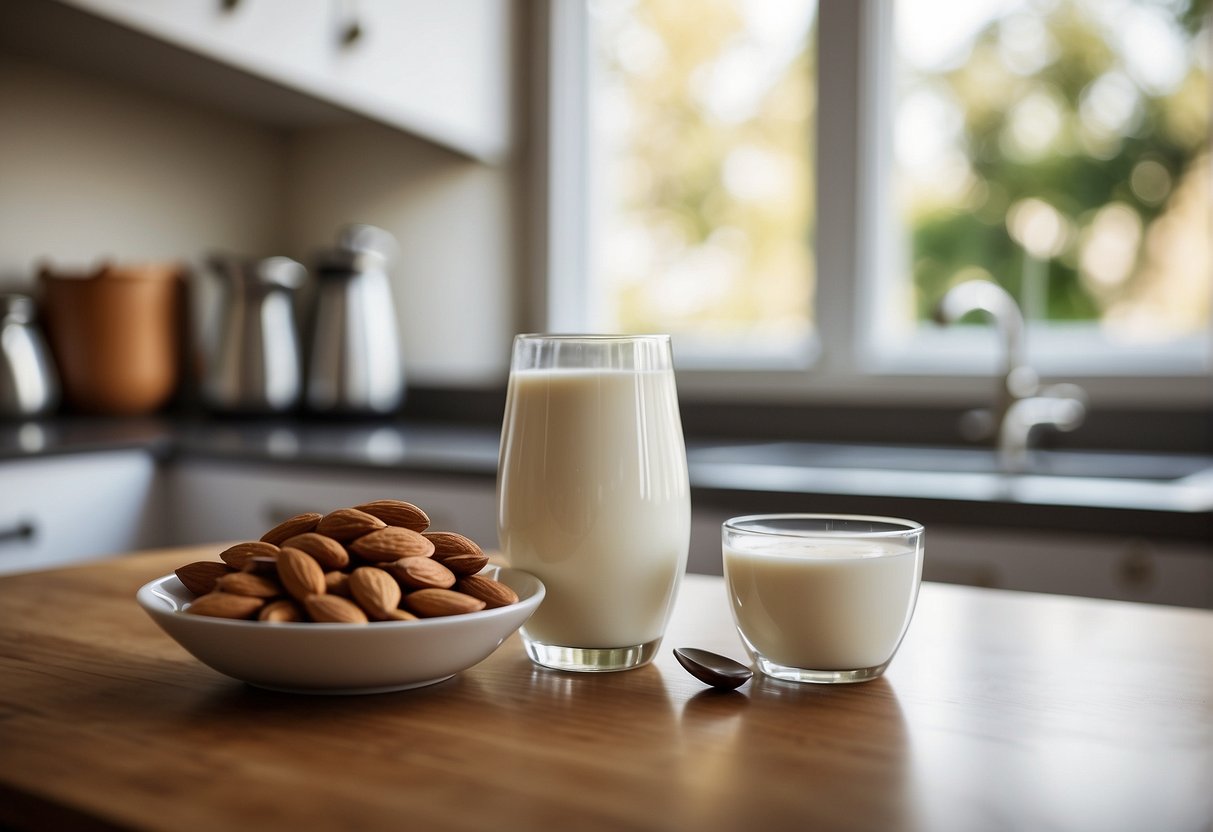
When I think about mixing almond milk and yogurt, I consider both the health benefits and the nutritional value this combination brings to the table. This duo offers a tasty way to enjoy the advantages of probiotics, along with a favorable calorie and protein profile.
Probiotic Content and Digestive Health
Almond milk yogurt teems with probiotics. I find that these beneficial bacteria are fantastic for digestion and can help bolster my immune system. My gut health gets a boost from the presence of these microorganisms, helping maintain a healthy digestive environment. Some studies, like one featured on Healthline, suggest that plant-based yogurts can provide a nutritious profile and may be easier on the stomach for those with dairy sensitivities.
Caloric Information and Protein Content
As far as calories are concerned, almond milk yogurt usually offers a lighter alternative. It typically contains fewer calories than dairy-based yogurts, which is something I keep in mind for my calorie-conscious friends. However, it’s important to note that it often has less protein; although, companies are finding ways to fortify it. Despite this, almond milk yogurt can still be a healthy addition to my diet, especially when I’m looking for something lower in sugar and higher in fiber. For more specifics on the nutrient comparisons, Verywell Health provides a good rundown. As for calcium, many almond milk yogurts are fortified, making them a good source of this essential mineral for bone health.
Making Almond Milk Yogurt at Home
Making almond milk yogurt at home is a rewarding process that allows for customization and ensures a vegan-friendly result. Here’s how I go about creating my homemade almond milk yogurt, starting with the choice of ingredients.
Choosing Ingredients and Alternatives
For my homemade almond milk yogurt, I ensure I have high-quality almonds since these are the foundation of the milk and thus the yogurt. Sometimes, I use store-bought almond milk, but I prefer homemade for the fresher taste and control over the ingredients. If I’m aiming for a thicker yogurt consistency, I opt for thickeners such as agar-agar or gelatin (although it’s not vegan).
Preparing Homemade Almond Milk
To start with homemade almond milk, I soak the almonds overnight, drain them, and blend with fresh water. The ratio I follow is typically 1 cup of almonds to 4 cups of water. After blending, I strain the mixture using a cheesecloth or a fine-mesh sieve to achieve a smooth liquid, which is my almond milk base.
Fermenting with the Right Starter Culture
Fermentation is crucial, and for that, I need the right starter culture. I’ve used both probiotic capsules and yogurt culture packets, but my go-to is usually a high-quality yogurt starter culture since it’s specifically designed for this purpose. After heating the milk to just the right temperature, around 110°F, I add the culture, mix it well, and pour the mixture into jars to ferment in a warm place. The waiting game begins here – letting it ferment for 24 to 48 hours until I get the perfect tanginess and texture.
Texture and Consistency
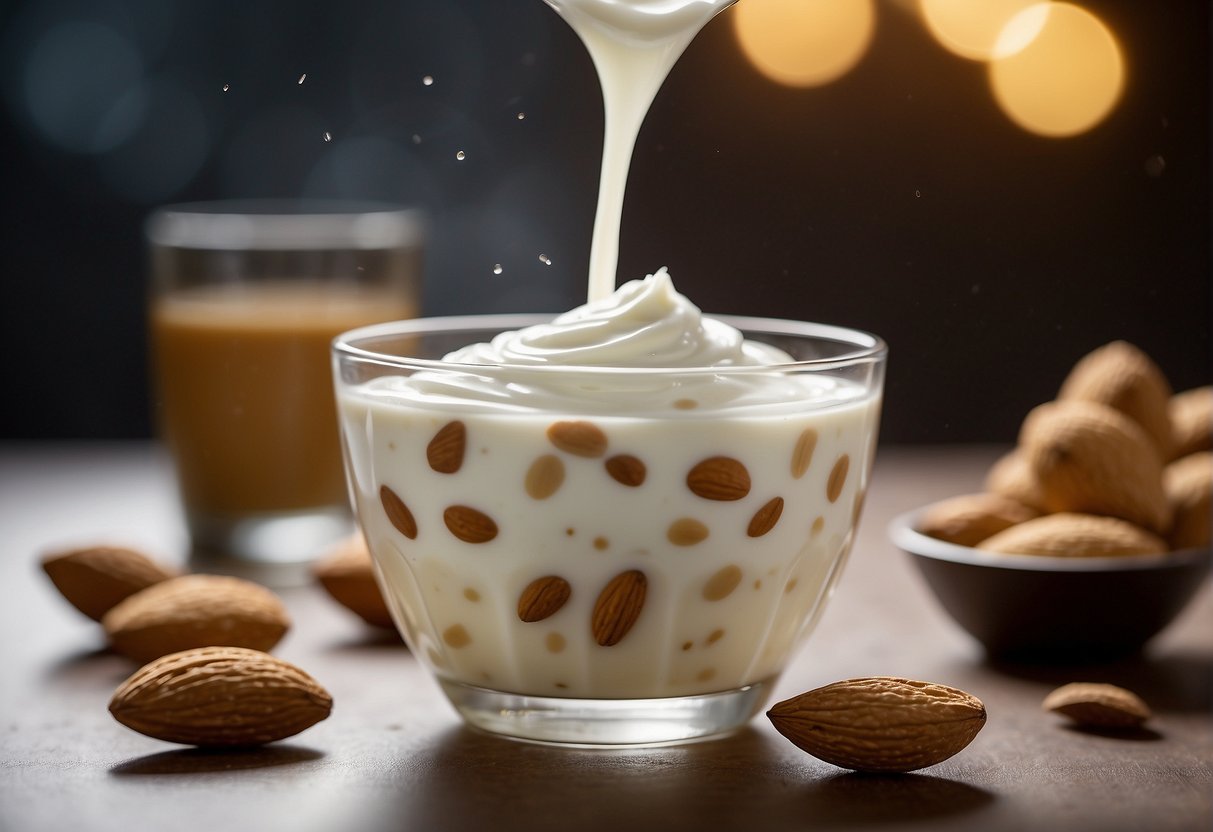
When I make almond milk yogurt, the texture and consistency can be a bit of a wildcard. I aim for that creamy, thick outcome, just like traditional dairy yogurt. But, it’s crucial to get a few things right to avoid a runny disappointment.
Achieving the Desired Thickness
For me, getting that perfect “spoonable” thickness depends on patience and a bit of trial and error. The fermentation process for almond milk yogurt is crucial. I typically let it ferment for 8 to 24 hours, tasting periodically to hit that sweet spot between too tangy and just right. The longer it ferments, usually, the thicker and tangier it gets.
The Role of Thickeners in Yogurt Making
Thickeners come to the rescue if my almond milk yogurt is too thin. A variety of options work well:
- Agar: A plant-based gelatin substitute that sets things up nicely with a smooth finish.
- Arrowroot powder: I’ve found this gives a silky texture, plus it’s gluten-free.
- Cornstarch: A classic thickener, though it can sometimes lead to a slightly “gloopy” consistency.
- Gelatin: For non-vegan options, gelatin is strong but can be a bit tricky to work with.
- Xanthan Gum: A little goes a long way to thicken and stabilize the yogurt.
- Pectin: Common in jam, pectin is a natural way to add body to yogurt.
Each of these thickeners has its own quirks, like how arrowroot powder needs to be incorporated correctly for the best results. Some thickeners may slightly alter the taste, so I use them sparingly and always taste as I go.
Flavor Enhancements and Variations
I’ve found that mixing almond milk and yogurt can really elevate your taste experience, especially with a few twists. Here are some of my favorite ways to add punch to almond milk yogurt.
Combining Fruits and Natural Sweeteners
I love the versatility of fruits and natural sweeteners when it comes to jazzing up almond milk yogurt. Here’s how I do it:
- Fruit Puree: I blend fresh or frozen fruits into a puree and gently fold it into the yogurt for a natural fruit flavor. Berries, mangoes, and peaches are my go-tos.
- Sweeteners: To satisfy my sweet tooth without going overboard, I often drizzle a bit of maple syrup or honey. These not only sweeten the yogurt but also add their own unique flavors.
- Jams and Preserves: Sometimes, I stir in a spoonful of my favorite jam for a quick flavor boost.
Creative Uses for Almond Milk Yogurt in Recipes
Almond milk yogurt isn’t just for snacking. It’s also fantastic in various recipes, from smoothies to baking. Take a peek at what I often do:
- Smoothies: A scoop of almond milk yogurt adds creaminess and protein to my morning smoothie.
- Granola Pairing: I often top my yogurt with homemade granola for a crunchy texture. Mixing granola with fruit makes for a hearty breakfast or snack.
Cooking with yogurt might sound odd, but it works wonders:
- Dressings: Whisking almond milk yogurt into dressings gives my salads a creamy touch without being too heavy.
- Baking: When I’m in the mood for baking, I substitute almond milk yogurt for some of the fats in recipes, which makes for moist and tender baked goods.
Using almond milk yogurt can transform the flavor profile of your dishes, whether you’re aiming for sweetness, creaminess, or just a touch of tang.
Storing and Serving Homemade Yogurt
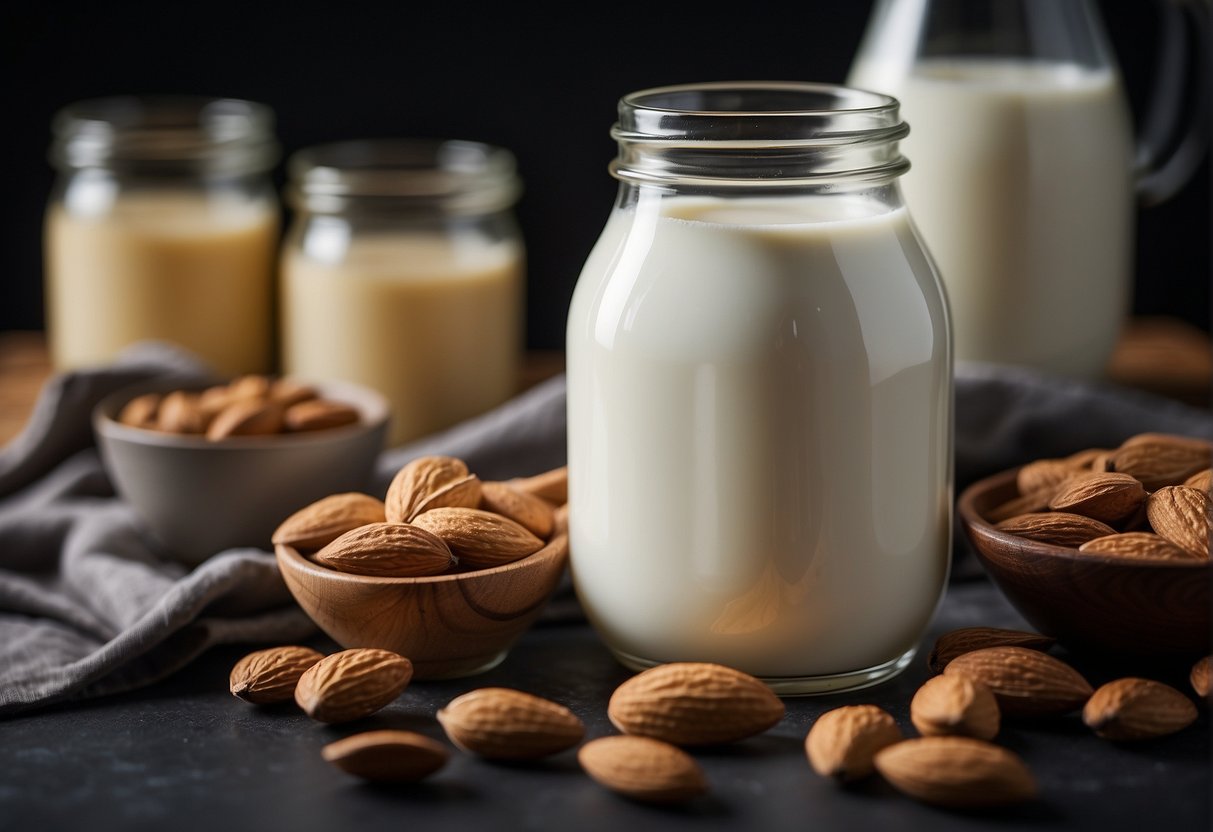
When I make homemade yogurt, especially when using almond milk, keeping it fresh and tasty is crucial. Here are some tips and tricks I’ve learned for storing your yogurt properly and serving it in delicious ways.
Refrigeration and Shelf Life
Once my homemade almond milk yogurt is ready, I always refrigerate it immediately. I find that storing it in glass jars not only helps to keep it fresh but also makes for a charming presentation. Homemade yogurt typically keeps well in the refrigerator for about 5-7 days, although the exact shelf life can vary based on the incubation time and specific ingredients. If the yogurt seems to be separating or developing a sour smell before this time, it’s a sign that it’s going bad and should be discarded.
To extend its life further, I sometimes freeze portions of the yogurt in ice cube trays — this works great for smoothies or as a cool snack on a hot day. Once frozen, I transfer the cubes to a bag or container for more compact storage. Keep in mind that freezing might alter the texture a bit, but I find it still tastes great.
Tips for Serving and Pairing with Other Foods
When it comes time to serve my homemade almond milk yogurt, I like to get creative. For breakfast, a dollop of yogurt on top of granola or mixed with fresh fruit is a classic choice. A drizzle of honey or a sprinkle of cinnamon can add some lovely flavors, too.
For savory options, my yogurt can be a tangy base for a dressing or a substitute for sour cream. I love pairing it with herbs for a dip or spooning it atop spicy dishes to cool them down. It’s also delicious stirred into soups for added creaminess without the dairy.
To enhance the meal, I consider what I’m serving the yogurt with. Lighter, citrusy flavors pair well in the morning, while robust, spicy dishes work well with a scoop of yogurt to level out the flavors.
Frequently Asked Questions
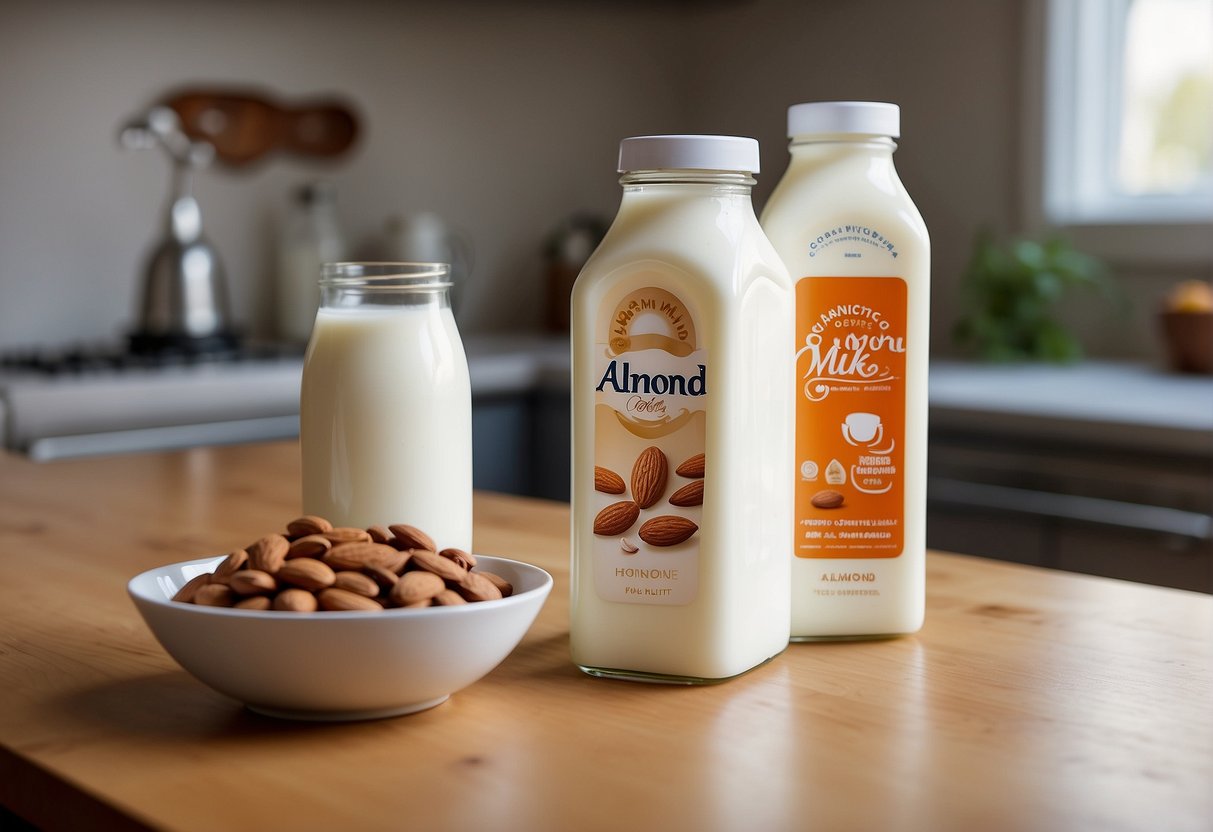
When it comes to making non-dairy yogurt, I’ve found that a lot of people have some common questions. Let’s get right to those and clear up any confusion.
What’s the best non-dairy milk to use for making yogurt?
In my experience, almond milk is a great option for yogurt-making due to its mild flavor and creamy texture. However, soy and coconut milk are also popular choices that can yield a good-tasting yogurt.
Can you get a good protein content with almond milk yogurt?
Yes, although almond milk naturally contains less protein than dairy milk, many commercial almond milk brands are fortified with extra protein. If you make almond milk yogurt at home, consider adding a protein-rich thickener like chia seeds for an extra boost.
How do you make two-ingredient almond milk yogurt?
My go-to method involves heating almond milk to about 110°F and then mixing in a yogurt starter culture or a high-quality probiotic capsule. This straightforward process introduces beneficial bacteria necessary to thicken the almond milk and turn it into yogurt.
Are there benefits to eating almond milk yogurt over traditional yogurts?
Sure, almond milk yogurt offers a lactose-free alternative, making it a suitable option for lactose intolerance or those following a vegan diet. It’s also generally lower in calories and can be beneficial for those managing their weight.
What’s a simple almond milk yogurt recipe with probiotics?
I start with unsweetened almond milk and heat it gently. Next, I whisk in a couple tablespoons of a high-quality probiotic before letting it ferment for several hours. This simple recipe results in a yogurt that’s packed with gut-friendly bacteria.
How does the taste of almond milk yogurt compare to regular yogurt?
Almond milk yogurt typically has a more subdued, less tangy taste than regular yogurt. I’ve found that the flavor can be enhanced with the addition of sweeteners, extracts, or fruit, depending on personal preference.