
Almond Milk and Mango Combination Basics
When I’m in the kitchen, whipping up a smoothie, I love reaching for almond milk and mango. It’s like they’re best pals that make my taste buds dance. Let me break it down for you. Almond milk is my go-to for a dairy-free liquid base; it’s light and has a nutty touch that doesn’t overpower other flavors.
Now, let’s talk mango—nature’s candy, right? I use fresh mango when they’re in season, all juicy and sweet. But hey, don’t fret if you can’t find good ones. Frozen mango is a champ in smoothies, giving them a creamy texture and a cool chill.
Here’s a quick rundown on including them in your concoctions:
- Almond Milk: Start with a cup of almond milk as your liquid base.
- Mango: Toss in about one cup of either fresh or frozen mango chunks.
It’s pretty straightforward, but remember to adjust the ratios to your liking. Sometimes I pop in a bit more mango for sweetness or almond milk for a thinner consistency. And trust me, there’s no wrong way to blend these two up. Whether you’re after the taste or some vitamin action, this combo’s a keeper. Happy blending!
Health and Nutritional Benefits
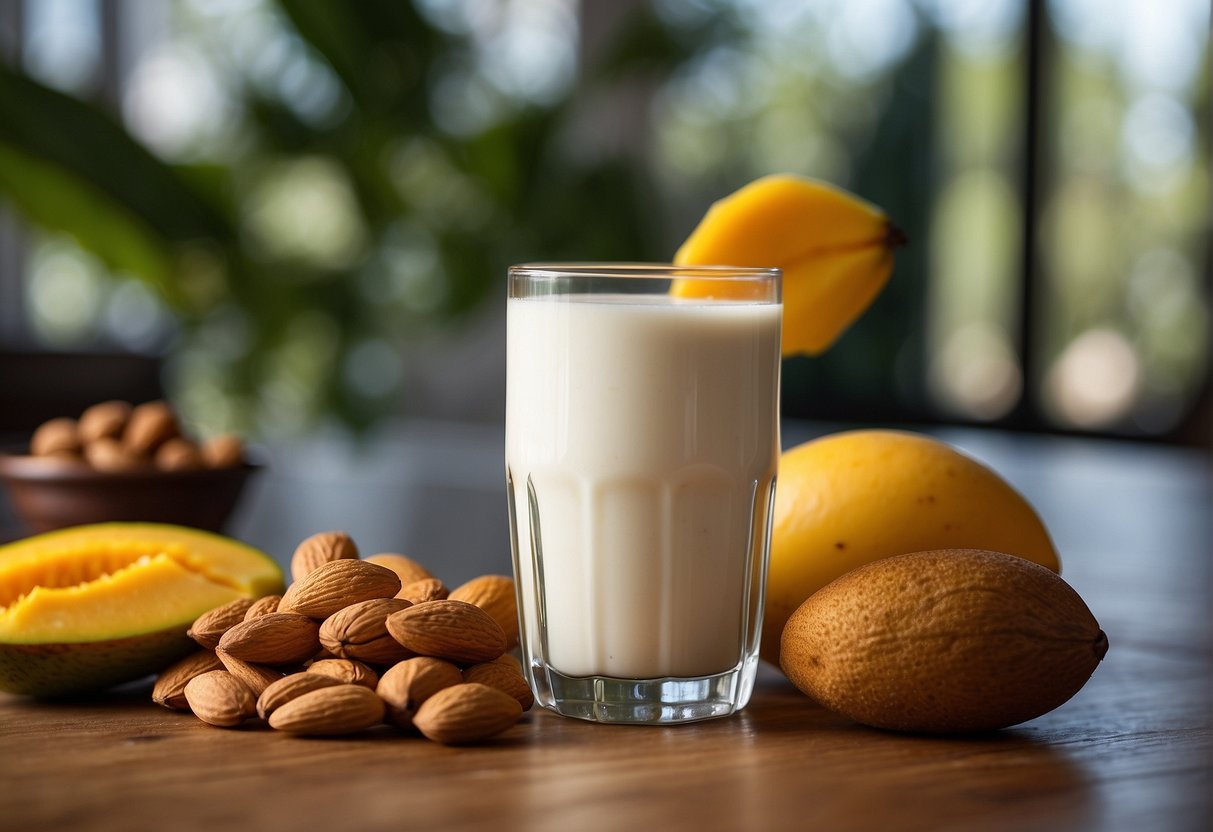
When I mix almond milk and mango, I’m creating a tasty blend that’s full of nutritional benefits. Both almond milk and mango are packed with essential vitamins and minerals, and together, they offer a refreshing dose of nutrients.
Vitamins and Minerals Content
Almond milk is a fantastic source of added vitamins and minerals such as vitamin E, calcium, and often vitamin D, as these are commonly fortified in commercial brands. You can check out some specifics on its content here. As for mango, it’s loaded with vitamin C, which is crucial for immune health, and provides a good dash of potassium and iron, which support a range of bodily functions. Mangoes also bring their own set of vitamins, like vitamin A and folate, which are brilliant for eye health and metabolism, respectively.
Dietary Fiber and Protein
Mixing mango with almond milk doesn’t just tantalize my taste buds; it gives me a boost of dietary fiber thanks to the mango. This nutritional powerhouse contributes to a healthy digestive system and helps me feel full for longer. Although almond milk isn’t a protein giant, it does contain about 1 gram of protein per cup, which can help to a small degree. If you’re curious about the protein aspect of almond milk, take a look here. Worth mentioning, though, is that I can easily add a scoop of protein powder to this mix if I’m after a more substantial protein hit.
Creating the Perfect Mango Smoothie
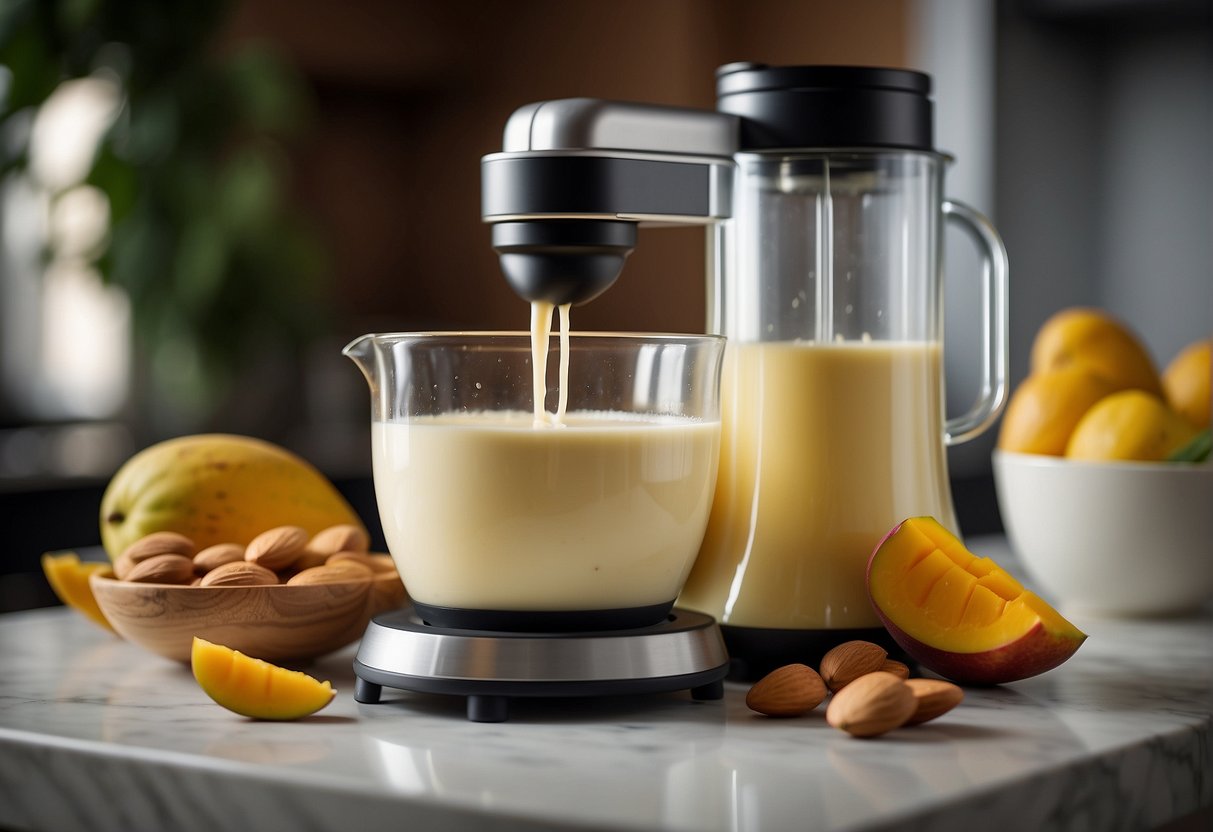
When I make a mango smoothie, I focus on fresh ingredients and the right blending technique to achieve that creamy, dreamy texture. Let’s dive into how I select the perfect components and my go-to blending strategies for the ultimate mango smoothie experience.
Smoothie Ingredient Selection
Mangoes: The star of the show is obviously mangoes. I always aim for ripe, juicy mangoes because they provide the best flavor and sweetness. Whether I opt for fresh mangoes or, for convenience, two cups of frozen mango, I make sure they’re of top quality.
Base Liquid: My choice of liquid is typically unsweetened almond milk due to its light texture and how well it complements the mango. However, variations with coconut milk can add a tropical twist, and it’s a great option if I’m going for a vegan or dairy-free smoothie.
Add-ins:
- Bananas: A small frozen banana gives the smoothie a thicker consistency and a natural sweetness. I use a whole banana if I want a pronounced banana flavor.
- Berries and Other Fruits: Sometimes I’ll throw in a handful of strawberries for a vibrant strawberry mango smoothie, or add different berries if I’m feeling experimental.
- Greens: For an extra health kick, a handful of greens like spinach or kale can be tossed in. They’re almost tasteless behind all the fruity goodness.
Blending Techniques
The goal with blending is to create a smooth, lump-free smoothie. I start by adding the liquid base into the blender first—this helps to get a smoother blend without taxing the blades too much. I then add in the softer, easy-to-blend ingredients like banana pieces or any greens I might be using.
I blend on high speed until everything looks well incorporated. If it’s too thick, I’ll add a bit more almond milk. Too thin? I toss a few more mango chunks in. The trick is to blend in stages for the creamiest mango banana smoothie, adding the hardest to blend items last. If the blender struggles, a gentle stir helps move things along without adding excess liquid.
That’s it—a no-fuss approach to whipping up a fruit-filled, delightful mango smoothie.
Alternative Recipes and Variations
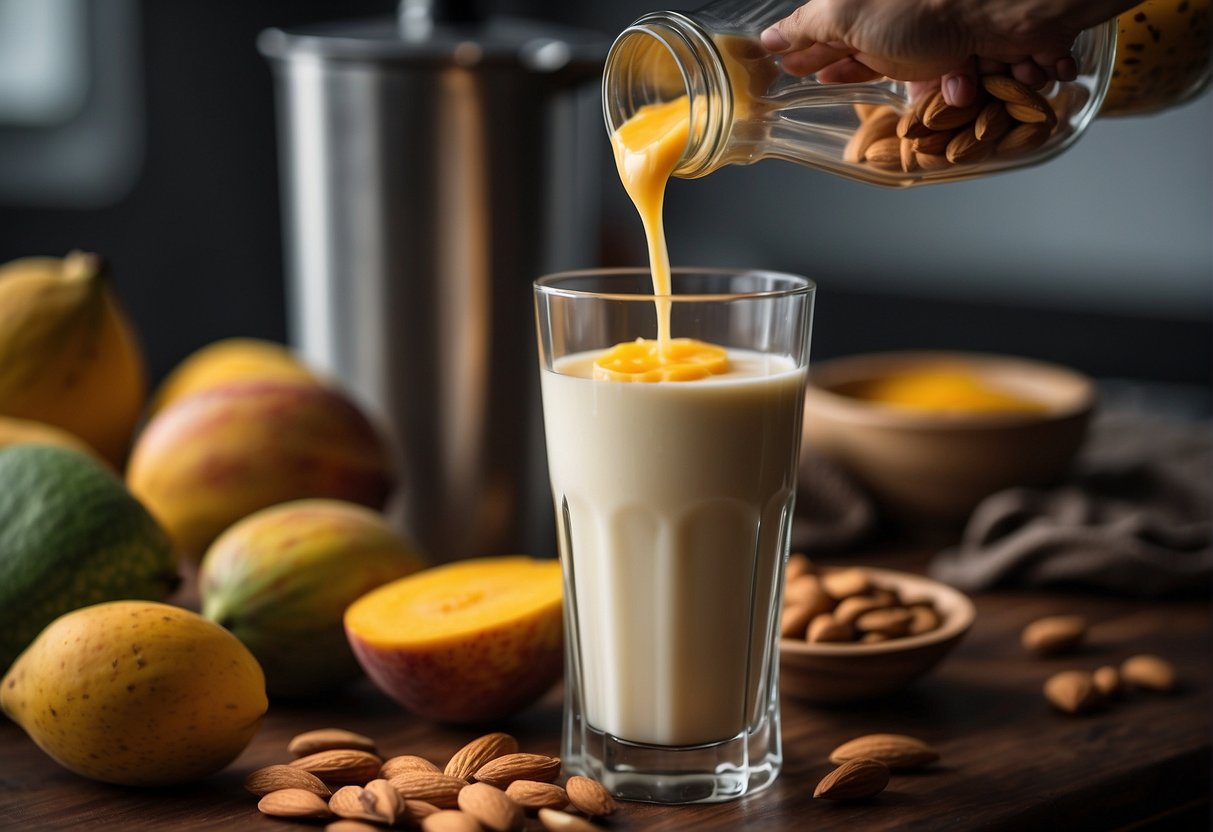
When I’m in the mood for something creamy and fruity, I love to mix almond milk with mango. It’s a combo that works really well for both smoothies and ice creams, providing a dairy-free base that complements the sweetness of mango. Let me share some tweaks I’ve tried that you might enjoy.
Tropical Flavor Enhancements
For that beachy vibe, I throw in extra tropical fruits like pineapple or papaya into my almond milk and mango mix. A squeeze of lime juice adds a nice zesty kick. I find the addition of coconut flakes or a splash of coconut milk gives it an exotic twist, making it not just a drink but a mini-vacation in a glass. If you’re looking for a refreshing healthy smoothie recipe, a tropical almond milk and mango smoothie with these add-ins is my go-to.
Protein-Packed Options
Morning workouts demand a breakfast smoothie that packs a punch. That’s why I spike my mango and almond milk smoothies with vanilla protein powder for muscle recovery. Adding a tablespoon of chia seeds gives me essential omega-3s and fiber. If I’m looking for more flavor, a handful of blueberries or some strawberry banana action sets me right up. And let me tell you, a vegan shake with these ingredients is more than just a protein boost—it’s downright delicious. If you’re interested in such a combination, check this idea for a 3-ingredient mango smoothie which can be easily fortified with your protein powder of choice.
Frequently Asked Questions
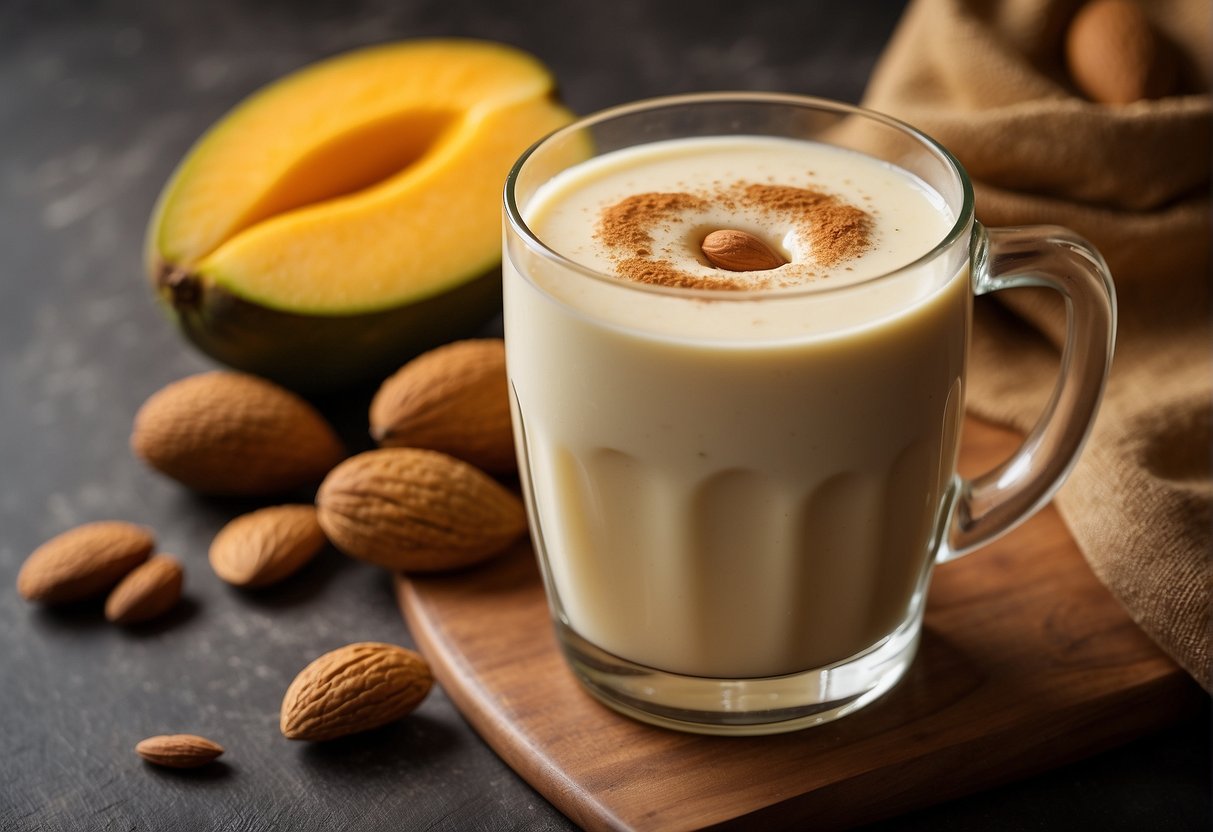
When making a mango smoothie, I love using almond milk for its creamy texture and subtle nutty flavor. It lightens up the recipe while still providing a rich taste. Here’s how you can do it too.
What’s the best way to incorporate almond milk into a mango smoothie recipe?
To best incorporate almond milk into a mango smoothie, I find blending the milk with ripe mango chunks and a touch of honey or another sweetener creates a deliciously creamy consistency. Additionally, using almond milk in cooking can provide guidance on avoiding separation or curdling.
Is adding almond milk to a mango smoothie a good idea for weight loss?
Yes, adding almond milk can be a good idea for weight loss since it’s typically lower in calories compared to whole dairy milk. However, for a weight loss focused smoothie, make sure to watch the overall calorie content of all the ingredients you’re adding.
How does almond milk affect the calorie count of a mango smoothie?
Almond milk generally has fewer calories than dairy milk, so using it in a mango smoothie can lower the overall calorie count. The impact on calorie count also depends on whether you use sweetened or unsweetened almond milk.
Can you share an easy mango smoothie recipe that uses almond milk?
Sure, for a quick mango smoothie, blend together 1 ripe mango, 1 cup of almond milk, a handful of ice cubes, and a bit of honey if needed. It’s simple and delicious with almond milk’s versatility.
What are the benefits of including almond milk in my mango smoothie?
Including almond milk in your mango smoothie adds calcium and vitamins D and E, which are often fortified in commercial almond milk. Plus, it’s dairy-free and vegan-friendly, making for a more inclusive beverage choice.
What other fruits pair nicely with mango in a smoothie?
Berries, particularly strawberries, create a delightful combination with mango in a smoothie. The strawberry mango smoothie is a testament to this perfect pairing. Bananas are also a great choice to add creaminess and depth of flavor.