
Kale and Avocado Salad Basics
When I make a kale and avocado salad, I focus on fresh ingredients and simple preparation techniques to create a vibrant side dish or a wholesome meal. Here’s how I get my kale and avocado salad just right.
Selecting Ingredients
- Kale: For texture and flavor, I choose between curly kale and lacinato kale, also known as dinosaur kale. I look for fresh, organic leaves that are dark green and without any yellow spots.
- Avocado: Ripe avocados are essential—soft to the touch but not mushy. They add creaminess and are packed with healthy fats.
- Lemon Juice: A squeeze of fresh lemon juice not only adds a bright zing to the salad but also helps in keeping the avocados vibrant.
- Olive Oil: A drizzle of good quality extra virgin olive oil can make all the difference. It adds a smooth finish and healthy monounsaturated fats.
- Seasoning: Salt and freshly ground pepper are key for bringing out the flavors of the kale and avocado.
Preparation Techniques
- Massaging Kale: Before tossing it with other ingredients, I always massage the kale leaves with a bit of olive oil and lemon juice until they are tender and darkened; this makes them more palatable and easier to digest.
- Combining Ingredients: I carefully fold diced avocado into the massaged kale to prevent mashing it too much. The avocado should be bite-sized and evenly distributed.
By paying attention to the quality of the kale and avocado and using the right techniques to prepare them, I find that my salad turns out deliciously healthy every time.
Enhancing Flavors and Nutrition
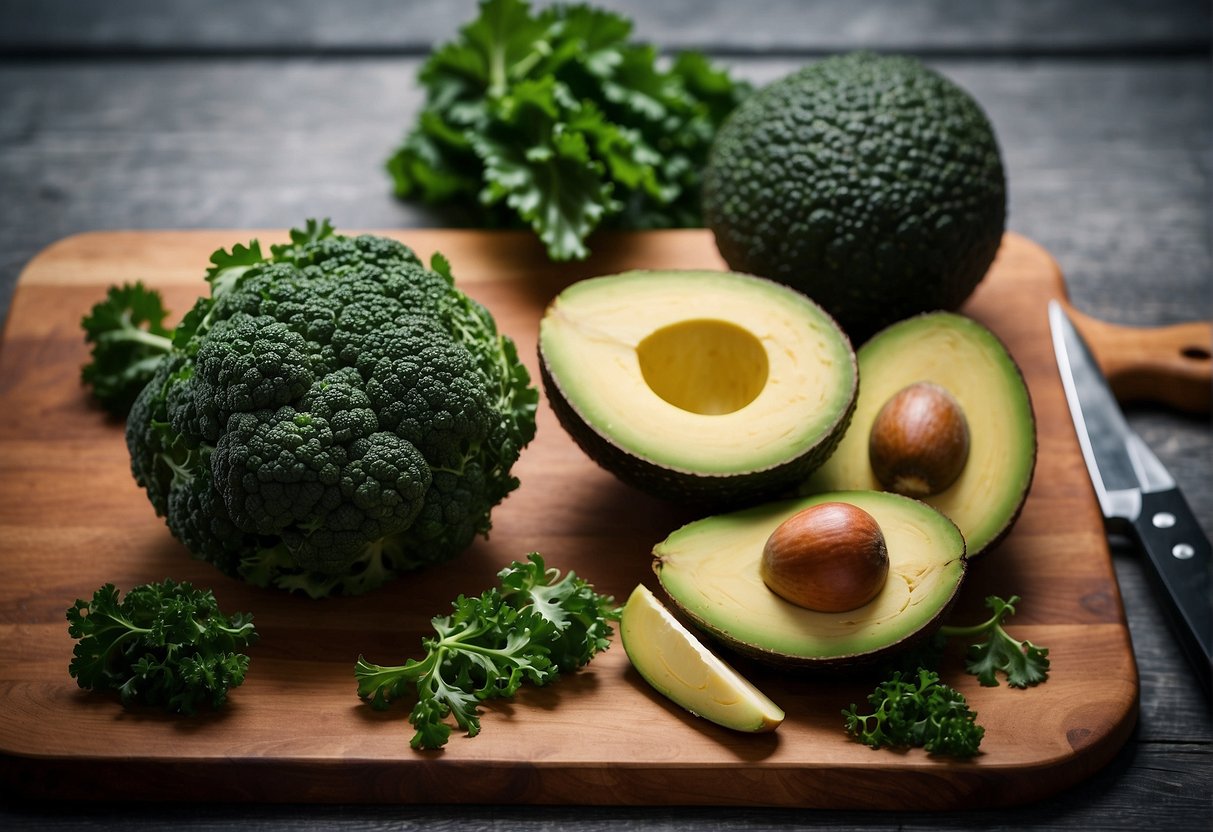
I love combining kale and avocado because it not only creates a dish rich in flavors but also boosts its nutritional content. It’s a super easy way to get more fiber, vitamins, and healthy fats onto my plate.
Choosing Complementary Add-Ins
When I mix kale and avocado, I look for add-ins that’ll complement the creamy texture and earthy taste. Lemon juice works wonderfully to add brightness, while something like red onion gives a nice sharp contrast. For crunch, I toss in a handful of almonds or sunflower seeds, both of which are also excellent sources of protein and calcium.
Tomatoes are another go-to for me; they’re not just juicy and delicious, but they come packed with vitamin A and lycopene. And if I’m looking for something more substantial, I’ll add some cooked quinoa—it’s a fantastic vegetarian protein source and gives the salad an amazing texture.
Dressing Variations
I believe a great dressing can totally transform a salad. I usually start with a base of lime juice or lemon to keep it fresh and zesty. For a creamy twist without the dairy, I turn to avocado itself, mashing it with a little garlic and black pepper for a simple yet flavorful dressing. Sometimes I add chopped cilantro for some herby zest—it’s nutritious and gives the salad a vibrant kick.
If I want to get fancy, I whisk together some olive oil with lemon juice, and perhaps a touch of balsamic vinegar and mustard. These ingredients emulsify beautifully with the avocado’s healthy fats, bringing out the flavors and making every bite a delight.
Special Diet Adaptations
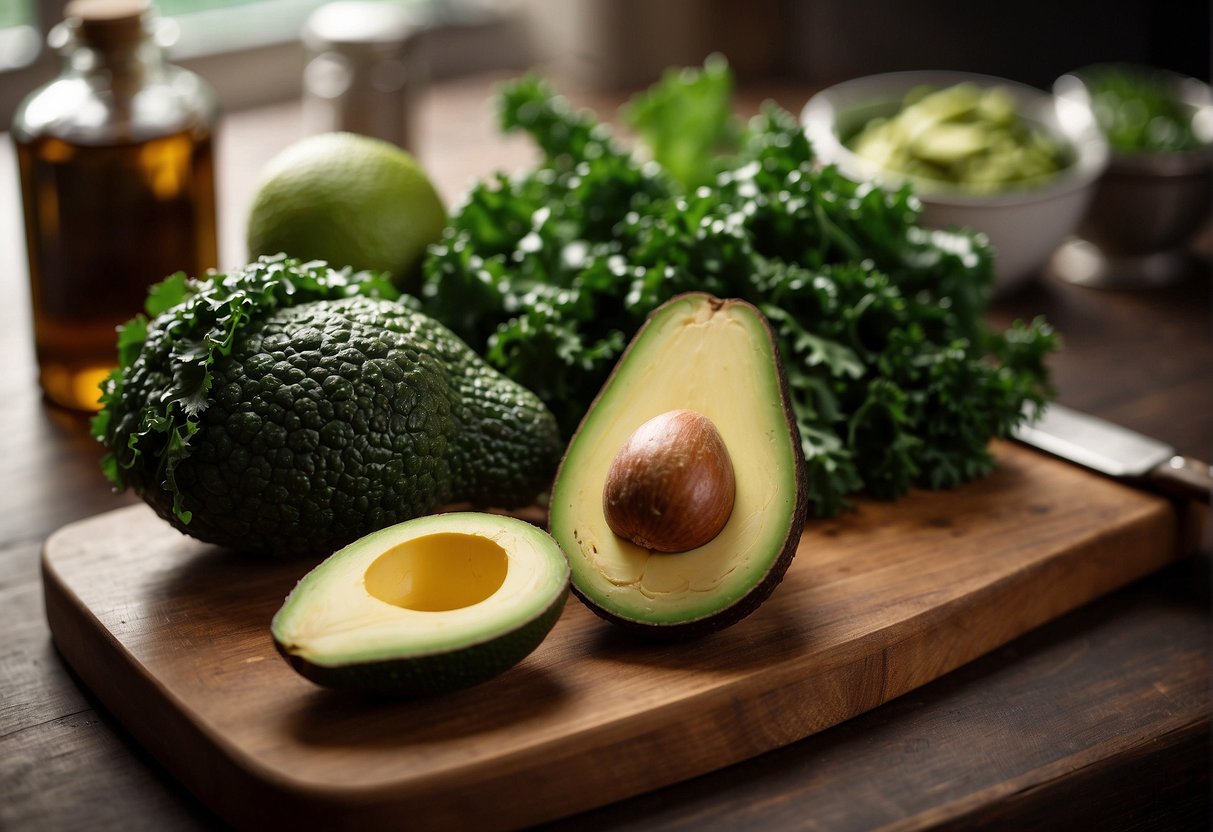
When I’m whipping up a kale and avocado salad, I always consider how I can adapt it to different special diets. Whether it’s ensuring the dish is low-carb for my keto friends or making a vegan version that’s just as delicious, there are easy tweaks to make everyone happy.
Keto and Low-Carb Options
For a keto-friendly twist, I focus on keeping the carb count low. Kale is a fantastic choice because it’s naturally low in carbs and high in nutrients. I swap out any high-carb ingredients for those better suited to a keto diet. Here’s what I do:
- Replace sugary dressings with a homemade mix of olive oil, lemon juice, and a touch of dijon mustard.
- Add more fats with extra avocado or by sprinkling on some nuts or seeds, like pumpkin or sunflower seeds.
- Protein boost comes from grilled chicken, beef, or fatty fish, like salmon.
Vegan Alternatives
I have plenty of friends who are vegan, so adapting my kale avocado salad for them is a no-brainer. Here’s what I keep in mind:
- Dressing: I use plant-based yogurts or hummus as a base for a creamy dressing.
- Cheese: It’s out, of course. Nutritional yeast or diced tofu can add a cheesy flavor or extra protein.
- Croutons: I make sure they’re made from vegan bread and skip using butter, opting for olive oil instead.
Both of these adaptations make it easy to enjoy a scrumptious kale avocado salad, no matter the dietary restrictions on the guest list.
Practical Tips for Kale and Avocado Salad
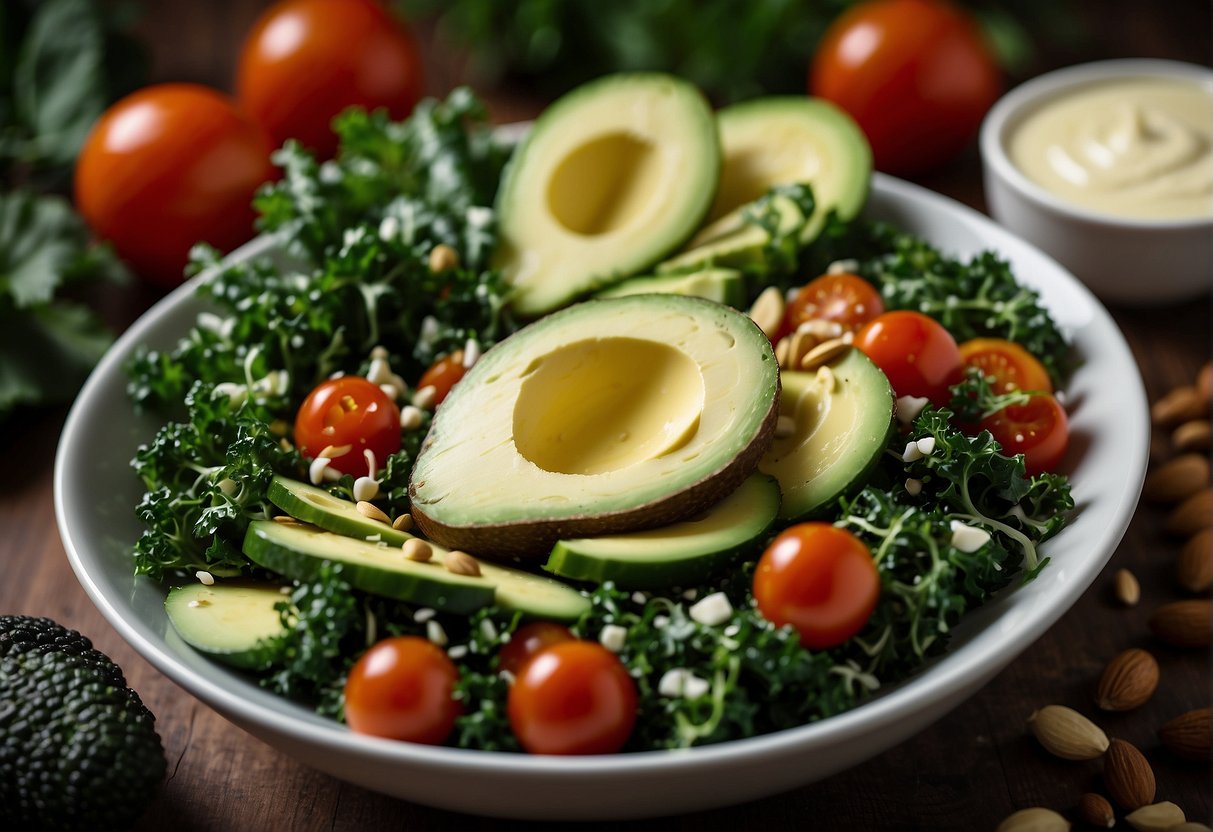
When I make kale and avocado salad, I’ve found a few tricks that not only maximize flavor but also help with keeping leftovers fresh. Since salads can be finicky after a day or so, knowing how to store them can make a big difference.
Making the Most of Leftovers
I love making a big batch of massaged kale salad to last through the week. It’s one of those rare salads that can still taste great the next day. After massaging my kale with a bit of citrus juice, such as lemon or lime, not only does the acid soften the leaves, but it also helps to keep the salad vibrant and less bitter. If I’ve accidentally gone overboard and made too much, I’ll add a fresh avocado only to the portion I’m about to eat. This way, the avocado doesn’t turn brown in the salad, and I can enjoy creamy avocado with my greens each time.
Storing Suggestions
For storing, I’ll pop the massaged kale into a sealed container and stash it in the fridge. This smart move keeps the leaves crispy and fresh for up to a few days. Avocados, however, are a different story; they require special attention. If I’ve cut an avocado and want to save half for later, I’ll keep the seed in, give it a light squeeze of citrus juice, and then tightly wrap it up before putting it in the fridge to stave off the browning. As for meal prep, if I’m plating the salad ahead of time, I’ll hold off on the dressing and avocado until it’s time to serve.
Frequently Asked Questions
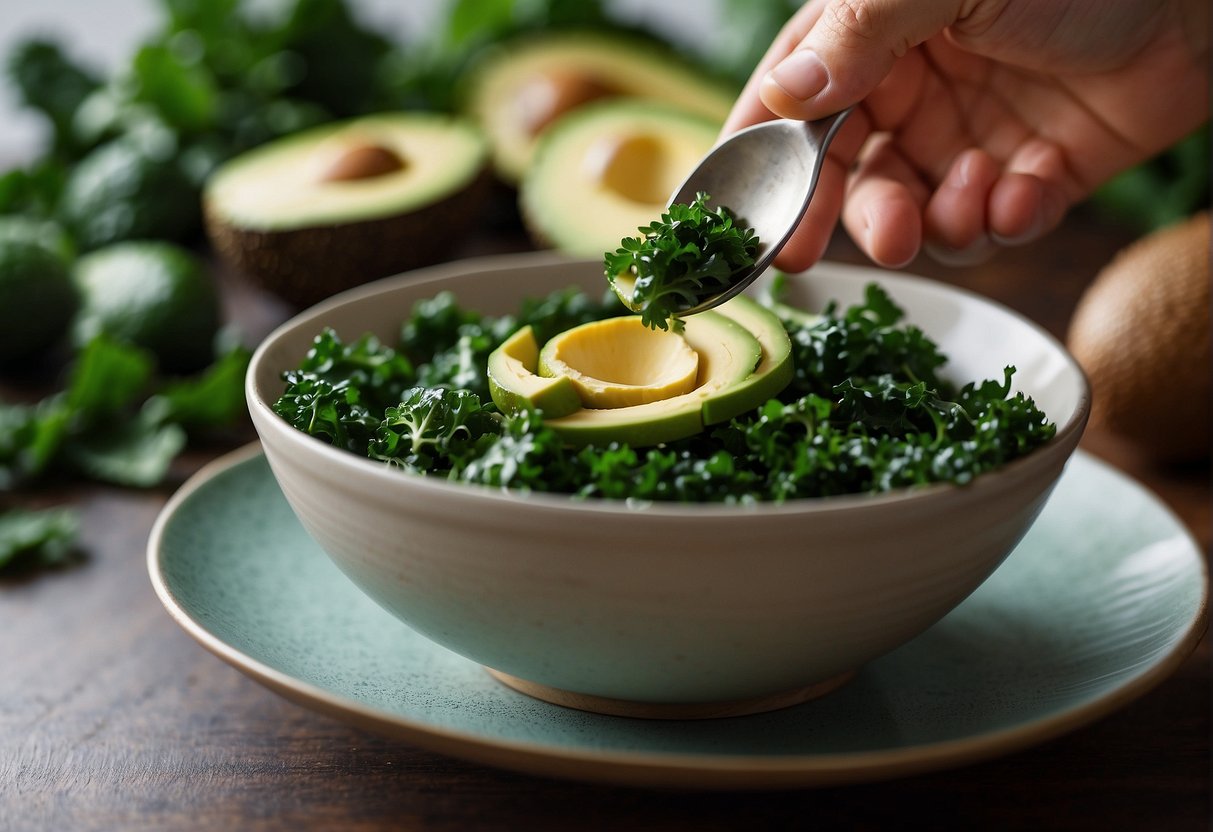
In my experience, kale and avocado are like a superfood duo; they’re both packed with nutrients that can benefit your health in a variety of ways. Let me walk you through some common questions I get about combining these two.
What are the benefits of adding kale to a smoothie?
Adding kale to a smoothie is a savvy move because it’s a nutrient powerhouse. Kale is loaded with vitamins A, K, and C, along with minerals like manganese. It’s also got a ton of fiber which helps with digestion.
Can avocado enhance the nutritional value of a kale smoothie?
Absolutely, avocado is a nutritional booster for any smoothie. It’s filled with heart-healthy monounsaturated fats, it ups the creamy texture, and helps your body absorb fat-soluble vitamins more effectively.
Is a kale and spinach blend beneficial for your health?
Mixing kale and spinach gives you a double-down on vitamins, iron, and calcium. It’s a surefire way to increase the nutrient diversity in your drink.
What are some tasty ingredients to mix with kale and avocado in a smoothie?
I’ve found that ingredients like banana, pineapple, or mango add natural sweetness and complement the flavors of kale and avocado. Ginger or mint can add a refreshing kick!
How does a kale and avocado smoothie support weight loss?
Kale’s low in calories and high in fiber which can help you feel full longer. When you include avocado, you also get healthy fats that can prevent snacking and overeating.
Is it safe to consume raw kale in a smoothie?
It’s generally safe to enjoy raw kale. However, if you have a thyroid condition, it’s best to limit the intake as kale contains goitrogens, which can interfere with thyroid hormone synthesis.