
Understanding Almond Milk and Coconut Water
When mixing drinks for my diet, I like to consider their nutritional benefits and flavor profiles. Here’s a breakdown of what almond milk and coconut water are made of and what nutrients they bring to the table.
What Is Almond Milk?
Almond milk is a plant-based drink made from ground almonds and water. It’s a popular dairy alternative that’s both vegan and lactose-free. Almond milk has a creamy texture and a subtle nutty taste. Unlike whole almonds, which are high in fiber and protein, almond milk is lower in these nutrients unless fortified. However, it’s often enriched with vitamins and minerals such as calcium and vitamin D.
What Is Coconut Water?
Coconut water is the clear liquid found inside young, green coconuts. It’s not to be confused with coconut milk, which is made from the coconut’s flesh. Coconut water is low in calories and rich in potassium, an essential mineral that supports heart health and hydration. It’s naturally fat-free and contains antioxidants that may have health benefits, making it a refreshing beverage on its own.
Nutritional Profiles
Comparing the two, almond milk typically contains:
- Calories: 30-50 per cup (varies with sweetness)
- Protein: 1 gram
- Calcium: Usually fortified up to 45% of the DV
- Vitamins: Often fortified with vitamin D and vitamin E
While coconut water has:
- Calories: 45 per cup
- Potassium: Up to 600 mg, around 17% of the DV
- Fiber: 2.6 grams
- Vitamins: Small amounts of vitamin C and some B vitamins (like riboflavin and thiamine)
Almond milk and coconut water both bring a unique set of nutrients to the table, with almond milk being a good source of calcium when fortified and coconut water offering a natural source of minerals and hydration.
Mixing Techniques and Recipes
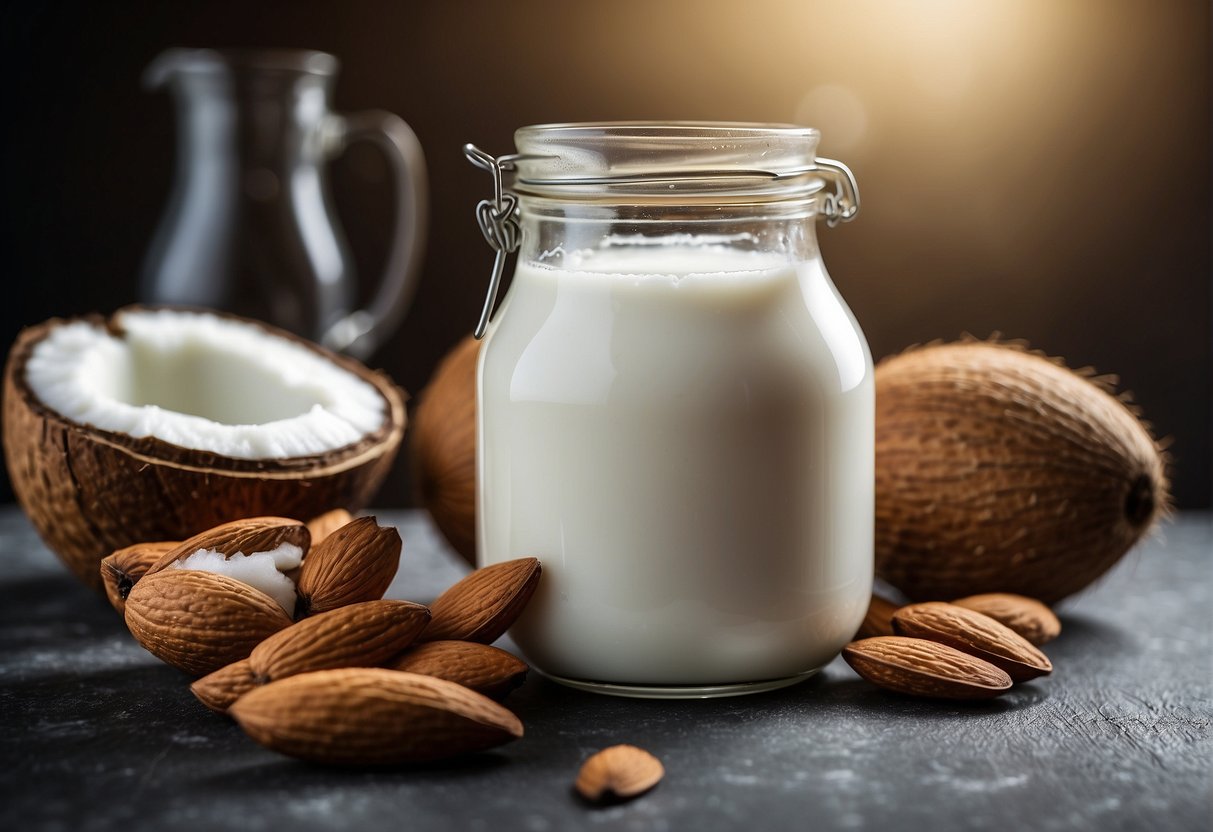
I’ve found that mixing almond milk with coconut water isn’t just possible, it’s downright delicious. It’s all about the right methods and a couple of tasty recipes to put your own twist on this tropical blend.
Basic Mixing Methods
When I mix these two liquids, I start with homemade almond milk since it has a fresher taste and creamier texture compared to store-bought versions. To make it, I soak almonds overnight, then blend them with water and strain the mixture for a smooth, rich milk. After that, mixing is simple: I just pour equal parts of almond milk and coconut water into a jug and stir. This combination balances the nutty flavor of the almonds with the sweet, refreshing taste of coconut water. If I want it sweeter, I throw in a dash of natural sweetener.
Almond Milk and Coconut Water Recipes
Now, if you’re up for trying a recipe, one of my favorites is an Almond-Coconut Smoothie. Here’s how to nail it:
- In your blender, combine 1 cup of almond milk with 1 cup of coconut water.
- Add a frozen banana for creaminess—this is key ’cause it thickens the drink without adding fat.
- For nutrition and flavor, toss in a handful of spinach and some chia seeds.
- Blend until smooth, taste, and sweeten if needed. Voila! A refreshing beverage that’s perfect for a post-workout.
Another quick recipe is the Tropical Morning Shake:
- Soak 1 cup of raw almonds for about 24 hours, changing the soaking water every 8 to 12 hours.
- Then, blend the soaked almonds with 2 cups of fresh water.
- Strain the mixture to get your homemade almond milk.
- In a shaker, combine equal parts of this milk and coconut water.
- Add a bit of maple syrup or honey if you like things sweeter.
For both of these recipes, the key is to keep a balance between the almond milk’s richness and the coconut water’s hydrating properties. They’re perfect for when you want a liquid breakfast or a quick, nutritious snack. And hey, experimenting with your ingredients is part of the fun—I encourage you to try adding mango or pineapple for an extra tropical kick!
Benefits and Uses of Mixed Beverages
When I mix almond milk with coconut water, I’m creating a beverage that not only tastes sweet and refreshing but also packs a nutritional punch. Let’s dive into the specific health benefits and some creative ways to utilize this combo in our daily diet.
Health and Nutritional Benefits
Combining the nutritional properties of almond milk with the electrolytes found in coconut water makes for a powerful healthy drink. What’s great about this mix is that it’s a vegan, non-dairy option, perfect for those who are lactose intolerant or looking to skip animal products. Almond milk, which I often use in smoothies, is low in sugars and comes fortified with calcium and vitamins like D and E. Plus, it’s a source of healthy fats and sometimes added protein. On the other hand, coconut water is high in potassium and antioxidants, which are excellent for hydration and overall health.
- Calories: Lower than dairy milk, making it a good choice for calorie-conscious individuals.
- Potassium: Great for post-workout recovery due to its presence in coconut water.
- Antioxidants: Helps fight oxidative stress.
- Vitamins & Minerals: Often fortified in almond milk, covering potential dietary gaps.
Creative Uses in Foods and Drinks
I’ve found some exciting ways to incorporate this mixture into my daily routine. Almond milk and coconut water blend beautifully with berries for a refreshing smoothie, and it pairs wonderfully with coffee as a light, sweet alternative to cream. I even use it as a base for yogurt and overnight oats, which gives me an extra dose of flavor without the added sugars. Here’s a quick list of my favorite uses:
- Morning Coffee: A splash lightens up my cup with a hint of sweetness.
- Smoothie Base: Mixes well with fruits for an energizing drink.
- Yogurt Substitute: Gives a tropical twist to my breakfast bowl.
In short, experimenting with almond milk and coconut water has worked out great for me. It’s a combo that can suit multiple dietary needs while enhancing the flavor profile of my favorite beverages and dishes.
DIY Tips and Tricks
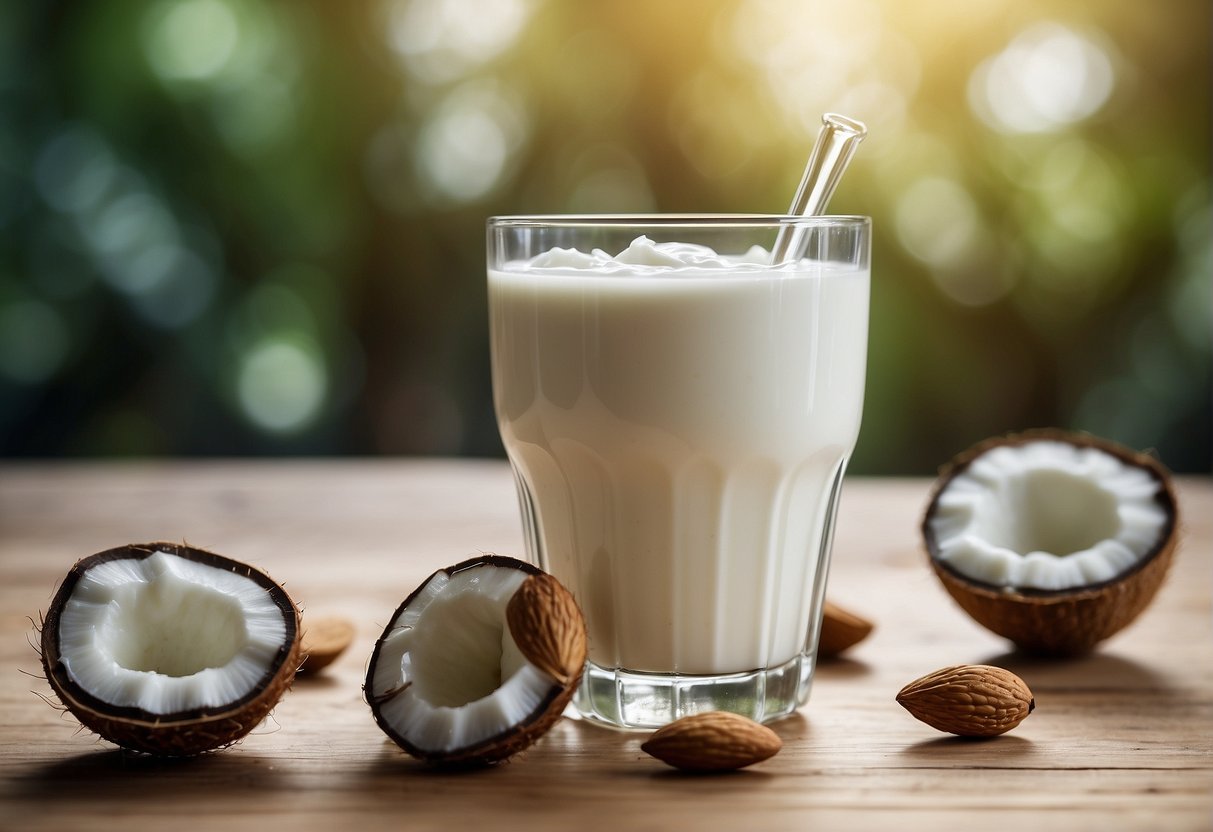
When I mix almond milk with coconut water, I find that starting with quality ingredients and knowing how to store the final mix can make all the difference. Let’s dive into how I prepare the ingredients and keep the blend fresh.
Homemade Ingredient Preparation
First things first, I always start with raw almonds. I find that soaking the almonds overnight, or for at least 24 hours, gives me a creamier milk. If I forget and need a quick solution, hot water can reduce the soaking time to 1-2 hours. I like to add a pinch of salt when I soak them; it seems to enhance the nuts’ natural flavors.
In my experience, a nut milk bag or a fine mesh strainer is essential for achieving a smooth texture. After blending, I carefully strain the mixture to remove the pulp. If I want a hint of sweetness, I’ll add a touch of vanilla extract, maple syrup, or organic honey—just a tablespoon or so does the trick.
Storage and Preservation
Once I’ve made my almond and coconut milk blend, I pour it into a mason jar or any glass container with a tight-fitting lid. I’ve learned that the key to keeping it fresh is storing it in the refrigerator as soon as possible.
Here’s a quick rundown of how I do it:
- Always use a clean container.
- The blend usually stays fresh for up to two weeks.
- I give the jar a good shake before each use because natural separation can occur.
With these tips, I’m able to enjoy homemade almond milk with coconut water that’s both delicious and preservative-free.
Frequently Asked Questions
In my experience blending almond milk with coconut water, I’ve discovered some interesting benefits and uses. Let’s explore what happens when you bring these two together.
What are the health benefits of drinking almond milk combined with coconut water?
Combining almond milk with coconut water can provide a hydration boost due to coconut water’s electrolyte content. I find that the mixture also supplies vitamins and minerals from almond milk, like vitamin E and magnesium.
Can I use almond milk and coconut water in a smoothie without any issues?
Absolutely, I often whip up smoothies using almond milk and coconut water as the liquid base. Not only does it work well, but it also adds a creamy texture and a hint of tropical flavor.
How does coconut water enhance the taste of almond milk?
Coconut water adds a subtle sweetness and nutty flavor that complements the smooth, slightly nutty taste of almond milk. This pairing can make a drink more refreshing and enjoyable for me.
Are there any nutritional advantages to mixing dairy alternatives like almond milk with coconut water?
Yes, there are nutritional nods in favor of the mix. Almond milk is low in calories and rich in vitamin E, while coconut water is a natural source of electrolytes. The combination makes for a nutrient-rich, hydrating beverage.
What effect does blending almond milk with coconut water have on your overall hydration and energy levels?
I’ve noticed that blending almond milk with coconut water tends to increase my hydration due to the electrolytes, and it gives a slight energy boost without a heavy feel, making it a great post-workout drink for me.
How does the combination of coconut water and almond milk contribute to a balanced diet?
When I include almond milk and coconut water in my diet, it helps me balance it by adding plant-based proteins from almond milk and potassium from the coconut water, which are essential for muscle and heart function.