
Blendable Basics
When I think about creating a smoothie, there’s nothing like the creamy texture that avocados and almond milk bring to the mix. What I love about avocado is not just its richness, but also its versatility. Combined with almond milk, which is light yet delightfully nutty, it creates a base that’s both flavorful and smooth.
Here’s the deal:
- Avocado is not only creamy, but it’s also brimming with nutrients like potassium, so you’re getting health benefits along with great taste.
- Almond milk is a fantastic dairy-free substitute, it brings its own charm without overwhelming the avocado’s subtle taste.
But the consistency is key. I use a ripe avocado for that perfect buttery texture, or a frozen avocado if I want my smoothie colder and thicker. Here’s a quick guide to follow:
- A ripe avocado will blend smoothly, making your smoothie naturally thick and rich.
- Mixing in a frozen banana not only sweetens the drink but boosts the creamy factor and adds more potassium.
- Almond milk complements both fresh and frozen ingredients, easily adjusted to get your desired consistency.
Pro Tip: To keep things lively, I sometimes throw in different fruits or even some spinach – it’s all about balancing the flavors and textures to your liking. If I fancy an extra hint of sweetness, a dash of honey does the trick.
Remember, there’s no exact science to this – feel free to play around. Every blend is unique, but avocados and almond milk are a match made in smoothie heaven.
Nutritional Profile
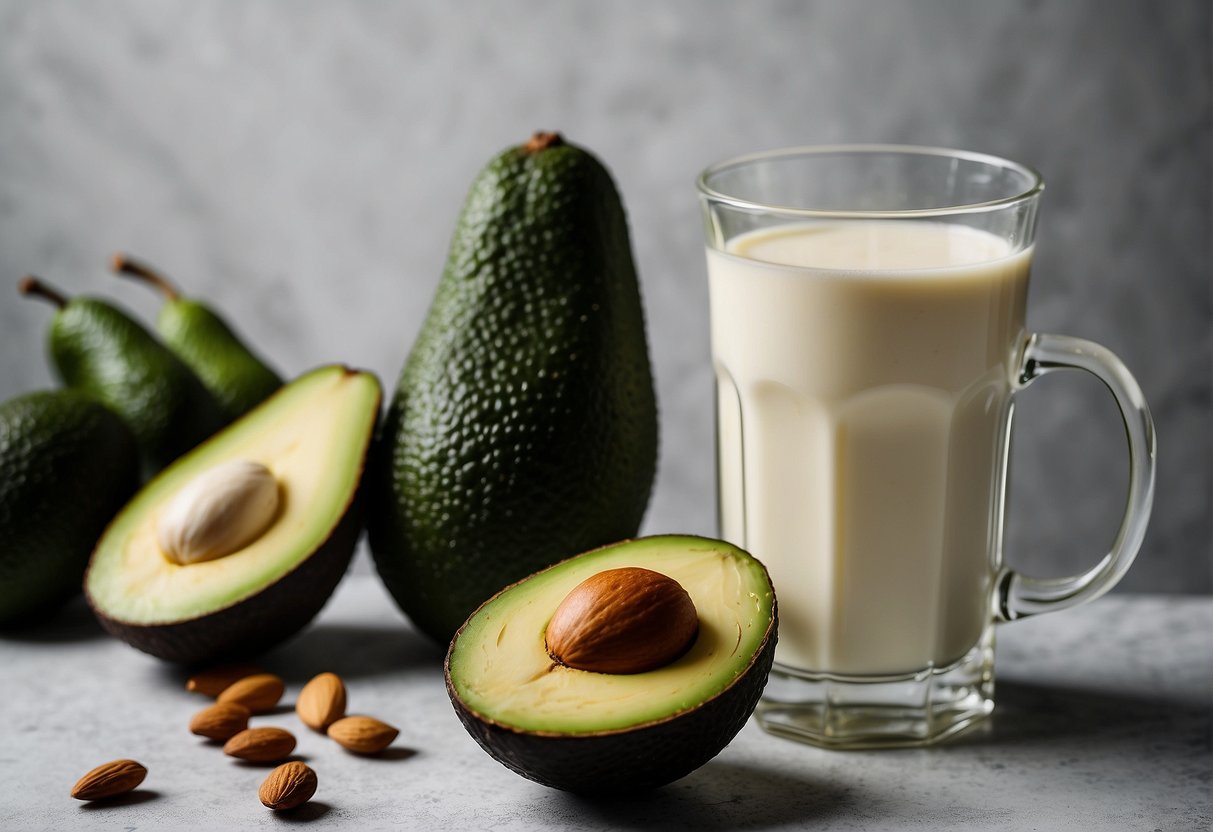
When I mix almond milk with avocado, I’m blending together a powerhouse of nutrients that cover a significant portion of my daily requirements. I’m talking about a mix that’s rich in healthy fats, has a decent amount of protein, and comes packed with essential vitamins and minerals.
Macro Breakdown
Avocados are calorie-dense due to their high content of monounsaturated fats, which are the heart-healthy kind. In terms of macros, they bring primarily fat and fiber to the table. One medium avocado has about:
- Calories: 240
- Total Fat: 22g
- Fiber: 10g
- Protein: 3g
On the other hand, unsweetened almond milk is much lighter in terms of calories but isn’t a significant source of protein unless it’s fortified or has added protein powder:
- Calories: 30-50 per cup (depending on brand and type)
- Total Fat: 2.5g
- Carbohydrates: 1-2g
- Protein: 1g
Combining these two, I get a beverage that’s low in carbs, has a moderate amount of protein, and is high in beneficial fats.
Vitamins and Minerals
Both avocado and almond milk are excellent sources of various vitamins and minerals. Avocado is loaded with potassium, which can help manage blood pressure, and it’s also rich in folate, essential for cell repair and during pregnancy.
Avocado’s vitamin and mineral content includes:
- Vitamin C: important for immune function
- Vitamin E: protects against oxidative damage
- Vitamin K: essential for blood clotting
- Vitamin B5: aids in energy metabolism
- Vitamin B6: important for brain development and function
- Folate: crucial for DNA synthesis and repair
- Potassium: aids in heart function and muscle contractions
- Magnesium: necessary for many bodily processes, including regulating muscle and nerve function
Almond milk, particularly when fortified, can contribute to my intake of calcium and vitamin D, which are critical for bone health, while also providing vitamin E and magnesium.
Here’s a snapshot of what fortified almond milk may add:
- Vitamin A: good for vision and the immune system
- Calcium: vital for bone health
- Vitamin D: also critical for bone health and immune function
By combining the nutrient profiles of almond milk and avocado, I enrich my diet with a synergistic blend of macro and micronutrients that support overall health, including maintaining healthy cholesterol levels and providing a spectrum of nutritional benefits. Add a sprinkle of chia seeds, and I’ve got an extra boost of fiber, calcium, and iron—just another way to amp up this nutritious duo.
Flavorful Mix-Ins and Alternatives
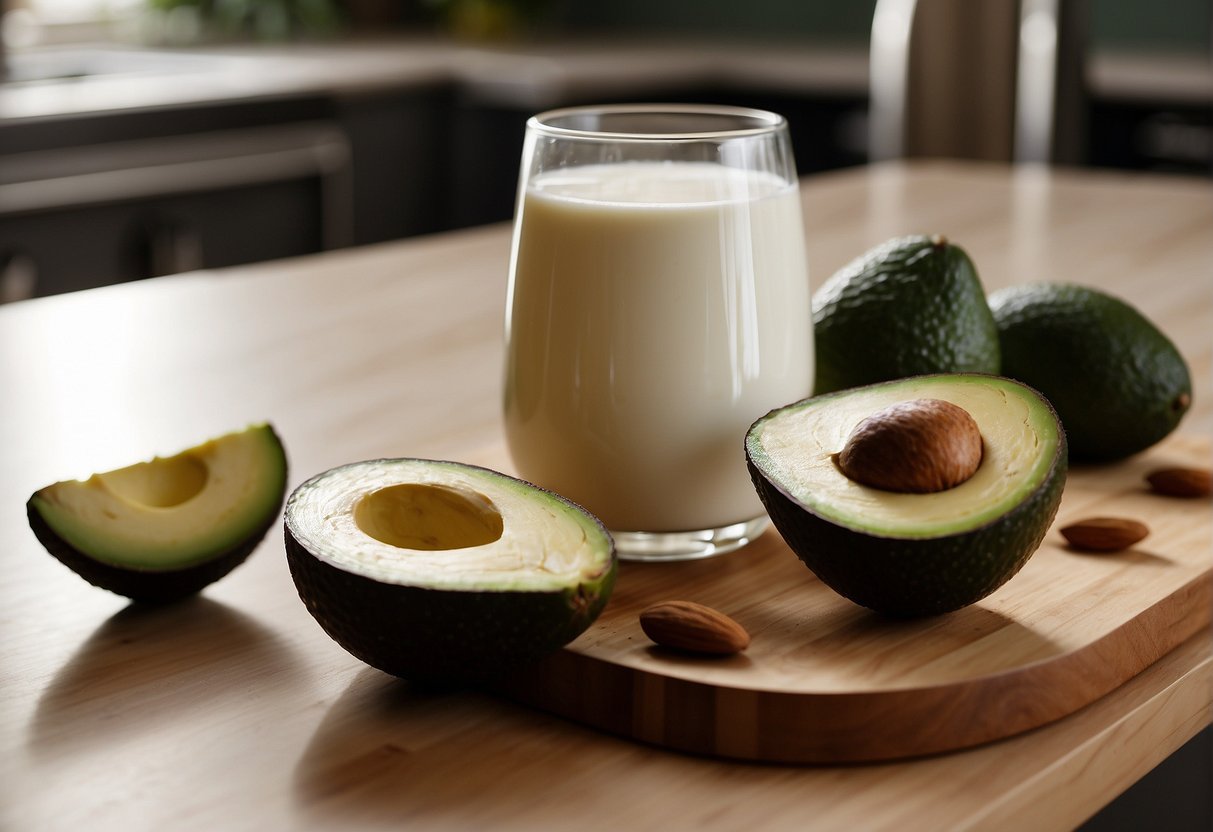
When I whip up an almond milk and avocado smoothie, I aim for that perfect balance of creaminess and taste. It’s like a blank canvas where I add those personal touches that really make it pop.
Sweetness and Flavor
If you’re like me and crave a touch of sweetness, sugar might be the obvious go-to, but there are so many other goodies to boost that flavor. My top picks? A drizzle of maple syrup or a spoonful of honey bring in natural sweetness without overpowering. Oh, and pure maple syrup? Divine. For a sugar-free option that’s still spot on, I reach for a sugar-free sweetener—just a little goes a long way. If I’m after a zesty kick, a squeeze of lime juice adds just enough tang.
- Sweeteners: Honey, Maple Syrup, Sugar-Free Sweetener
- Zest: Lime Juice for a tangy twist
Dairy and Non-Dairy Variations
Now, let’s talk creaminess. Unsweetened almond milk is great, but sometimes I like to shake things up. A dollop of Greek yogurt or even some oat milk can take the smoothness up a notch. On days I’m feeling extra, I throw in a scoop of almond butter or nut butter—it’s rich, it’s nutty, and it makes everything better. For those dairy-free days, coconut milk is my go-to; the flavor combo with avocado is just nuts (in a good way).
- Dairy Boost: Greek Yogurt for that extra creaminess
- Non-Dairy Alternates: Coconut Milk, Nut Butters (Almond, etc.)
Dietary Considerations
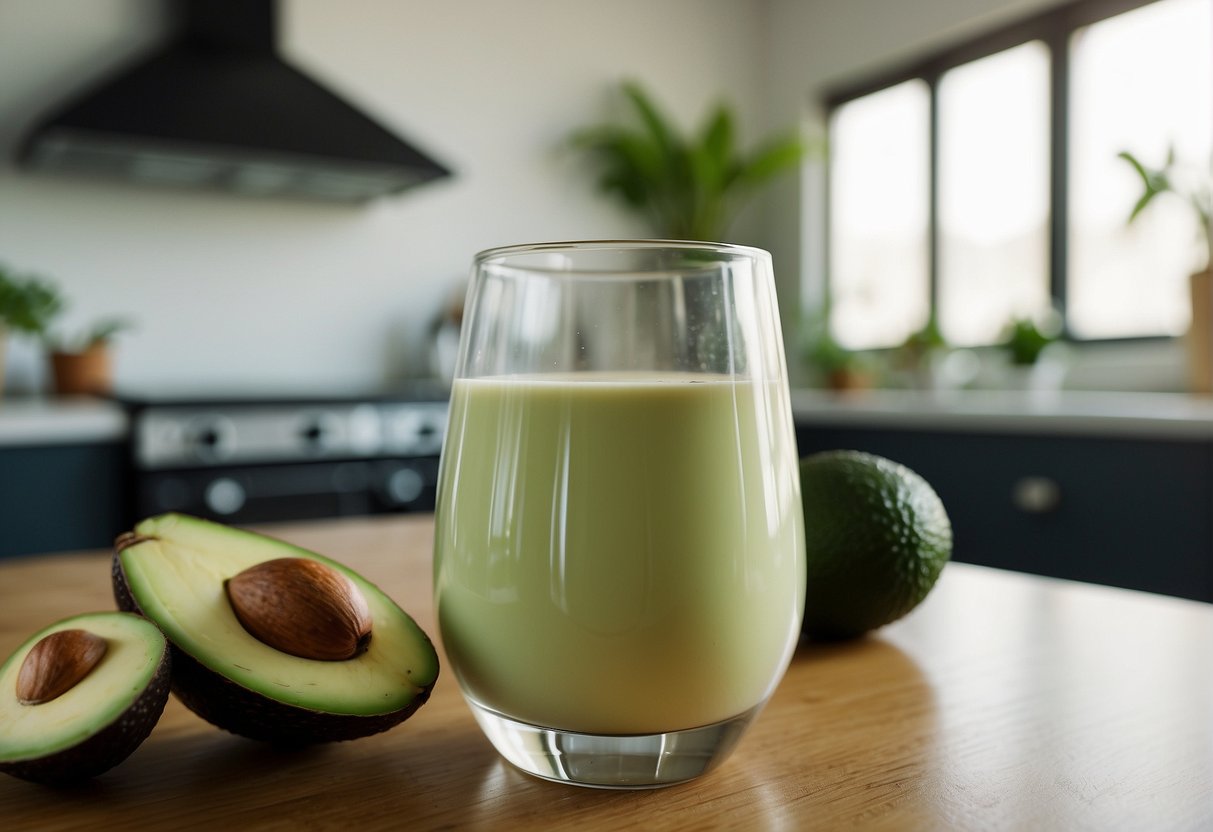
When I talk about mixing almond milk and avocado, I’m diving into a blend that’s vegan and dairy-free, making it a fantastic option for anyone avoiding animal products or lactose. Thanks to the buttery texture of avocados and the creamy quality of almond milk, the combo doesn’t skimp on a satisfying mouthfeel.
As a fan of low-carb diets myself, I totally get the appeal. Avocados and unsweetened almond milk are low in net carbs which is a thumbs up for my keto friends seeking keto-friendly ingredients. This mix fits neatly into a ketogenic lifestyle where keeping carbs minimal is the aim.
Beyond being low-carb, avocados are just packed with good fats that help me feel full, supporting weight management and potentially aiding in weight loss for those who are calorie-conscious. Avocado also slips smoothly into gluten-free diets, so no worries about hidden gluten here.
For those curious about the nutritional details, avocados are low in sodium, which is great for my blood pressure watching buddies. Almond milk typically has fewer calories than cow’s milk, making it a decent choice if I’m watching my calorie intake.
Lastly, I’ve read about folks using almond milk for detox purposes. While incorporating it with avocado won’t magically detoxify me, the healthy fats and fibers might support my body’s natural detoxification processes.
Here’s a quick breakdown:
- Keto-friendly: Both ingredients are low in net carbs
- Vegan: No animal products here
- Dairy-free: A great alternative to regular milk
- Satisfying: Creamy and filling to help curb hunger
- Weight Loss: Could be beneficial as part of a calorie-controlled diet
- Gluten-Free: Naturally without gluten
- Low Sodium: Friendly for those monitoring their salt intake
Preparation Tips and Techniques
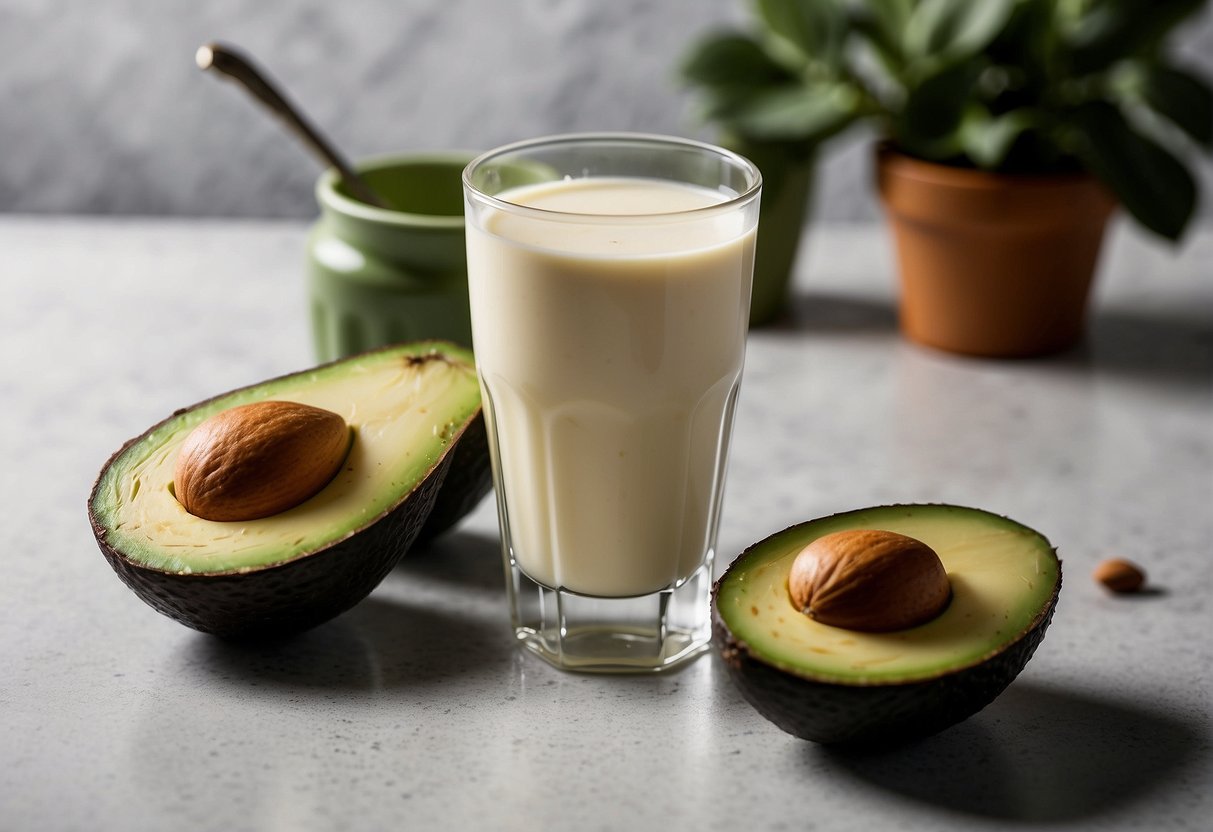
When I blend almond milk and avocado together, I’m creating something truly magical. Not only is the combination creamy and satisfying, but it’s also packed with nutrients. Here’s how I make sure my avocado and almond milk blends are top-notch every time.
Tools of the Trade
Blenders: A high-speed blender, like a Vitamix or any other high-powered blender, is key. They can easily pulverize ice cubes for a frosty touch in your avocado almond milk smoothie or green smoothie.
Accessories: Don’t forget to have some spatulas on hand to scrape down the sides, ensuring every bit of avocado and almond milk is blended smoothly.
Storing and Shelf Life
Leftovers: If I have any leftovers, I pour them into an airtight container and store them in the fridge. They typically keep well for about a day, but give it a good shake or stir before enjoying it the second time around.
Freshness: Overripe avocados can be too strong in flavor, so I always make sure my avocados are just ripe enough to ensure the best taste for my chocolate avocado smoothie or apple avocado smoothie.
Frequently Asked Questions
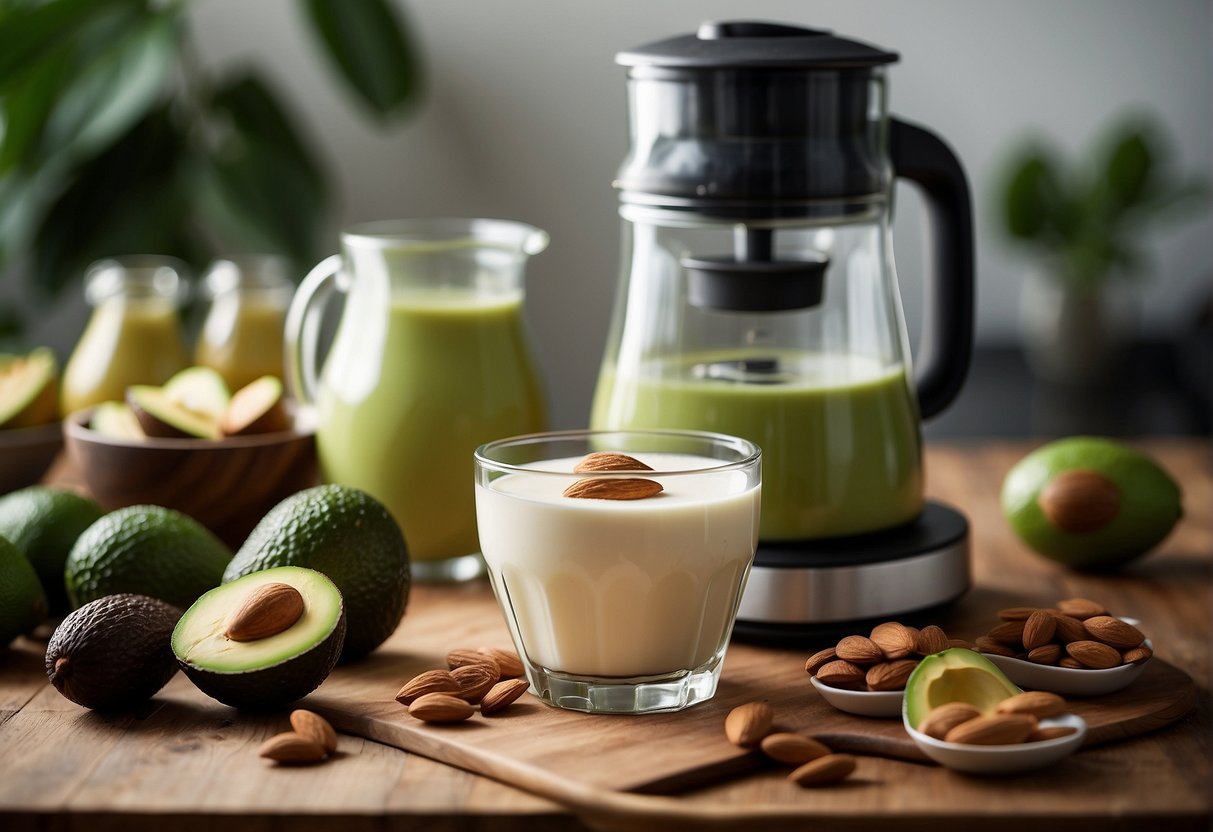
Mixing almond milk with avocado for a smoothie isn’t just delicious, it’s packed with nutrients that can benefit your overall health. Let’s dive into some common questions about this creamy concoction.
What are the health benefits of an avocado almond milk smoothie?
An avocado almond milk smoothie is rich in healthy fats, fiber, and vitamins such as vitamin E and potassium. This blend supports heart health, promotes skin health, and can contribute to a feeling of fullness.
How many calories are in an avocado almond milk smoothie?
The calories in an avocado almond milk smoothie can vary depending on the recipe, but generally, it contains a moderate number of calories due to the healthy fats in avocado and the low-calorie count of unsweetened almond milk.
Is an avocado almond milk smoothie a good keto-friendly option?
Yes, an avocado almond milk smoothie can be a good keto-friendly option, as avocados are low in carbs and high in fat, which fit the keto diet’s requirements, and almond milk is also low in carbohydrates.
Can my baby have a smoothie with avocado and milk?
It’s often safe for babies to have smoothies with avocado and milk after they’ve begun eating solid foods. However, you should use whole milk for babies instead of almond milk to ensure they get enough fats for their growing brains.
What’s a simple avocado smoothie recipe for weight loss?
A simple avocado smoothie recipe for weight loss might include unsweetened almond milk, avocado, spinach, and a natural sweetener like stevia. Such ingredients create a low-calorie, nutrient-dense drink that may aid in weight loss.
Why should I add almond milk to my smoothie?
Adding almond milk to your smoothie can provide a dairy-free, low-calorie base that complements the creamy texture of avocado without overpowering its flavor, plus it’s enriched with calcium and often vitamin D.