
Nutritional Profile and Benefits
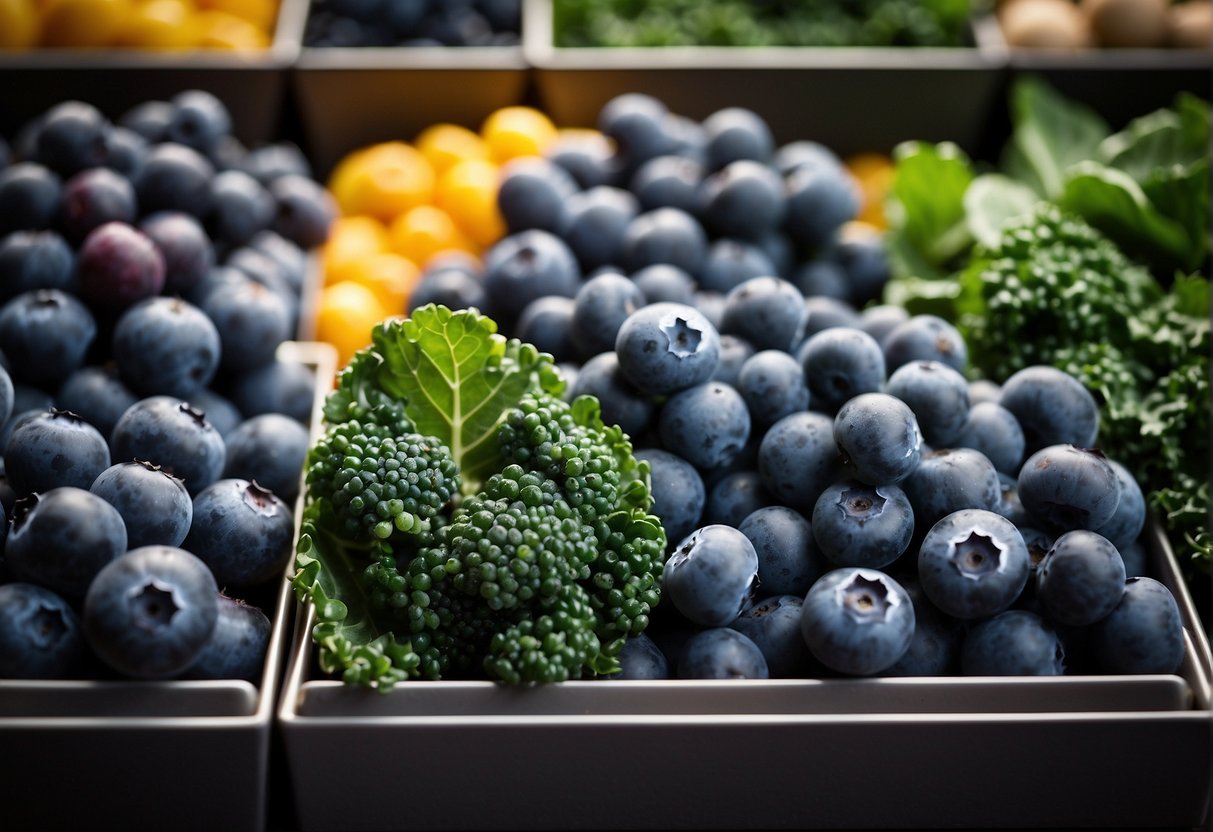
When I toss blueberries and kale together, I’m not just making a tasty snack; I’m combining two powerhouses of nutrition that pack a punch with their vitamins, minerals, and other health-promoting compounds.
Vitamin and Mineral Content
Both blueberries and kale are a boon for anyone looking to up their intake of vitamins and minerals. Blueberries are a fantastic source of vitamin C and potassium, while kale is off the charts with vitamins A, C, and K, and also brings calcium and iron to the table. With every bite, I take advantage of a diverse range of nutrients essential for my body’s functions.
- Blueberries: High in vitamin C and potassium.
- Kale: Rich in vitamins A, K, and C, and a good source of calcium and iron.
Antioxidant Advantages
I love knowing that I’m giving my body a helping hand against oxidative stress with the antioxidants in blueberries and kale. Blueberries have the fame for their antioxidant properties, mainly due to substances like anthocyanins which give them their blue hue. Kale steps up with its own antioxidant credentials, including beta-carotene and other health defenders that have been linked to several benefits.
- Blueberries: Loaded with antioxidants, particularly anthocyanins.
- Kale: Contains antioxidants such as beta-carotene, and various flavonoids and polyphenols.
Fiber, Fats, and Proteins
While neither blueberries nor kale are particularly high in fats or proteins, they do contribute a touch to my daily intake. Kale offers a small amount of omega-3 fatty acids, and both are good sources of fiber which helps with digestion and satiety. Protein-wise, kale provides a modest amount, which is a nice little bonus on top of all the other nutritional benefits.
- Blueberries: Contain dietary fiber, assisting in digestive health.
- Kale: Provides fiber, a bit of protein, and omega-3 fatty acids.
Combining Blueberries and Kale
In my kitchen adventures, I’ve found that blueberries and kale are a dynamic duo both in flavor and nutrition. They come together beautifully in a blueberry kale smoothie, where the sweetness of the blueberries balances the earthiness of the kale.
Flavor Combinations
When creating a smoothie, I love the way tart blueberries compliment the slightly bitter notes of fresh kale. It’s like they were made for each other. If I’m feeling bold, I’ll add frozen blueberries to intensify the smoothie’s flavor and chill. From my experience, baby kale offers a milder taste compared to mature kale leaves, which works perfectly with the natural sweetness of the blueberries. For an added twist, I sometimes throw in some spinach to mix up the superfood benefits without compromising taste.
Texture Considerations
Texture is key in a great smoothie. I use frozen blueberries to give a nice, thick consistency. But when I’m using frozen kale, I make sure to blend it first to avoid chunkiness. For fresh kale, this isn’t a problem—especially baby kale, which seems to blend more smoothly. If the smoothie is too thick, a splash of juice thins it without diluting the robust flavors.
Smoothie Preparation Techniques
When I make a smoothie, especially one with a blend as nutritious as blueberries and kale, being mindful about choosing the right ingredients and achieving the perfect consistency is key.
Selecting the Right Ingredients
Selecting quality ingredients is the foundation for a great blueberry kale smoothie. I always look for fresh, organic kale and ripe blueberries to ensure my smoothie is packed with nutrients. Often, I’ll use frozen blueberries because they add a cold punch to the drink and help thicken it without diluting the flavor like ice cubes sometimes do. Including a banana not only sweetens the smoothie naturally but also contributes to a creamy texture.
For an added health boost, I toss in a tablespoon of chia seeds or flax to incorporate omega-3s and fiber. As for the liquid base, I prefer almond milk or coconut milk for a lighter touch, but you can use regular milk, oat milk, or just water. If I’m aiming for a rich, indulgent smoothie, a spoonful of nut butter does the trick. Lastly, for a protein kick, I often add a dollop of yogurt, which gives the smoothie an irresistibly smooth finish.
Blending for the Best Consistency
The key to a velvety green smoothie is all in the blend. I start with the softer, high-liquid ingredients like the bananas and nut butter at the bottom to create a vortex that’ll help pull down the leafy greens. This is where having a high-quality blender pays off. I add my kale on top of the liquid ingredients, then the frozen blueberries, chia seeds, and finally, ice cubes only if needed for extra chill.
Here’s my pro tip: start blending on low to break down the bigger chunks, then ramp up to the highest setting for a smooth, homogenous mixture. This way, I avoid overworking the blender and ending up with a warm smoothie. If the mixture is too thick, I’ll add a splash more of almond milk or coconut milk until the consistency feels just right. It’s always better to add liquids gradually—you can always add more, but you can’t take it out once it’s too thin.
Recipe Variations and Add-Ins
I love experimenting with my blueberry and kale smoothies, and I’ve found that a few strategic add-ins can make a delightful difference in both taste and nutrition. Let’s dive into some dairy and dairy-free options, along with natural sweeteners and flavor enhancers to really elevate your smoothie experience.
Dairy and Dairy-Free Options
For a creamy texture, I often opt for Greek yogurt; it’s high in protein and can make any smoothie more filling. If you’re vegan or lactose intolerant, almond milk is a great dairy-free alternative that’s low in saturated fat, making it a heart-healthy choice. Here’s a quick glance at some choices:
- Dairy: Greek yogurt – adds creaminess and protein
- Dairy-Free: Almond milk, unsweetened coconut milk – reduces saturated fat
Remember, if you prefer a thicker consistency, frozen fruit can also double as a dairy substitute.
Natural Sweeteners and Flavor Enhancers
Ditch the processed sugars and give a shot to honey or maple syrup as natural sweeteners; they can complement the tanginess of blueberries and the earthy tones of kale. I sometimes drop in a scoop of vanilla protein powder—it’s great for an extra protein boost and adds a nice hint of flavor. For a rich, indulgent twist, a spoon of cocoa or chocolate protein powder turns my smoothie into a decadent treat.
- Sweet: Honey, maple syrup – natural and pairs well with fruits
- Flavor: Vanilla or chocolate protein powder – adds depth and protein without excessive sweetness
It’s all about finding the balance that works for you—in both taste and nutrition!
Health Considerations and Dietary Relevance
When I’m mixing blueberries and kale, I think about how they can fit into a balanced diet and address specific health goals. Here’s how these ingredients stack up in terms of nutrients and diet considerations.
Weight Management and Calorie Counting
Blueberries and kale are both low in calories — a real plus for my weight management. To give you specifics, a cup of raw kale has about 33 calories, while a cup of blueberries sits at around 84 calories. This combo makes for a nutritious addition to a healthy breakfast without packing too many calories, helping me feel full and satisfied. Plus, they’re virtually free of fat, have no cholesterol, and are low in sodium, which means I can enjoy a hefty serving without straying from my calorie counting.
Allergies and Specific Diet Needs
I always remind my friends with dietary restrictions to check if they have any allergies to blueberries or kale. Luckily, these superfoods generally fit well with a range of special diets, including vegan, paleo, and gluten-free. For someone managing blood pressure, the low sodium content in these greens is beneficial. Kale and blueberries are also rich in antioxidants which may help reduce the risk of cancer and improve skin health. The fiber in kale aids digestion and, alongside the vitamins in blueberries, supports muscle health. Just remember, blueberries contain some sugar, so if you’re watching your intake, balance is key.
Frequently Asked Questions
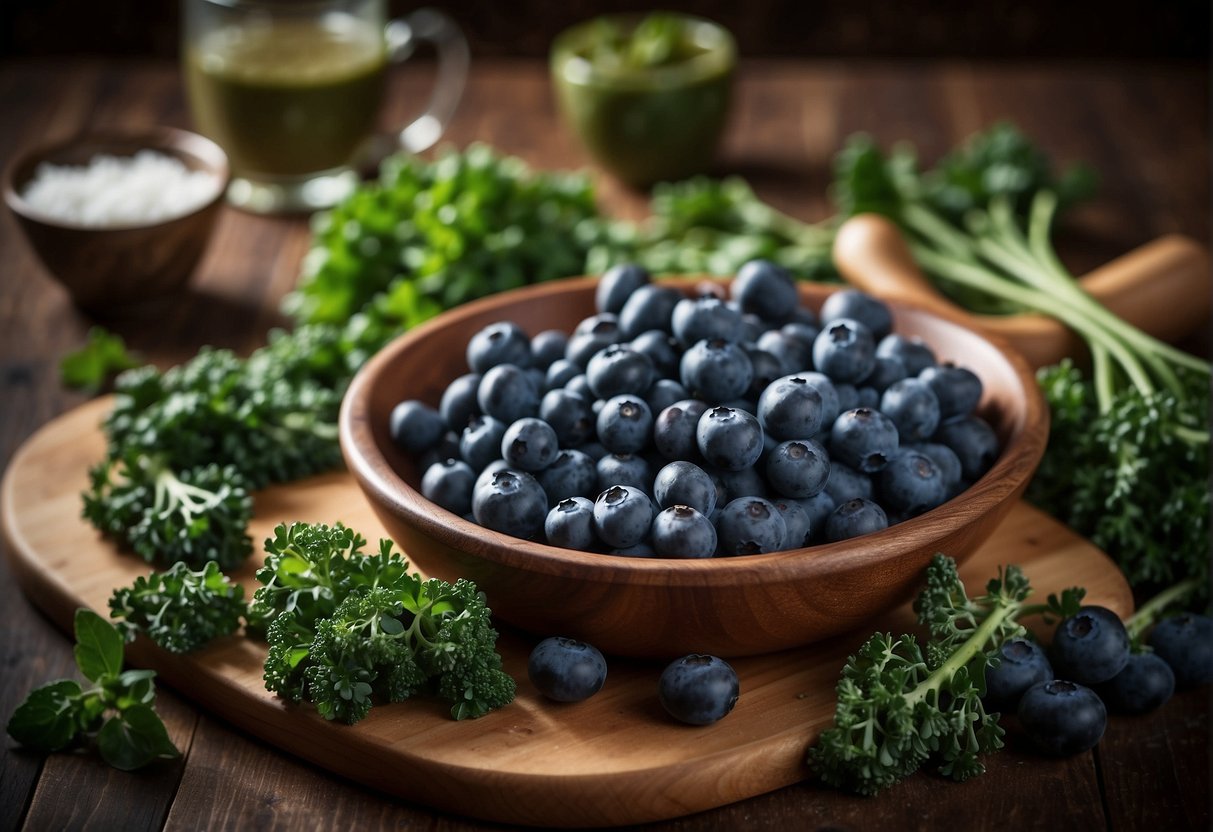
I love combining healthy ingredients in my smoothies, and I’ve done some research on the perks of blending kale with blueberries. If you’re curious, let’s dive into some common questions.
What are the benefits of adding kale to a blueberry smoothie?
Adding kale to a blueberry smoothie boosts the drink’s vitamin K and fiber content. This leafy green is packed with nutrients and antioxidants that complement the vitamins and antioxidants found in blueberries.
How can a smoothie with kale and blueberries aid in weight loss?
A kale and blueberry smoothie can be low in calories but high in fiber, which helps you feel full longer. Since they’re both nutrient-dense and low in fat, they’re great for a weight loss-friendly diet.
Can you use raw kale in a berry smoothie, and is it healthy?
Yes, you can use raw kale in a berry smoothie, and it’s very healthy. It provides extra nutrients without needing to cook the kale, making your smoothie prep quicker and preserving the kale’s raw benefits.
What fruits are best to combine with blueberries in a smoothie?
Fruits like raspberries or bananas work well with blueberries in a smoothie for added flavor and nutritional benefits. Their natural sweetness can enhance the taste and provide different vitamins and minerals.
Are there specific advantages to drinking a kale and blueberry smoothie for liver health?
Yes, kale and blueberry smoothies can support liver health due to the detoxifying properties of kale and the antioxidants in blueberries that may protect against liver diseases.
What are the overall health benefits of consuming blueberries and kale together?
Consuming blueberries and kale together can enhance your intake of powerful antioxidants, vitamins, and minerals, supporting overall health, including heart and brain function, thanks to their respective nutrient profiles.