
The Basics of Mixing Banana and Mango
When I whip up a fruity concoction, there’s nothing quite like blending bananas and mangoes together. The creamy texture and nutritional boost are just unbeatable.
Benefits of Banana and Mango
Bananas are a powerhouse of nutrition, packed with fiber, which aids digestion, and potassium that helps maintain electrolyte balance. Mangoes, on the other hand, are rich in vitamin C and antioxidants. Combined, they not only taste delicious but also provide a wealth of health benefits. This duo brings a perfect balance of flavor and creamy consistency that makes smoothies and desserts feel indulgent yet healthful.
Selecting the Right Fruit
Choosing the right bananas and mangoes can make a big difference in your recipes. For bananas, I look for ones that are ripe but not overripe – a few brown spots are usually a good indicator of peak creamy goodness. For mangoes, it’s all about finding that give when I press the skin; they should be firm but yielding. It’s always best when they’re fresh, as they blend better and have a sweeter, more vibrant flavor.
Creating the Perfect Banana Mango Smoothie
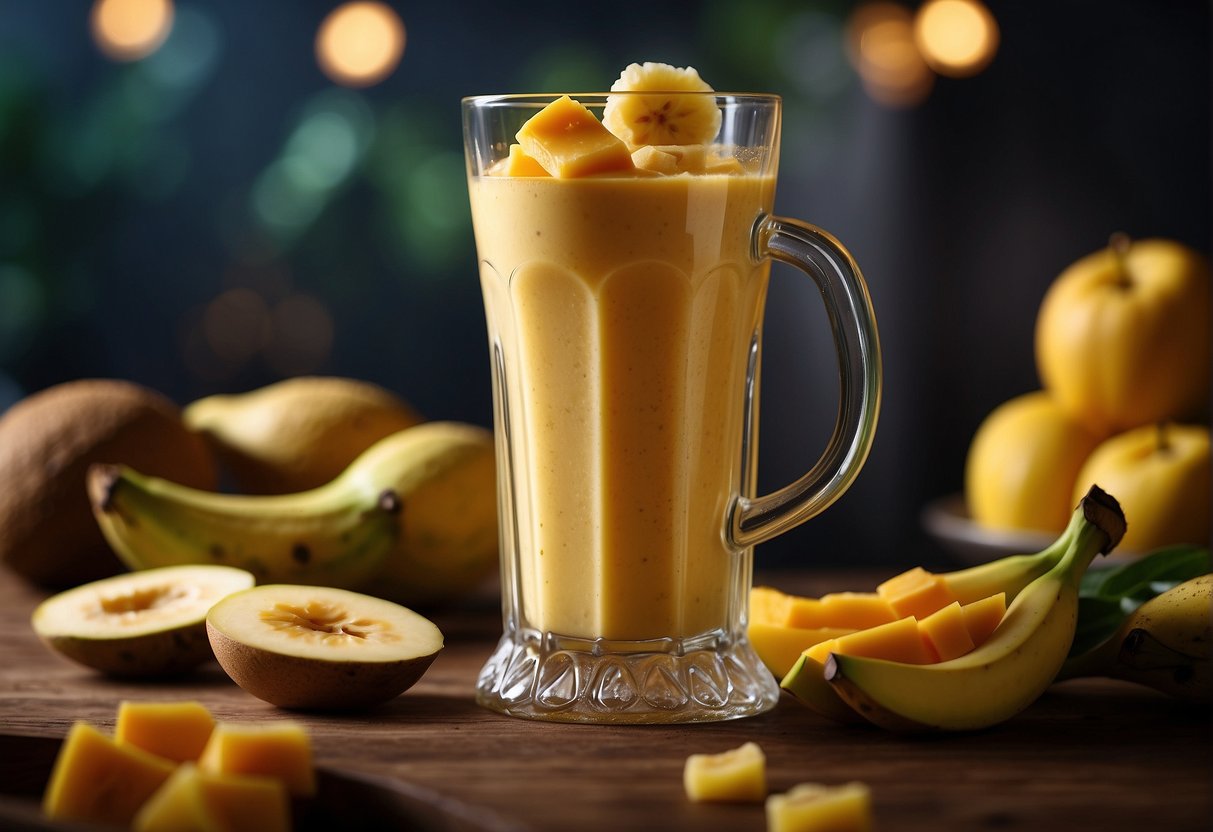
Making a banana mango smoothie is like creating a vibrant, tropical escape in a glass. I find that the key is to balance the sweetness and creaminess while ensuring a nutritional punch.
Essential Ingredients and Add-Ins
- Fruits: For the best flavor and chill, I always reach for frozen mango and frozen bananas. This duo promises a naturally sweet and creamy base.
- Base Liquid: I typically pour in some milk (almond milk for a nutty flavor or cow’s milk for extra calcium and potassium).
- Protein Boost: A scoop of protein powder or a dollop of Greek yogurt amps up the protein content, keeping me full for longer.
- Extra Fiber: Chia seeds not only increase fiber content but also add a satisfying texture.
- Sweetener: If the fruits aren’t sweet enough, a drizzle of honey can enhance the sweetness.
Pro Tip: To keep the calories in check, adjust the sweetness with natural sweeteners and choose a low-fat milk option.
Blending Techniques
- Layering: Always start with the liquid on the bottom, it’ll make blending smoother. I pour the milk in first, followed by the softer ingredients, then the frozen fruits last.
- Pulse to Start: I give it a few quick pulses to break down the big chunks before going full speed, ensuring ice and frozen fruit are very well blended.
- Consistency Checking: After the initial blend, I check the consistency. If it’s too thick, I splash in a bit more milk; if too runny, some more frozen fruit or ice can save the day.
Remember, a high-powered blender will give you the creamiest result with no rogue chunks.
By following these steps and choosing the right ingredients, my banana mango smoothie turns into a healthful, refreshing snack or quick meal that’s brimming with flavor and nutrition.
Nutritional Information and Health Benefits
When I think about mixing banana and mango, not only am I struck by the delightful taste combination, but also the impressive nutritional profile they create together. Rich in essential vitamins and minerals, this mix definitely brings a healthful punch to any snack or meal.
Vitamins and Minerals Content
Bananas and mangoes both have their unique nutritional offerings. Bananas are known for their high potassium content, which is essential for maintaining proper heart function and balance fluids in the body. They also provide a decent amount of vitamin C, fiber, and vitamin B6. Here’s a breakdown for bananas:
- Potassium: 358 mg per 100 grams
- Vitamin C: 8.7 mg per 100 grams
- Fiber: 2.6 grams per 100 grams
On the other hand, mangoes boast a higher amount of vitamin A and vitamin C, contributing significantly to immune function and skin health. They’re also a good source of fiber and contain an array of other nutrients, including vitamin E, vitamin K, and a small amount of calcium, iron, and selenium. Mangoes serve up:
- Vitamin C: 36.4 mg per 100 grams
- Vitamin A: 54 µg per 100 grams
- Fiber: 1.6 grams per 100 grams
Together, bananas and mangoes complement each other, ensuring a rich intake of complementary nutrients.
Dietary Considerations
Now, if I’m looking at the dietary aspect, I’m happy to report these fruits offer more than just vitamins and minerals. They are naturally low in sodium, cholesterol-free, and offer a good dose of dietary fiber. This combination helps with digestion and can contribute to heart health. Also, being naturally sweet, they provide an energy boost without the need for added sugars.
However, it’s worth being mindful of the calorie content when you’re watching your dietary intake. For instance, mangoes contain a bit more calories, around 60 calories per 100 grams, whereas bananas provide slightly less, with about 89 calories per medium-sized banana. It’s all about balance, and in moderate amounts, these fruits can certainly be part of a balanced diet.
Serving and Storage Tips
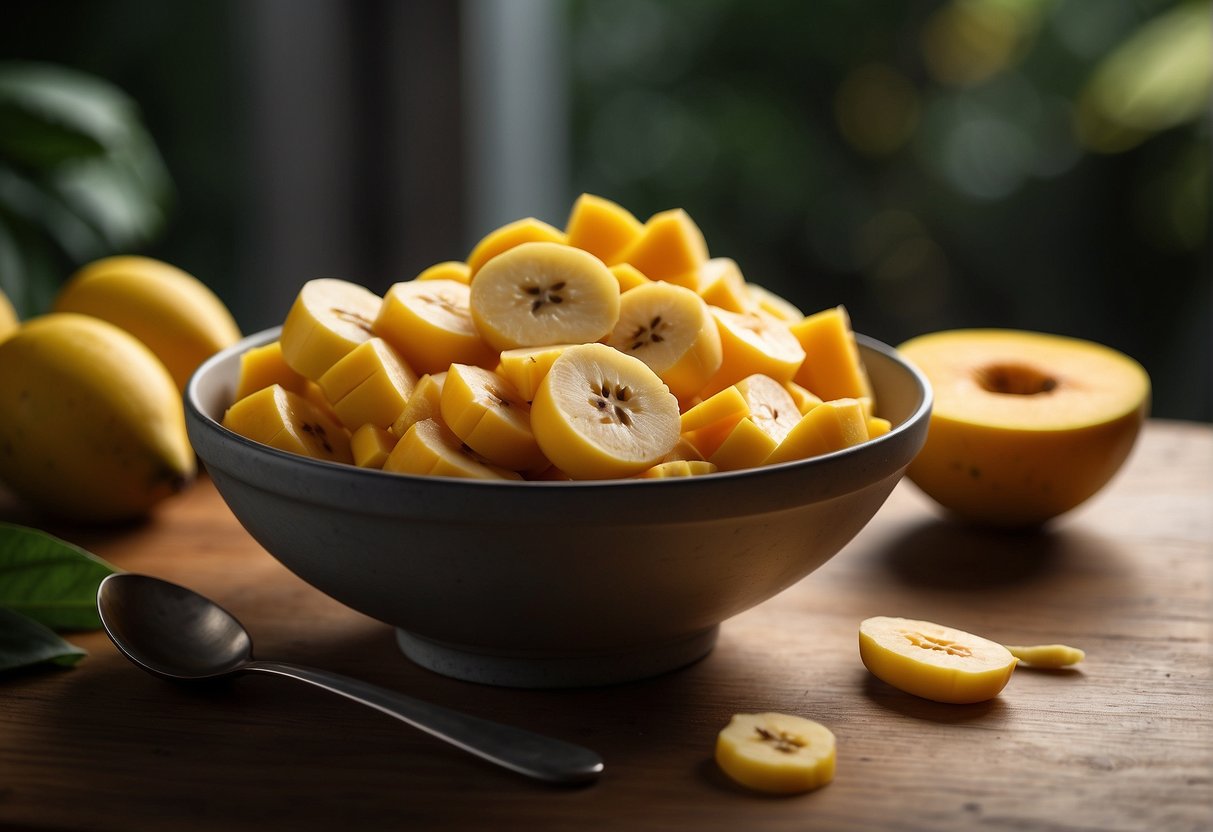
When I whip up a delicious banana and mango smoothie, I always think about the best way to savor every sip and how to keep it as fresh as possible. Here’s what I’ve found works great for enjoying and storing this fruity treat.
Best Ways to Serve
For breakfast, pouring the smoothie into a bowl and adding a handful of toppings like nuts and granola turns it into an irresistible smoothie bowl. If I’m in a rush or fancy a midday snack, I’ll just fill up a mason jar and take my smoothie on-the-go. And when the mood strikes for a dessert, nothing beats a well-chilled glass of this sweet delight. Occasionally, I make it extra thick, almost like a smoothie bowl, and enjoy it with a spoon.
- Breakfast: Serve in a bowl with toppings for a healthy breakfast.
- Snack/Dessert: Pour into a glass or mason jar for a portable option.
Storing for Freshness
If I find myself with leftovers, I make sure to refrigerate them in a sealed container. I prefer using mason jars since they’re airtight and keep the smoothie fresh. The smoothie stays good for about a day, but it’s best to give it a good shake or stir before drinking since separation might occur.
- Leftovers: Refrigerate in an airtight container, like a mason jar.
- Smoothie Bowls: Can be refrigerated, covered, but best enjoyed immediately.
Remember, these tips ensure that every banana and mango blend is just as delightful as when you first made it!
Frequently Asked Questions
I get it, mixing fruits in smoothies is a bit of an art, and you’ve got questions. Let me help clear up some of the confusion surrounding banana and mango smoothies.
What are the benefits of blending mango with banana in a smoothie?
Mixing mango and banana not only yields a tropical flavor bomb, but it’s also a nutritional powerhouse. Mangoes are loaded with vitamin C and fiber, while bananas are a great source of potassium and natural sugars, making for a balanced, energy-boosting drink.
How can combining banana and mango in a diet support weight loss?
When I use bananas and mangoes in my diet, I’m getting a combo that’s rich in fiber and can help me stay fuller longer, which might keep me from snacking unnecessarily. Plus, if I use these fruits to replace a high-calorie snack, I might reduce my overall calorie intake to support weight loss.
Can you make a mango and banana smoothie without including milk?
Absolutely! If you don’t have milk or just prefer to skip it, use alternatives like water or fruit juice to blend your banana and mango. You’ll get a smoothie that’s just as delicious but lighter in texture.
Is it safe to consume banana and mango together?
Totally safe! Bananas and mangoes complement each other perfectly and there’s no known risk in consuming them together. My body gets a boost of essential nutrients and fiber without any adverse effects.
What fruits pair well with mango in a smoothie?
I often add other fruits that mingle well with mango, like pineapple or berries, to make my smoothie more interesting and to pack in even more vitamins.
What is the best way to blend mango and banana for a creamy texture?
For that perfectly creamy texture in my smoothie, I make sure to use ripe bananas and mangoes. Sometimes, I also toss in some Greek yogurt or avocado for added creaminess without diluting the flavor.