
Overview of Strawberry Banana Smoothies
When I think of a classic smoothie, the strawberry banana combination pops right into my mind. It’s a fan favorite for a good reason. With just strawberries and bananas, you can whip up a delightful treat that’s not just bursting with fruity flavors, but is also pretty good for you.
Strawberries bring a sweet-tart balance and are a great source of vitamin C, while bananas add a creamy texture and contribute a good dose of potassium to the mix. Together, they create a smoothie that not only tastes amazing but is also brimming with nutrition.
Here’s a quick rundown on why I find these smoothies so appealing:
- Fiber: Both strawberries and bananas are high in fiber, which is great for digestive health.
- Calories: Generally, a strawberry banana smoothie can be quite low in calories, making it a suitable choice for calorie-conscious friends.
- Sugar: The natural sugars in the fruit make the smoothie sweet without added sugars.
- Health: Packed with vitamins and minerals, it’s a healthy option to satisfy sweet cravings.
| Nutrient | Benefit |
|---|---|
| Vitamin C | Antioxidant and immunity booster |
| Potassium | Essential for heart health |
| Dietary Fiber | Supports digestion and fullness |
I love how versatile a strawberry banana smoothie is. You can throw in some yogurt for extra creaminess, a scoop of protein powder for a post-workout snack, or even some spinach for an additional nutrient punch. The best part? You can adjust the ingredients to your liking, making it as indulgent or as light as you prefer.
Essential Ingredients
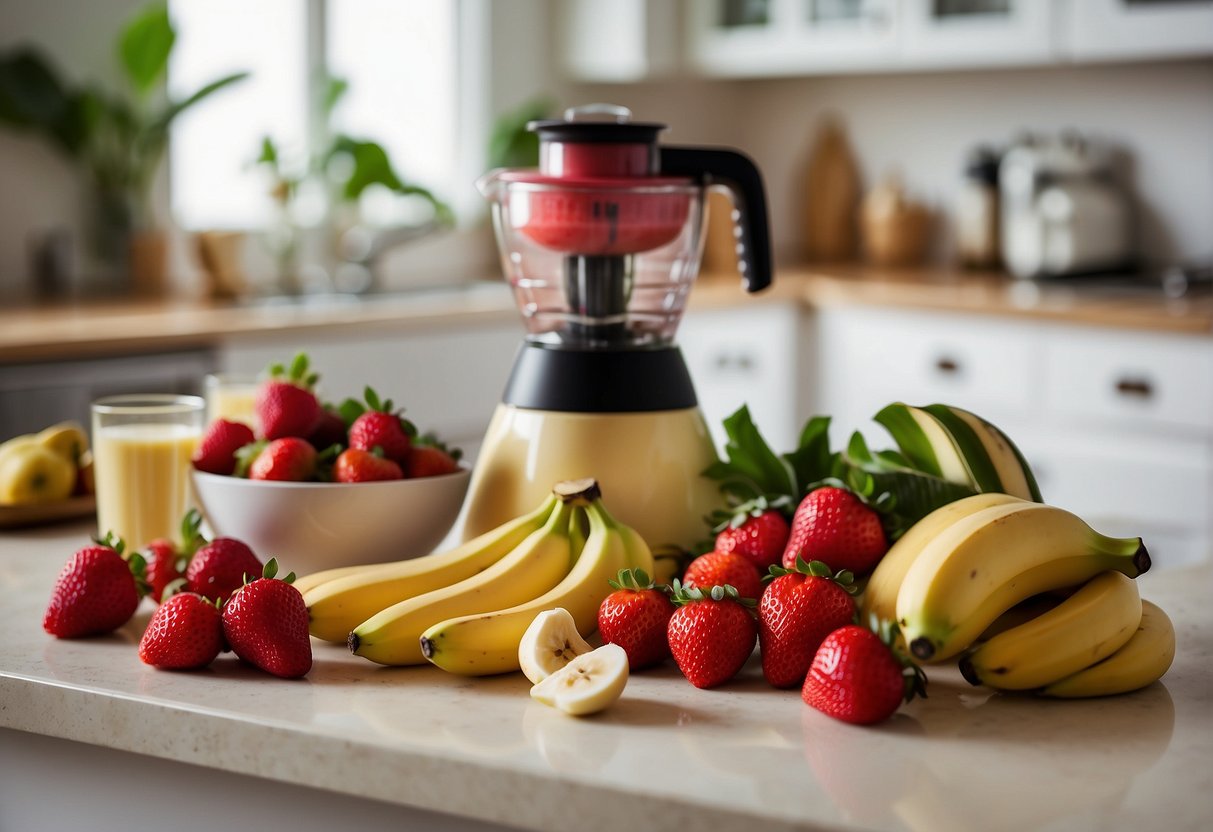
When I make a banana strawberry smoothie, I reach for ingredients that are not only simple but also pack a punch in terms of flavor and nutrition. Let’s dive into the essentials that transform basic fruits into a delectable and nutritious drink.
Fruit Basics
- Bananas: I always include a ripe banana for natural sweetness and creaminess.
- Strawberries: Fresh strawberries add a refreshing tang, but when out of season, frozen strawberries work just as well.
Liquids for Blending
Choice of liquid can vary depending on personal preference and dietary needs:
- Milk (dairy or non-dairy like almond milk, coconut milk, soy milk, oat milk)
- Water or orange juice for a thinner consistency
Thickening Add-ins
To achieve the perfect texture:
- Ice cubes for a frosty chill
- Greek yogurt or plain Greek yogurt for extra thickness and a protein boost
Sweeteners and Flavor Enhancers
A dash of something sweet or aromatic can elevate the smoothie:
- Honey or maple syrup to enhance the natural sweetness
- A touch of vanilla extract for a flavor twist
Protein and Nutrition Boosts
- Protein powder to help keep me full longer
- A sprinkling of seeds like chia, hemp, or flax seeds for omega-3s and fiber
Healthy Fats and Fiber
I don’t shy away from healthy fats; they’re essential for my body:
- Nuts or nut butters like peanut butter or almond butter for satiating fats and proteins
- Fiber from the seeds mentioned above or from the fruits themselves
Special Dietary Options
For those with specific dietary needs, there are plenty of substitutions:
- I ensure to use dairy-free and vegan options such as plant-based milks and yogurts.
- For a gluten-free drink, I simply avoid adding any ingredients that may contain gluten.
Greens and Veggies
Sometimes I sneak in some veggies for an extra nutrient kick:
- A handful of spinach or kale blends right in, making it a green smoothie.
- Other veggies like cucumber or beetroot are also a great addition to experiment with.
Choosing the Right Equipment

When I’m whipping up a strawberry banana smoothie, the equipment can make or break my blending game. It’s all about power, consistency, and ease of use.
Selecting a Blender
I always reach for a high-powered blender when I’m craving a creamy smoothie. The Vitamix stands out as a top performer—it blasts through frozen fruit with ease, giving that perfect velvety consistency. Don’t just grab any blender, though. For a smoothie that’s not chunky, simple blenders might not cut it. A Vitamix blender is an investment, but man, does it make a difference.
Using Alternative Tools
Not everyone has a fancy blender. Sometimes, I use a hand blender or food processor when I’m in a pinch. They’re not just for soups or dough; these babies can actually churn out a decent smoothie with a bit more effort. Here’s how I see them:
- Hand Blender: Best for softer fruits; might struggle a bit with fully frozen strawberries unless they’re in smaller pieces.
- Food Processor: Surprisingly capable, but expect a bit more texture to your smoothie—not always the silkiest finish.
Preparation Techniques
When I’m making a banana strawberry smoothie, I like to keep things simple but effective to achieve that perfect thick and creamy texture. Here’s a little guide I follow:
First, I gather all my ingredients. This usually includes ripe bananas, fresh strawberries, a liquid base like almond milk or yogurt, and maybe a sweetener like honey if I’m feeling fancy.
For the thick smoothie lovers:
- Frozen fruits: I make sure to freeze my bananas and strawberries ahead of time. This helps thicken the smoothie without the need for ice, which can water down the flavor.
- Yogurt: Adding Greek yogurt also contributes to a creamy consistency and a tangy taste.
Here’s how I blend it:
- Start low: I begin blending on a low setting to break up the big chunks.
- Ramp it up: Then, I gradually increase to the highest setting for a uniform texture.
- Pulse if needed: Sometimes, there are stubborn bits that need a quick pulse.
TIP: I always add liquid sparingly because I can always put more in, but can’t take it out if my smoothie gets too runny.
Texture Adjustments:
- Too thick? Add a splash more of your liquid base.
- Too runny? A few more frozen strawberries or half a frozen banana can save the day.
I’ve found that personal taste really dictates the exact measurements, so I usually eyeball it and adjust as I go. Remember, the key to a perfect smoothie is in balancing the ingredients to suit your texture preferences!
Smoothie Variations
When I’m whipping up a strawberry banana smoothie, I love to play with different flavors and add-ins. Here’s how I personalize my smoothies to keep things interesting and give them an extra nutritional boost.
Classic Flavor Combinations
I’ve found that certain fruits blend perfectly with the classic strawberry banana base. Mangoes, peaches, and pineapples are my go-to choices when I’m looking for that tropical twist. These fruits add a natural sweetness and a richness in flavor that make any strawberry banana smoothie taste like a sunny vacation in a glass.
Creative Mix-ins
But why stop at fruit? To switch things up, I like to stir in oats or overnight oats, which make the smoothie heartier and more filling – perfect for breakfast on the run. And for a hint of nutty flavor and extra texture, seeds are magical. A spoonful of chia seeds, hemp seeds, or flax seeds can make a lot of difference, plus they’re great for adding omega-3 fatty acids and fiber.
Superfoods and Supplements
I’m a big fan of customizing my smoothie to fit my dietary needs, so adding a scoop of protein powder is a no-brainer when I need a post-workout boost. Not only does it enrich my strawberry banana or any berry smoothie, but it also helps in muscle recovery. For those days when I feel like I need a little extra something, I’ll drop in some superfoods – a sprinkle of antioxidant-rich goji berries or a dash of spirulina to ramp up the health quotient.
Nutritional Information

When I make a strawberry banana smoothie, I keep an eye on the nutrition. Each ingredient adds its own kick of nutrients. Strawberries and bananas are naturally sweet, so my smoothies can have a fair amount of sugar, but they’re also packed with vitamins.
A typical 12-ounce serving of my strawberry banana smoothie falls somewhere between 188 to 210 calories. Pretty decent for a snack, right? It’s usually low in fat, with about 1 gram or so per serving. Carbs come in around 34 grams, but they’re not just empty calories; they include dietary fiber that’s good for digestion.
I watch for protein content too, especially after a workout. So I might throw in some Greek yogurt, which can add about 5.5 grams of protein to the mix (Nutritionix). Also, smoothies are my sneaky way to take in some extra vitamins and minerals. Strawberries and bananas are excellent sources of Vitamin C and potassium. Plus, if I use milk or fortified plant-based alternatives, I’m getting a boost of calcium and sometimes Vitamin D.
For those who do gluten-free, smoothies are a win. They naturally contain no gluten, unless you add something that’s got it hidden away.
Now, I always double-check my specific ingredients for things like cholesterol and sodium, but generally, these smoothies are low in both. And if you’re like me, making sure there’s a punch of nutrients with every sip, toss in other fruits or some spinach for iron and even more vitamins, like Vitamin A.
Honestly, smoothies are where it’s at for tasty, healthy nutrition.
Serving and Presentation Tips
When I whip up a banana strawberry smoothie, especially if I’m serving it for breakfast or as a snack, presentation is key. First off, choose the right glass. I like to go with a clear, tall glass that shows off the smoothie’s vibrant color and layers.
For a touch of flair:
- Garnish: Top the smoothie with a fresh strawberry or a banana slice. If I’m feeling fancy, I fan out the strawberry on the rim of the glass.
- Texture: Add a sprinkle of granola or chia seeds on top for a healthy crunch.
- Drizzle: Sometimes, I drizzle a bit of honey or melted dark chocolate over the smoothie for that Instagram-worthy look.
| Ingredient | Purpose |
|---|---|
| Granola | Adds a crunchy texture |
| Chia seeds | Boosts nutritional value |
| Honey | Provides natural sweetness |
| Dark chocolate | Adds a rich and decadent flavor |
Making a banana strawberry smoothie is simple. Once it’s ready to serve:
- Pour the smoothie carefully into your chosen glass.
- Leave a little room at the top so the garnish doesn’t cause an overflow.
- Pop in a colorful straw that contrasts with the smoothie for an extra pop.
Remember, the eyes eat first, so I take my time to make it look as delightful as it tastes. Serve immediately for the best experience since smoothies tend to separate if they sit too long. Enjoy!
Storage and Make-Ahead Tips
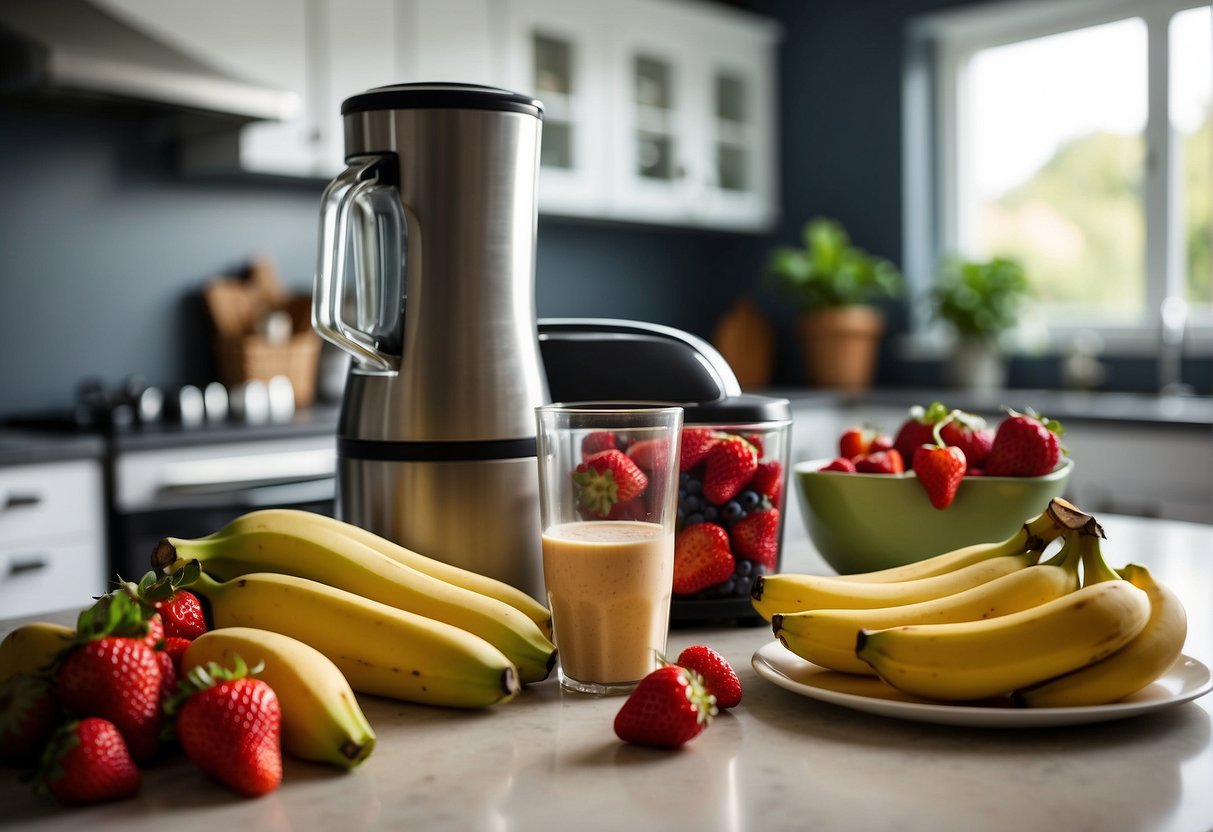
When I’m prepping my strawberry banana smoothies, I love having strategies to keep them fresh and tasty. If I can’t sip them right away, storing them properly is key. I always make sure any leftovers are in an airtight container, and then I pop them in the fridge. They’ll keep well for about a day or so.
But here’s a cool trick: pour the smoothie into an ice cube tray and freeze it. When I’m ready for a smoothie, I just blend the cubes with a splash of juice or milk for a quick refresh.
For a make-ahead option, I sometimes prepare smoothie packs. I’ll measure out the strawberries and bananas, and then stash them in the freezer. When I’m in a rush, I’ll grab a pack, toss it with some yogurt or liquid of my choice in the blender, and boom! Breakfast is served.
| Ingredient | Prep | Storage |
|---|---|---|
| Strawberries | Hull & slice | Freezer, up to 6 months |
| Bananas | Peel & slice | Freezer, up to 6 months |
| Yogurt | – | Fridge, use by date |
For store-bought smoothies, I find it’s best to keep them unopened in the fridge and check the best-by date to ensure they’re still good. Once opened, it’s like homemade – enjoy it within a day or so.
Remember, these smoothie make-ahead tips are not just about saving time; they’re about preserving the deliciousness of every sip!
Sharing and Social
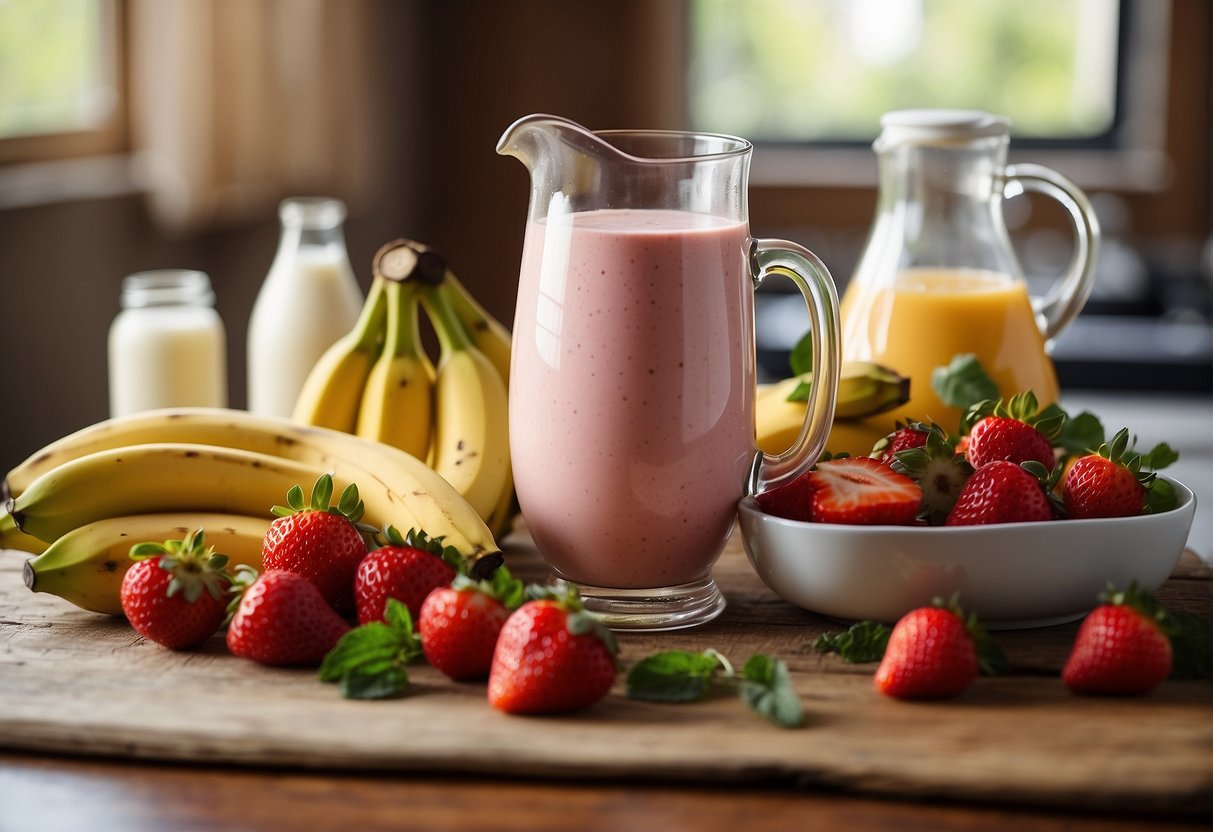
I love seeing how my favorite strawberry banana smoothies become a hit on social media. It’s not just about the taste; it’s about the visuals and community, too. Here’s how I make the most of it across different platforms.
Instagram-Worthy Photos
When I post my strawberry banana smoothie on Instagram, it’s all about the visuals. Natural lighting and a clean background make the pink hues pop. I always snap a high-res pic from the top to get the best angle. Adding a fun straw or garnish can really make the photo stand out.
Sharing Recipes on Pinterest
Pinterest is my go-to for sharing and discovering new smoothie recipes. It’s easy to create a pin with a beautiful photo of my smoothie, but the secret is in the description. I make sure to include keywords like “refreshing,” “healthy,” and “easy-to-make.”
Smoothie Challenges on Facebook
Over on Facebook, I engage my friends with smoothie challenges. We share our versions of the best strawberry banana smoothie and encourage others to try a twist on the recipe. It’s all about who can come up with the healthiest or most indulgent version!
Frequently Asked Questions

I’ve got some smooth tricks up my sleeve that might just make your next strawberry banana smoothie the best you’ve ever had.
What’s the best way to make a strawberry banana smoothie with yogurt?
For a creamy strawberry banana smoothie with yogurt, I blend together ripe bananas with fresh or frozen strawberries, a scoop of yogurt, and a touch of honey if needed. It’s the ripe bananas that really add the natural sweetness.
Can I use milk instead of yogurt in a strawberry banana smoothie?
Absolutely, I often swap out yogurt for milk to get a lighter smoothie. Just pour in your preferred amount of milk to achieve the consistency you like. Almond milk is my go-to for a smoother taste.
How can I make a healthy strawberry banana smoothie?
To make my smoothie healthy, I stick to using fresh fruit, a handful of spinach for extra nutrients, and use Greek yogurt for a boost of protein. I skip the added sugars because the fruits are sweet enough.
What are the essential ingredients for a classic strawberry banana smoothie?
The essentials for a classic smoothie like this are strawberries, banana, yogurt, and a little ice or I use frozen fruit. I make sure my bananas are ripe for peak flavor.
What makes strawberry banana smoothies beneficial for health?
Strawberry banana smoothies are packed with vitamins, fiber, and potassium because of the fruits I use. They can contribute to my daily fruit intake and keep me feeling full and energetic.
What’s the secret to making a professional-quality smoothie at home?
The secret I’ve found is to use frozen fruit to chill and thicken the smoothie instead of ice, which can water it down. A high-powered blender gets me that smooth, professional texture.