
Health and Nutritional Benefits
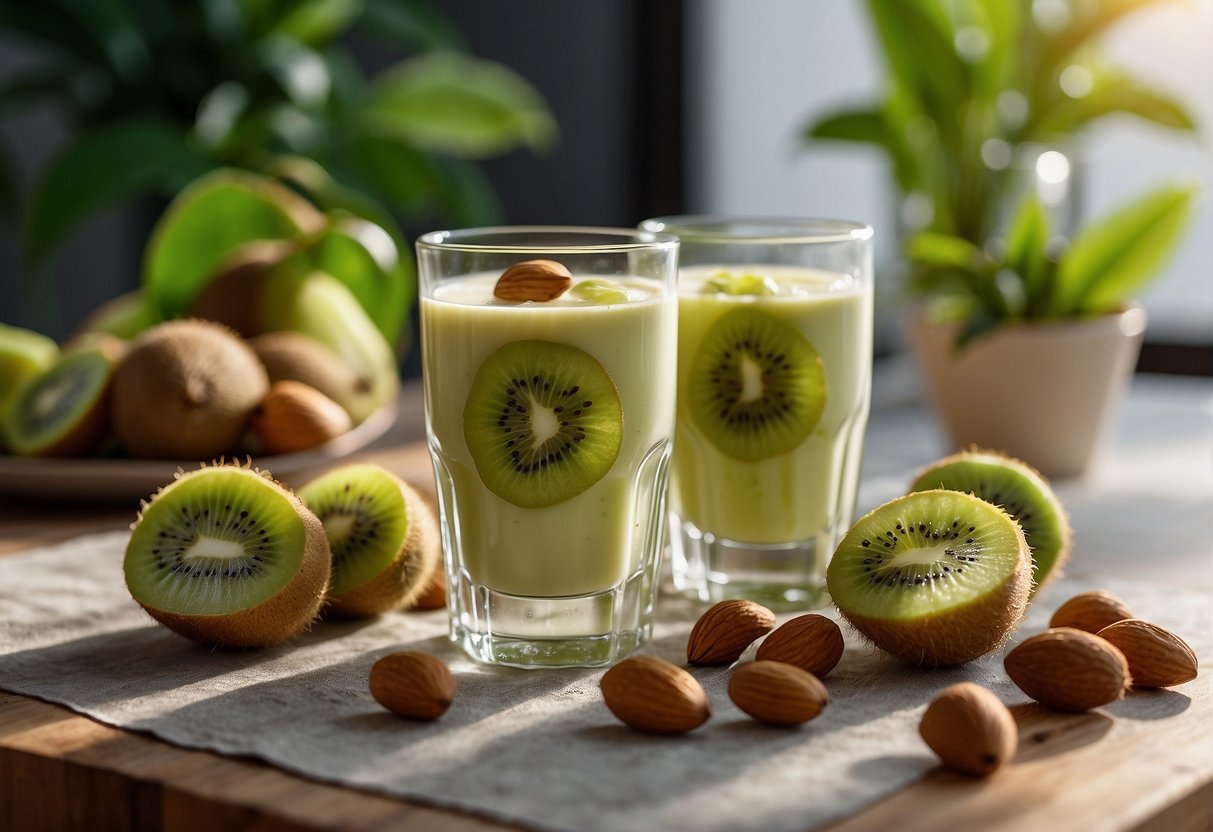
When I blend kiwi with almond milk, I’m not just making a delicious drink—I’m also whipping up a nutrient-dense treat that’s loaded with essential vitamins and minerals. Let’s dive into what makes this combo so beneficial for health.
Importance of Vitamin C and Antioxidants
Kiwi is a powerhouse fruit that provides an incredible amount of Vitamin C, a vital antioxidant that I find essential for the body’s immune system and skin health. It’s also packed with other antioxidants that help combat oxidative stress. Meanwhile, almond milk is a great source of Vitamin E, which complements the antioxidant profile of kiwi, making the mix a robust duo for fighting free radicals.
- Kiwi: Rich in Vitamin C
- Almond Milk: Good source of Vitamin E
Kiwi and Almond Milk for Digestive and Heart Health
Combining kiwi’s dietary fiber with almond milk’s low-calorie content makes for a gut-friendly beverage that can aid in digestion. The fiber from kiwi keeps my digestive tract running smoothly, and it’s always a plus for me knowing that gut health influences overall well-being. Additionally, studies I’ve read highlight the importance of a diet rich in potassium for maintaining optimal heart health, and kiwi contributes a significant amount of this essential nutrient. Almond milk, on the other hand, is light on the stomach and adds to the mix without overwhelming it, making it supportive of both digestive and heart health.
- Kiwi: High in dietary fiber and potassium
- Almond Milk: Low in calories, supports heart health
Mixing Kiwi and Almond Milk: Guidelines
When I mix kiwi with almond milk, I’m always careful to consider the enzyme activity in kiwi and the potential for curdling. Here’s how I manage these factors for a delicious blend.
Understanding Kiwi Enzyme Actinidain
Kiwi contains an enzyme called actinidain, which has the ability to break down proteins. This is fantastic for tenderizing meats, but it also means that when I mix kiwi with certain types of dairy, there’s a chance it could break down the milk proteins, leading to curdling. Fortunately, almond milk is plant-based, so its proteins differ from those found in cow’s milk. This makes almond milk my milk of choice when pairing with a ripe kiwi for a smoothie, as it’s less likely to react negatively with actinidain.
Preventing Curdling
Even though almond milk typically doesn’t curdle as easily as cow’s milk, I still take steps to ensure a smooth mixture:
-
Temperature: I make sure my almond milk is cold, as extreme changes in temperature can sometimes affect the milk’s stability.
-
Ripeness: The riper the kiwi, the more active the enzymes. So, I tend to go for kiwis that are just ripe enough, avoiding those that are overly soft.
-
Mixing: I blend the almond milk and kiwi gently. I’ve found that a high-speed blend can sometimes encourage separation, so a lower speed can help maintain a creamy consistency.
By paying attention to these details, I enjoy kiwi and almond milk combinations without the worry of curdling.
Recipe Inspirations
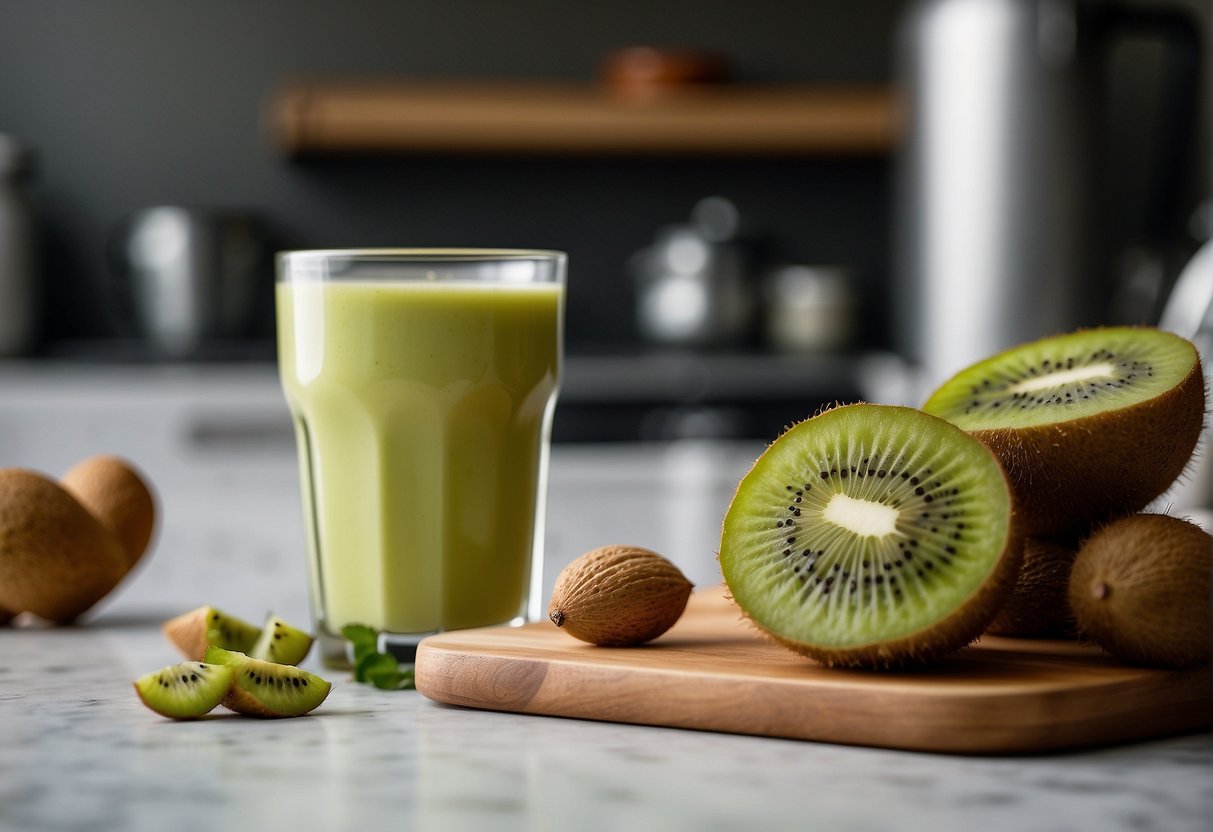
In creating tantalizing smoothie recipes, I’ve found that kiwi and almond milk provide a refreshing and creamy base that pairs beautifully with a wide range of ingredients. Below are some of my favorite ways to elevate this delightful combination.
Creating the Perfect Kiwi Almond Milk Smoothie
To craft an exquisite Kiwi Almond Milk Smoothie, I usually start with:
- 2 ripe kiwis, peeled and chopped
- 1 cup almond milk, unsweetened
- A handful of ice cubes
Blend these until smooth. For those with a sweet tooth, adding a teaspoon of honey enhances the natural sweetness. The result is a smooth and vibrant drink that’s not only easy to make but also brimming with fiber and vitamin C.
Diversifying with Additional Fruits and Ingredients
Sometimes, I like to mix things up and incorporate other fruits into my kiwi almond milk base. Here are a few winning combinations:
- Banana: Adds creaminess and potassium to the smoothie.
- Mango and Pineapple: Introduce a tropical twist that’s hard to resist.
- Blueberries: They contribute to a nutrient-packed drink with a color that pops.
I also throw in chia seeds or a scoop of vegan protein powder for an extra boost. When I’m feeling adventurous, I even add spinach to my smoothie for a sneaky serving of greens that’s perfect for anyone experimenting with green smoothies.
To cater to taste preferences without dairy, using coconut milk in place of almond milk creates a richer, more dessert-like experience, ideal for those decadent smoothie bowls or parfaits. And a sprig of mint or a handful of berries never hurts when it’s time to impress with both taste and presentation.
Dietary Considerations and Alternatives
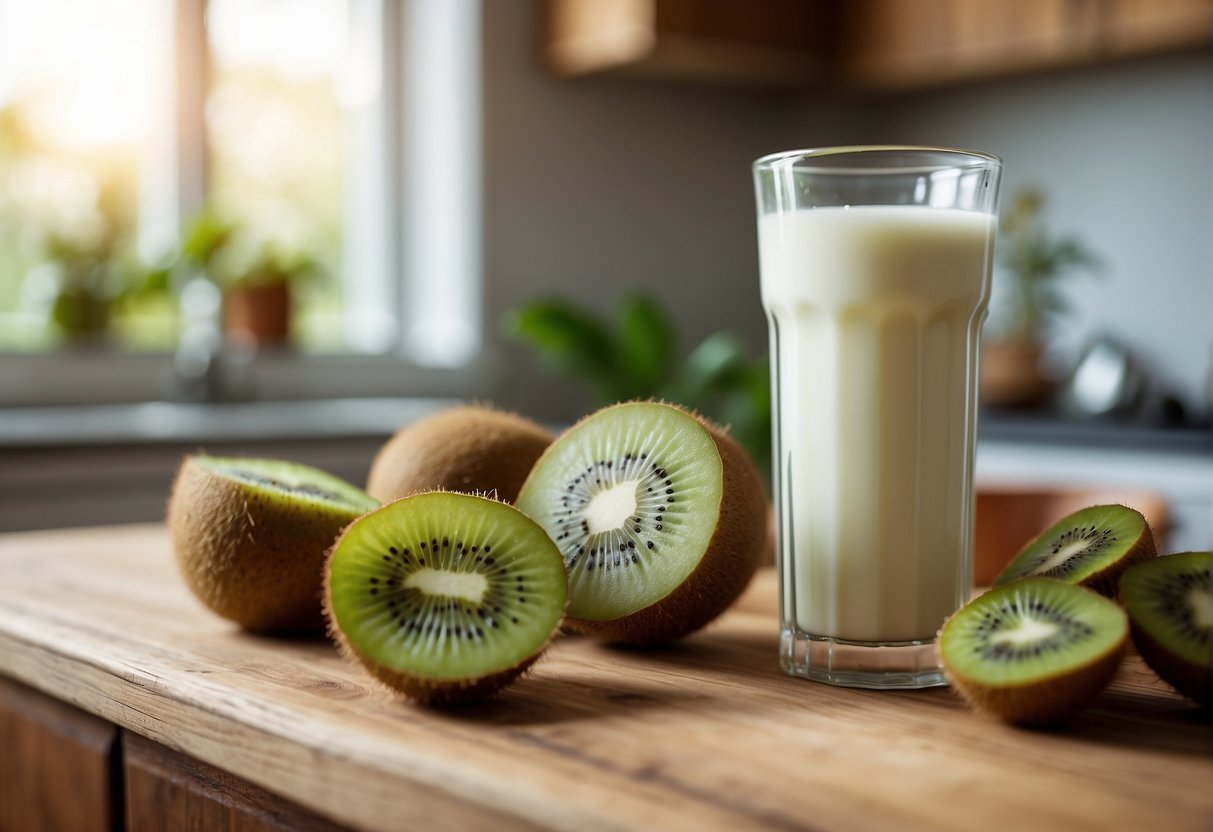
When I’m looking to mix kiwi with a milk alternative, I consider dietary requirements and how to maintain or enhance the flavor of kiwi.
Suggestions for Vegan and Dairy-Free Diets
Kiwi and Almond Milk: I find mixing kiwi with almond milk to be a delightful combination, especially if I’m after something that’s vegan and dairy-free. Almond milk is a fantastic alternative to traditional milk as it’s plant-based, typically lower in calories, and rich in vitamin E. Plus, it adds a slightly nutty flavor that complements the tangy sweetness of kiwi.
- Other Non-Dairy Alternatives:
- Coconut milk: Adds a tropical twist
- Oat milk: Brings in a creamy texture
- Soy milk: Packs extra protein
Adapting Recipes for Allergies and Taste Preferences
For those with allergies or specific taste preferences, kiwi can be a tricky fruit to introduce to recipes due to its enzyme content which can sometimes react with dairy products.
- Managing Sweetness: If the kiwi isn’t sweet enough, consider adding a bit of sugar or a sweetener that aligns with your dietary needs. I tend to use natural sweeteners like honey or agave to keep things healthy.
- Protein Boost: If I need more protein in my diet, I’ll bolster my kiwi blend with a scoop of protein powder that’s allergy-friendly—like a pea or hemp-based one. It’s a simple way to make my kiwi almond milk smoothie more filling and nutritious.
Culinary Tips and Tricks
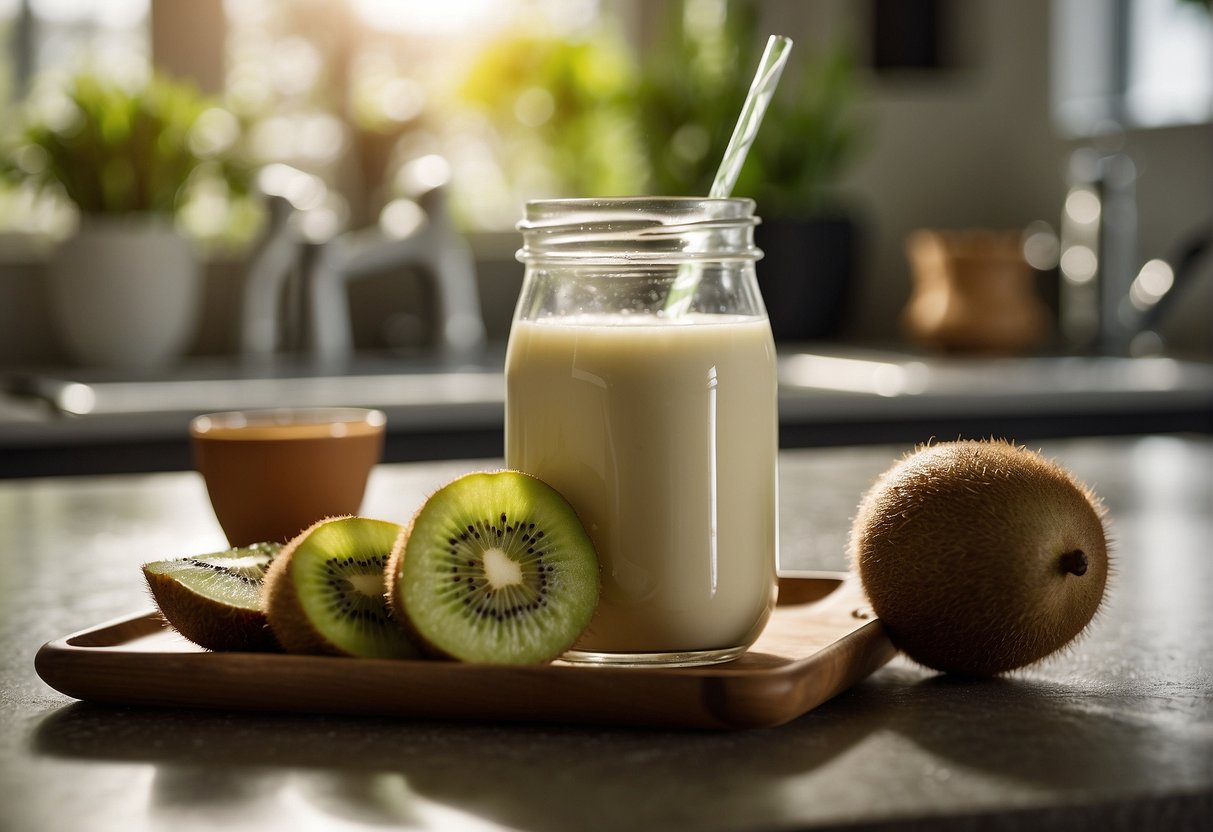
When I’m mixing kiwi with almond milk for smoothies or other dishes, I’ve picked up a few tips to really make the flavors and textures shine. Here’s what I’ve learned to boost enjoyment, whether it’s for a quick breakfast or a delicious snack.
Enhancing Taste and Texture
Using kiwifruit in a smoothie with almond milk is a game-changer for me. I always make sure my kiwi is ripe to bring out its maximum sweetness. For texture, frozen kiwi chunks not only chill my drink but also give it a refreshing thickness. Blending it just right is key; too long and it goes runny, too short and it’s chunky. I aim for about 30-60 seconds in my blender for a silky result. Here’s a quick tip: a small spoon of almond butter can add a delectable richness without overpowering the kiwi’s unique flavor.
Serving and Presentation Ideas
I love getting creative with serving! For an engaging breakfast, arranging thin kiwi slices along the sides of a glass before pouring the smoothie creates an artistic touch. As a snack, a layered look with almond milk-based whipped cream or parfaits adds visual appeal and variety in taste. When I have guests, I garnish with a few extra kiwi slices on top or a sprinkle of chia seeds for a bit of contrasting texture. It’s all about catering to taste preferences and ensuring every sip or spoonful is as enjoyable as it is refreshing.
Frequently Asked Questions

When it comes to making smoothies, I’ve got some questions up my sleeve. Almond milk and kiwi seem like a great pair, but let’s get into the nitty-gritty of what you really want to know.
Is it safe to have a kiwi and almond milk smoothie?
Absolutely! Mixing kiwi with almond milk is not only safe but also a tasty way to enjoy these two ingredients. Just remember that kiwi contains actinidain, which can break down proteins and might make your smoothie a bit runnier over time.
What are the benefits of adding kiwi to an almond milk-based smoothie?
Kiwi is a nutrient powerhouse, rich in vitamin C and dietary fiber. Adding kiwi to your almond milk smoothie boosts your drink’s nutritional profile and gives it a refreshing zesty flavor.
Can adding sugar to a kiwi and almond milk mixture impact weight loss goals?
Yes, tossing extra sugar into your smoothie can impact weight loss goals by increasing the calorie count. I try to keep it healthy by relying on the natural sweetness of kiwi and maybe tossing in some other fruits instead.
Is it better to make a kiwi and almond milk smoothie with or without yogurt?
This is a matter of preference. Including yogurt can add creaminess and probiotics, which can be great for your gut health. If you opt for a dairy-free version, just stick with kiwi and almond milk to keep it plant-based.
What might happen if you combine kiwi with dairy milk as opposed to almond milk?
Kiwi mixed with dairy milk isn’t the best idea because the enzymes from the kiwi can curdle the dairy. Almond milk doesn’t have the same issue, so it’s a smoother blend.
What are the best ingredients to blend with kiwi for a nutritious smoothie?
For a nutritious smoothie, I blend kiwi with ingredients like bananas for creaminess, berries for antioxidants, and a handful of greens like spinach for that extra health kick. Exploring different combos helps me to keep it delicious and nutritious every time.