
Understanding Boba: Origins and Ingredients
When I think about boba, two popular drinks come to mind: the classic boba tea and the creamy boba smoothie. Here’s a deeper look at what boba is, what goes into these drinks, and why tapioca pearls are such a big deal.
What Is Boba?
Boba, often referred to as bubble tea, is a Taiwanese creation that has taken the world by storm. The term originally comes from the Taiwanese slang for “breasts,” likened to the round shape of tapioca balls. Its roots trace back to the 1980s with several tea shops like Chun Shui Tang claiming to be the birthplace of the original pearl milk tea.
Key Ingredients in Boba Tea and Boba Smoothie
The typical boba drink, whether it’s a tea or a smoothie, starts with a tea base. For boba tea, this could be black, green, or oolong, while boba smoothies are often non-tea based and rely more on fruit flavors or even a combination of milk and ice. Both are sweetened, frequently with sugar or syrup, and may include milk to add a creamy texture. However, the key distinction is the texture; boba teas are usually served with ice, while boba smoothies are blended into a thicker, more shake-like consistency.
Tapioca Pearls: The Star of Boba Drinks
Now, let’s talk about the heart of the boba experience – tapioca pearls. Originating from the cassava plant found in Asia, these chewy spheres are what set boba drinks apart. Q, which denotes a chewy texture in Taiwan, is the goal when preparing tapioca pearls; achieving that perfect Q is essential for an authentic boba drink experience. Whether floating in a tea-based boba or a fruit-infused boba smoothie, these little balls of joy are what many people look forward to when sipping on these iconic beverages.
Boba Tea Vs. Boba Smoothie: Beverage Breakdown

I’m here to lay out the delicious details between boba tea and boba smoothies. While both have their unique allure, they cater to different taste buds and occasions.
The Classic Boba Tea
Boba tea, typically known as bubble tea or pearl milk tea, originated in Taiwan and has become a worldwide phenomenon. At its core, it consists of tea—often black or green—sweetened and then shaken with milk and ice. The ‘boba’ refers to the chewy tapioca pearls sitting at the bottom, waiting to be scooped up with a wide straw. It’s a refreshingly cool experience that combines the nuanced flavors of tea with a fun, chewy texture.
The Rise of the Boba Smoothie
The boba smoothie is a newer twist on the classic, blending the boba pearls with a fruitier concoction. Rather than tea, this version often uses a mix of fruit juices or purees with milk or yogurt to create a thicker, often creamier beverage. It’s a smoothie at heart, boosted with the distinct, chewy mouthfeel of boba pearls. These are a hit for people who prefer their drinks on the sweeter, fruit-filled side.
Texture and Consistency Differences
When distinguishing between the two, texture and consistency take the spotlight. Traditional boba tea is usually less thick, allowing easy sipping through a straw and occasional bursts of tapioca pearls. In contrast, a boba smoothie is much thicker, often requiring a spoon to navigate through the creamy landscape dotted with boba. If I’m in the mood for something light and tea-flavored, I’ll go for boba tea. But when my sweet tooth calls for a dessert-like treat, a boba smoothie is what I’ll choose.
Preparation Techniques: From Boiling to Blending
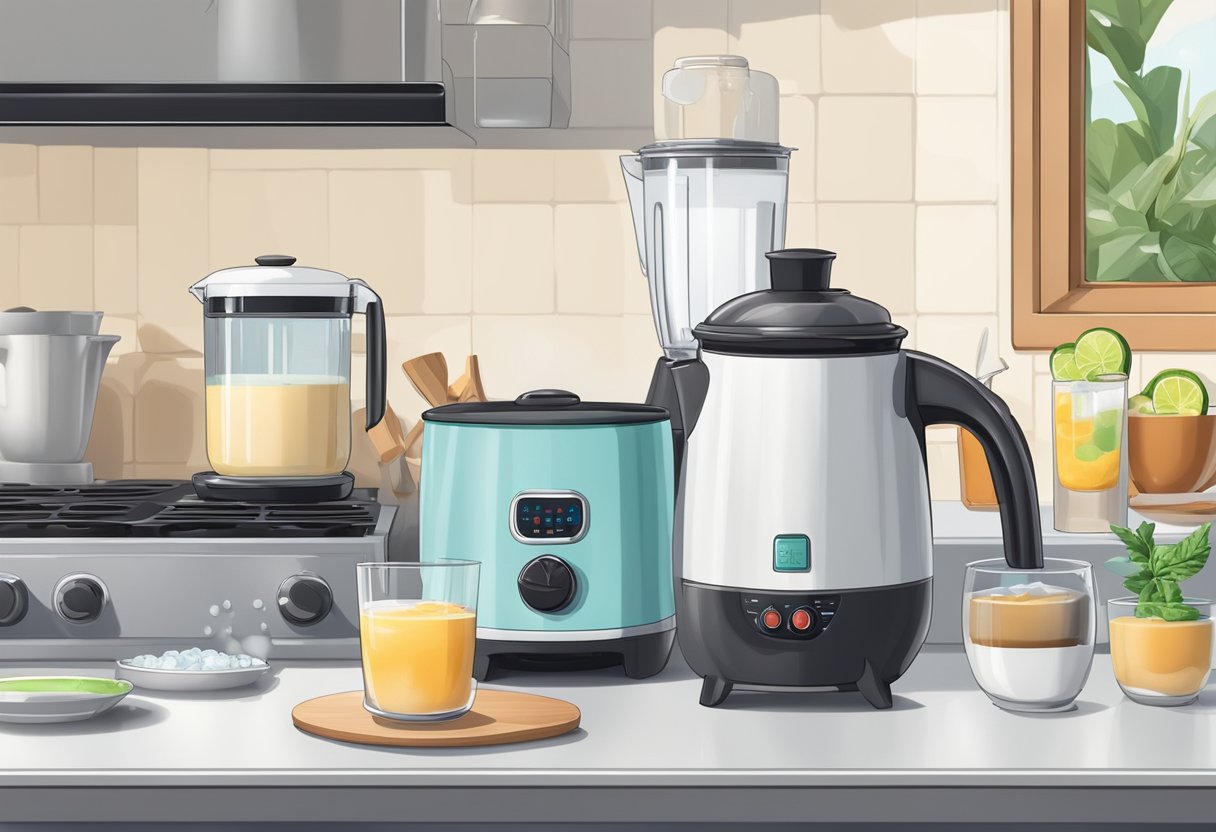
When I whip up a boba drink, it’s all about texture and flavor. Whether it’s a classic boba tea or a creamy boba smoothie, the key lies in perfecting the preparation process. Let’s dive into how each is made.
Boba Tea Preparation
For a great boba tea, I start with boiling water — it’s crucial for cooking the tapioca pearls to that signature chewy texture. Here’s a quick rundown:
Boil the Pearls:
- Bring a pot of water to a rolling boil.
- Add tapioca pearls and stir gently until they float to the surface.
- Cook for about 20 minutes or according to the package instructions.
Prepare the Tea:
- While the pearls are cooking, I steep my tea – be it classic black or an aromatic taro milk tea, in hot water.
- Once brewed, I sometimes sweeten it to taste.
Assemble the Drink:
- I drain the cooked pearls and add them to a serving glass.
- I pour the prepared tea over the pearls, leaving room for ice and milk if it’s a milk tea version, giving it that signature boba drink look.
Boba Smoothie Blending Process
Now for the boba smoothie, my blender becomes my best friend. The process is a bit different but just as enjoyable:
Blend the Base:
- Choose my fruits or flavorings and toss them into the blender.
- Add milk or a dairy-free alternative along with ice to give it that smooth, creamy consistency.
Cook and Add Tapioca Pearls:
- Just like with the tea, I start by boiling my tapioca pearls until they’re perfect.
- Once they’ve cooled down a bit, I scoop them into my serving glass.
Combine and Enjoy:
- I pour the blended smoothie over the pearls.
- I make sure to give it a quick stir before sticking in a wide straw, perfect for slurping up those tasty pearls.
Whether I’m visiting bubble tea shops or making it at home, I love the ritual of crafting these delightful beverages. The magic is all in the preparation – boiling water for pearls and blending to creamy perfection.
Personalizing Your Boba Experience

I love how boba drinks are like a blank canvas—you can tweak them to fit your taste precisely. Whether you’re in the mood for something sweet and creamy or something more health-conscious, there’s a way to make it yours.
Customizing Sweetness
When I’m making my boba drink, getting the sweetness just right is crucial. I start with the sweetener, which can be anything from sugar to honey or even maple syrup. Some days, I prefer the rich taste of brown sugar, while on other occasions, a lighter syrup will do the trick. And remember, you can always adjust the sweetness level to match your preference—it’s all about what tastes good to you.
- Sugar: Classic, straight-up sweet.
- Brown Sugar: Adds a molasses kick.
- Honey: A nature-sweet note.
- Maple Syrup: Rich and distinctive.
Alternative Milk Options
I dig mixing up my boba drinks with different milk options. There’s whole milk for that creamy texture, but if I’m feeling something lighter, almond milk or oat milk are my go-tos. For a tropical twist, I can’t get enough of coconut milk in my boba. And, for friends who are dairy-free or vegan, non-dairy creamer is a fantastic way to still get that creamy consistency without the lactose.
- Whole Milk: Creamy and rich.
- Almond Milk: Nutty and light.
- Oat Milk: Sweet and earthy.
- Coconut Milk: Tropical and smooth.
- Non-Dairy Creamer: Dairy-free creaminess.
Toppings and Extras
Now, let’s talk about those awesome extras—I mean toppings and jellies that really make a boba drink pop. Throwing in some popping boba is like a party in your mouth with each sip. Or maybe some fruit pieces for a fresh twist? The options are endless, so I always have fun with it and recommend you do the same.
- Popping Boba: Burst of fun.
- Jellies: Chewy and flavorful.
- Fruit: Fresh and juicy.
Nutritional Aspects: Comparing Health Benefits
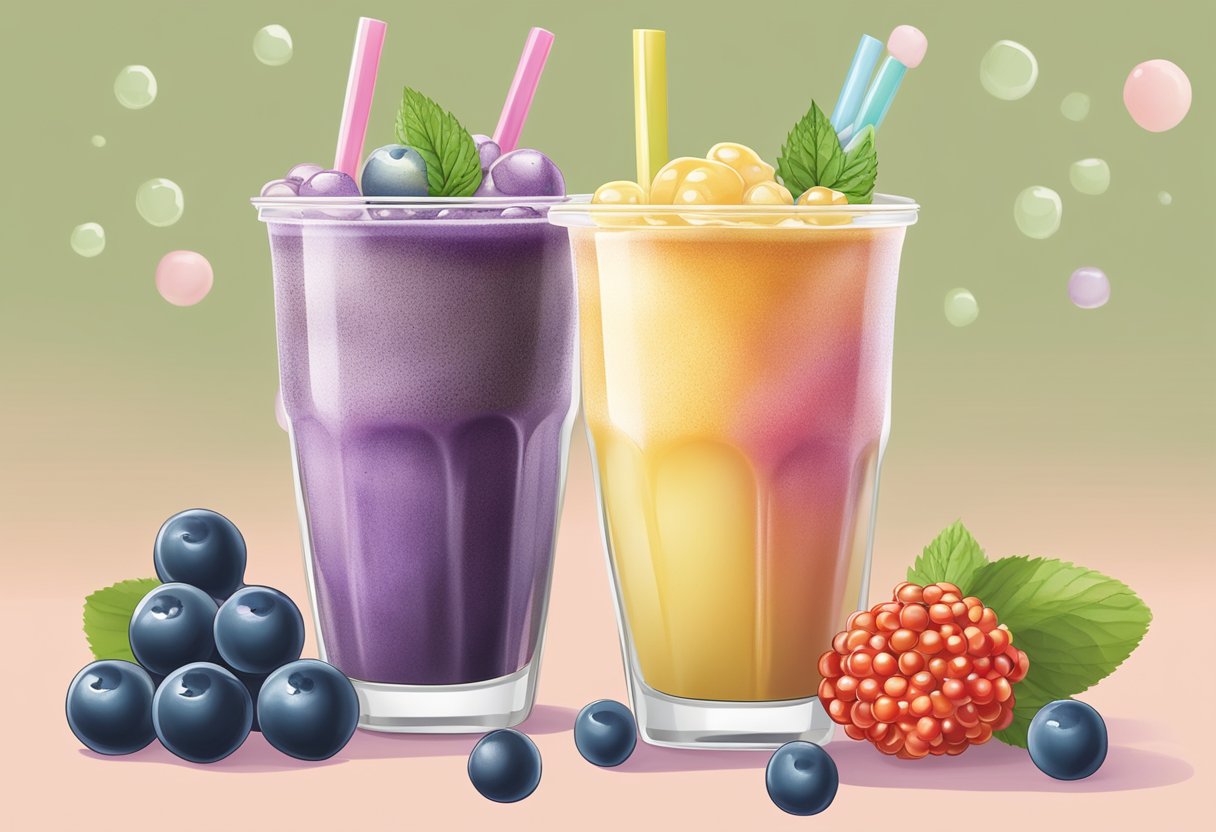
I love delving into the nitty-gritty of what I’m consuming, so let’s break down the nutritional content of boba smoothies versus boba tea. Both drinks have their perks, but knowing their differences can help us make better decisions based on our health goals.
Calories and Sugar Content
Boba smoothies often borrow their sweet taste from the natural sugars found in fruit, which can be a plus. However, they can still be high in calories, especially when additional sweeteners are used. On the flip side, boba tea’s calories primarily come from the tapioca pearls and the added sweeteners, like syrup or sugar. For example, an average 16-ounce serving of boba milk tea might contain about 300 calories and 38 grams of sugar, whereas a fruit boba smoothie of the same size can range significantly depending on the ingredients.
Vitamins and Minerals
When it comes to vitamins and minerals, boba smoothies generally have an edge because they can contain fresh fruits, which boast inherent nutritional value including vitamins like vitamin C and minerals such as potassium. Boba tea, unless it includes real tea leaves or fruit, usually lacks these beneficial nutrients.
Dietary Considerations
For those following specific diets, it’s important to know that boba drinks can be adapted to suit different needs. Some boba teas can be made vegan or gluten-free depending on the tea and tapioca pearls used, but always double-check because some pearls might contain traces of gluten. Boba smoothies can be easily crafted to accommodate dietary fibers and protein content with the addition of ingredients like chia seeds or protein powder. Still, watching the sweeteners is key for both boba smoothies and boba tea to keep the sugar content in check.
Cultural and Global Influence of Boba

Boba, with its humble origins in Taiwan, has blossomed into an international sensation. It’s fascinating how this unique beverage has woven itself into the cultural fabric across the globe.
Boba’s Popularity in Asia and Beyond
In Asia, particularly in Taiwan where it was invented by Lin Hsiu Hui, boba began as a playful addition to tea. The popularity of boba extended beyond Taiwan’s borders and found a receptive audience across Asia. Mainstream popularity kicked off in the 1990s when it became a staple in East and Southeast Asia, evolving from tea shops to street corners. Nowadays, it’s not just about bubble teas; boba has found its way into smoothies, coffee drinks, and even cocktails. Countries like South Korea, Japan, and China embraced boba with open arms.
I’ve seen how its influence has even leapt into the Western palate with remarkable ease. In places like the United States and Europe, boba isn’t just a drink, it’s part of a cultural trend marking a fusion of East meets West. It stands tall next to coffee giants like Starbucks as a go-to drink choice for millions.
Boba’s Impact on the Beverage Industry
Boba’s journey from Asian tea houses to global dominance has revolutionized the beverage industry. The chewy tapioca pearls have become synonymous with innovation and cultural expression. In my experience, you can’t stroll through a major city without spotting a boba cafe or a tea shop boasting a variety of boba options—from classic milk teas to fruit-flavored smoothies infused with boba. This simple idea has translated into a multibillion-dollar industry that continues to grow.
The boba wave hasn’t merely ridden on the existing beverage industry; it has crafted its own niche. For example, it forced traditional tea shops to rethink their menus and incorporate boba options. Similarly, the phenomenon has prompted the creation of specialized boba machines and processing equipment, showcasing the drink’s profound impact on business and culture alike.
Innovations in Boba: From Tea to Treats
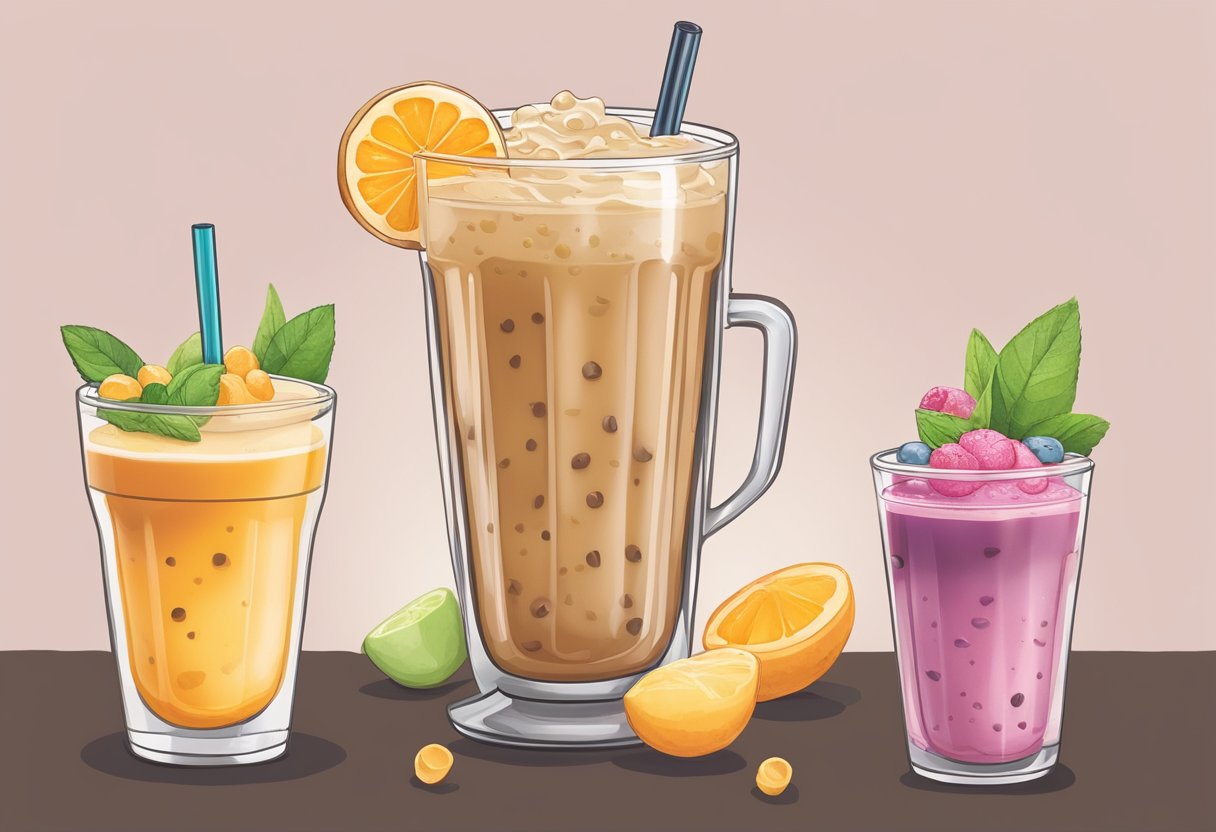
Boba has evolved well beyond the original tea base, and I’m here to explore how this delight has branched into creative smoothies and treats.
New Variations of Boba Tea and Smoothies
I’ve noticed that traditional boba tea, with its signature tapioca pearls, now shares the spotlight with inventive boba smoothie recipes. Envision a cool mango smoothie with boba pearls adding a chewy contrast to the smooth, fruity blend—a perfect refreshment on a hot day. Not just mango, but strawberry banana smoothies have also been reinvented with boba, creating a merge that balances both a luscious sweetness and satisfying texture. Some of my go-to boba drinks even include fruit teas with a creamy layer of foam on top, which adds a rich, velvety finish to every sip.
Boba-Inspired Products and Desserts
Boba’s influence has trickled into the realm of desserts and I couldn’t be more thrilled. I’ve seen ice cream parlors introducing boba as an intriguing mix-in or topping, instantly transforming a classic sweet treat into an experience full of playful chewiness. Imagine the joy of stumbling upon boba in the swirls of your ice cream, each pearl a delightful surprise. Additionally, bakers and dessert crafters are using boba pearls to add a twist to cakes and pastries. It’s fascinating to see how the humble boba has expanded its territory into such delectable domains.
Serving and Enjoyment Tips
When I whip up a boba drink at home, I focus on nailing the texture and having the right tools on hand. Let’s dive into making that boba experience as authentic and satisfying as it can be.
Perfecting Boba Drink Consistency
The key to impeccable boba drink consistency lies in the boba pearls themselves. Whether I’m making a boba smoothie or boba tea, ensuring the pearls are cooked just right is paramount—they should be tender, with a slight chewiness at the center, never mushy or hard. For a boba smoothie, I aim for a creamy, thick base that isn’t too runny, blending ice and fruit to just the right texture.
Choosing the Right Straw and Glass
Selecting an appropriate straw and glass is more important than it may seem for enjoying boba drinks. I always go for a wide straw—it’s a necessity to easily suck up those tasty tapioca pearls. And my go-to is a tall, transparent glass that’s both functional and showcases the drink’s layers. When I sip my boba tea, the contrast in textures from the smooth tea to the chewy boba makes every mouthful a treat.
Frequently Asked Questions
I’ve gathered some common questions to help clarify distinctions between boba smoothies and boba teas. Let’s dive right into the specifics!
What are the taste differences between boba smoothies and boba teas?
Boba smoothies are fruit-based and blended into a thick, often creamy texture with a sweet fruity flavor. In contrast, boba teas provide a mix of tea’s aromatic bitterness, balanced with the creaminess of milk and the chewy texture of tapioca pearls.
When comparing boba smoothies with boba teas, which one is generally considered healthier?
This comes down to the ingredients. Traditional bubble tea can be high in sugar due to sweeteners, whereas boba smoothies, made with fruit, might offer more vitamins. However, both can have high sugar content depending on the preparation.
How do the calorie contents of boba smoothies and boba teas compare?
The calorie count in both can vary widely, but generally, a boba smoothie will have more calories due to the fruit and possible yogurt or juice, compared to boba tea, which is mainly tea, milk, and sugar based.
Are there any significant nutritional differences between boba smoothies and boba teas?
Yes, boba smoothies can offer more nutritional value from the fruit, such as fiber and vitamins, while boba teas tend to not be as nutrient-dense, focusing more on flavor — especially if one opts for powders or syrups instead of real tea leaves.
Can boba smoothies be a part of a weight loss diet plan?
It can be tricky—bubble tea’s calorie content is often high, so moderation is key. I’d say boba smoothies can be included if made with low-calorie ingredients and natural sweeteners, but they should still be consumed in moderation.
Do traditional boba smoothies contain milk or dairy products?
Traditional boba smoothies may include dairy, like milk or yogurt, to achieve a creamy texture. However, one can always find or request non-dairy alternatives.