

Acai bowls have become one of my favorite nourishing treats, especially when I’m looking for something that’s both healthy and delicious. These bowls are typically made from pureed acai berries, which are considered a superfood due to their high antioxidant content and nutritional value. When I blend up an acai bowl, I love adding banana to the mix because it provides natural sweetness and creates a creamy texture.
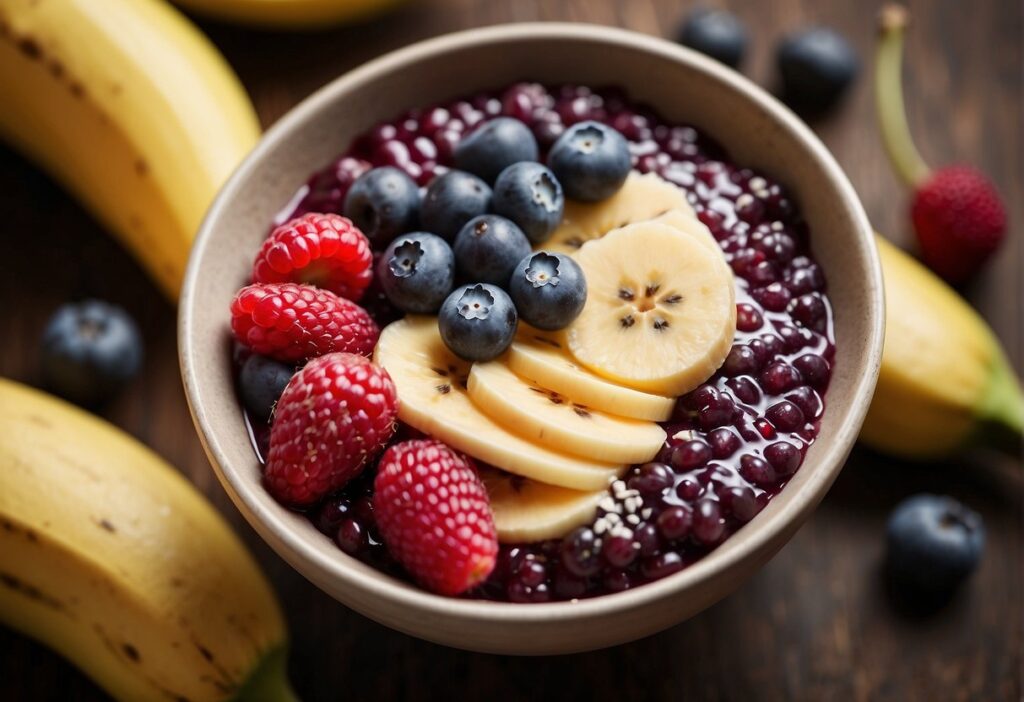
I first became interested in making my own acai bowls after learning about the health benefits associated with this Amazonian fruit. Acai is not only rich in antioxidants but also contains healthy fats and fiber, making it an excellent choice for a filling breakfast or a refreshing post-workout meal. When I prepare my acai bowl with banana, I get a double dose of nutrients since bananas are a great source of potassium and vitamin B6, as well as additional fiber.
What’s really wonderful about acai bowls is the versatility. You can top them with a variety of fruits, nuts, seeds, or granola to fit your taste preferences and nutritional needs. Whether I’m in the mood for something sweet or I need an extra energy boost, I can tailor my acai bowl to meet the moment. This customizability, paired with the healthful foundation of acai and banana, makes acai bowls a delightful part of my dietary routine.
Nutritional Profile
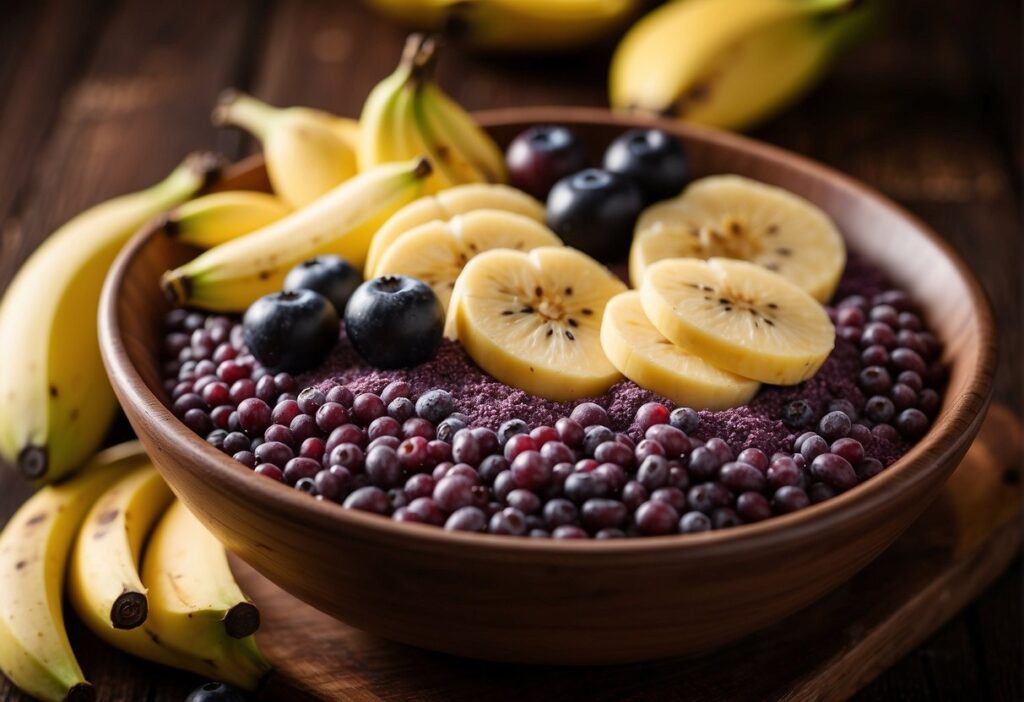
When I first explored the vibrant world of acai bowls, I was captivated not only by their vivid colors but also by their nutritional benefits. Let me walk you through the goodness packed in an acai bowl, particularly one that features banana as a key ingredient.
-
Calories: The number of calories in an acai bowl can vary, but it’s common to find bowls that hover around the 200 to 250 calorie range for a standard serving without toppings. Of course, adding toppings like granola, honey, or additional fruits can increase this count.
Macronutrients:
- Fats: Acai is known for its healthy fats, around 6 grams per serving, which are great for heart health.
- Proteins: There’s not a lot of protein in acai itself, but adding banana boosts that number a bit, contributing to about 3 grams per serving; perfect for a light, energizing snack.
- Carbohydrates: In acai, you’re looking at about 35 grams of carbs, which includes fiber and sugars. The dietary fiber, around 7 grams, is excellent for digestion.
Micronutrients:
- Vitamins: Bananas are a wonderful source of vitamin C and vitamin A. Acai adds to the mix with small amounts but impactful benefits.
- Minerals: You’ll find key minerals in acai bowls, like potassium and calcium, both essential for maintaining strong bones and proper muscle function. Iron is another notable mineral in acai, helping to keep our red blood cells healthy.
-
Antioxidants: Acai is famously rich in antioxidants, which combat free radicals in the body and support overall health.
The beauty of an acai banana bowl lies in its flexibility. I can always toss in a scoop of protein powder or a handful of nuts to amp up the protein, or sprinkle a touch of chia seeds for an extra fiber kick. It’s this nutritional adaptability that makes an acai bowl with banana not just a treat for the taste buds, but also a nourishing choice for my body.
Building Your Acai Bowl
Creating the perfect acai bowl starts with understanding the components and how they blend together to form a delicious and nutritious meal. Whether you’re a beginner or a smoothie bowl expert, the process is fun and allows for a lot of creativity.
Base Ingredients
For the base of your acai bowl, you’ll need frozen acai and something to blend it with. My go-to is a frozen acai pack or acai puree, but acai powder works as well. You’ll also need a liquid like almond milk or coconut water, and some ripe bananas to give it a naturally sweet taste and creamy texture. I use a high-powered blender to get everything smooth and well-combined.
- Acai: 1 frozen acai pack or 2 tbsp acai powder
- Frozen fruit: 1 large banana (sliced and frozen)
- Liquid: 1/2 cup almond milk, coconut water, or any non-dairy milk
- Equipment: High-powered blender
Customizing with Toppings
Toppings are where you can really tailor your acai bowl to your tastes. I sprinkle a generous amount of granola for crunch, some fresh fruit like blueberries, strawberries, or kiwi for extra flavor, and a few seeds or nuts for added texture. A drizzle of honey or a dollop of nut butter makes it even more decadent.
- Granola
- Fresh fruit: Strawberries, Mango, Kiwi
- Seeds/Nuts: Chia seeds, Coconut flakes
- Extras: Honey, Almond butter
Texture and Consistency
For me, the ideal acai bowl texture is thick enough to eat with a spoon but not so dense that it’s difficult to blend. Use a tamper to help mix the ingredients if needed, and add extra liquid a tablespoon at a time until it’s just right. If the mixture is too thin, add more frozen bananas or even some avocado to thicken it back up.
- Thickening: Frozen bananas, Avocado
- Adjusting texture: Additional liquid, seldom tsp at a time
Additional Boosters
I like to boost my acai bowls with extras for more nutrition. A scoop of protein powder blends seamlessly with the other ingredients. Sometimes, I’ll throw in a tablespoon of chia seeds or a spoonful of yogurt for protein, or a small amount of cacao nibs for a chocolaty touch.
- Protein powder: 1 scoop
- Yogurt: 1/4 cup
- Cacao nibs: 1 tbsp
Dietary Variations
Whether you’re vegan, avoiding gluten, or looking for a specific nutrient profile, your acai bowl can be customized to suit any diet. Use gluten-free granola, vegan yogurt, or your preferred sweetener. The robust flavors of the acai and the fruit really complement a wide range of dietary needs.
- Vegan: Use plant-based yogurt and sweeteners
- Gluten-Free: Opt for gluten-free granola
- Sweetener options: Maple syrup, Agave nectar, Stevia
Health and Lifestyle
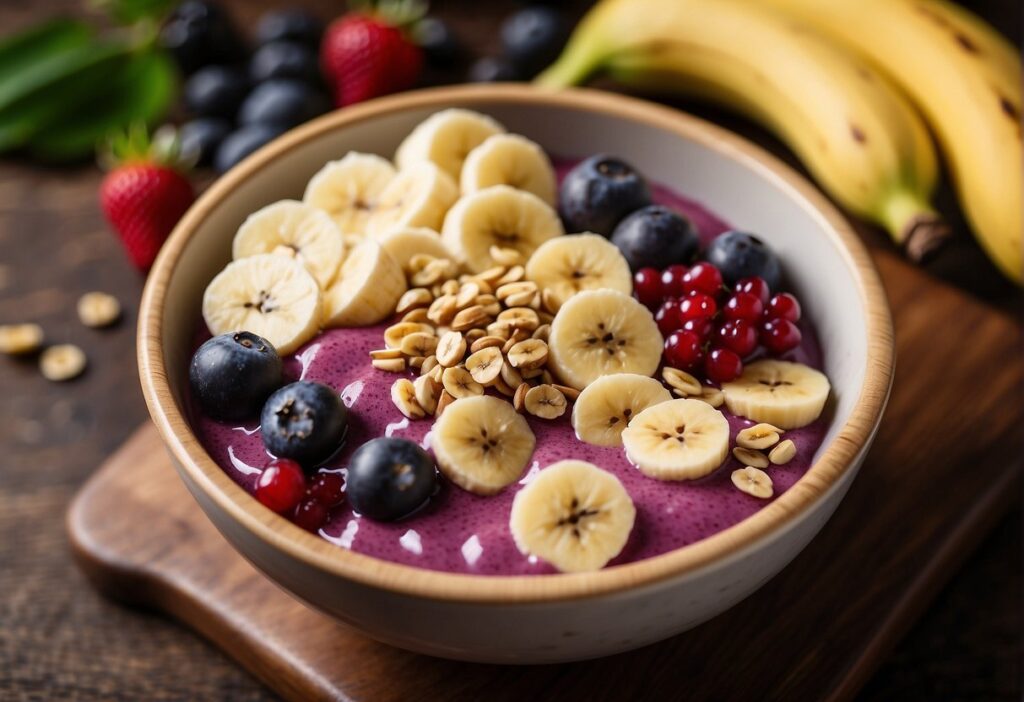
I often find that incorporating a delicious acai bowl into my day can blend health and pleasure in ways many other snacks can’t. For me, acai bowls are a fantastic choice for breakfast or a midday snack because they offer a balance of tasty and healthy ingredients. I like to start with a base of frozen acai puree, which I learned from EatingWell is a good source of fiber and contains nutrients like calcium, potassium, and vitamin A.
Here’s how I like to layer my acai bowl:
- Base: Frozen acai puree with sliced bananas for sweetness and creaminess.
- Toppings: A variety of fruits, nuts, and seeds for added texture and nutrients.
I’m aware of several health benefits from the antioxidants in acai, and I love that I can boost those benefits with toppings like blueberries, chia seeds, and almonds. If I feel like sharing my creation or need a little inspiration, I scroll through Instagram – it’s full of visually appealing acai bowls that can be quite the art pieces. They certainly brighten my day and can turn a simple meal into a vibrant lifestyle choice.
In my experience, it’s important to watch out for added sugars or high-calorie toppings since they can transform my healthy meal into something less beneficial. I prefer to keep my bowls as natural as possible, focusing on the fresh flavors and textures of the ingredients. Whether it’s for lunch or a quick snack, I believe a thoughtfully prepared acai bowl can play a delightful role in a balanced lifestyle.
Origin and Cultural Significance
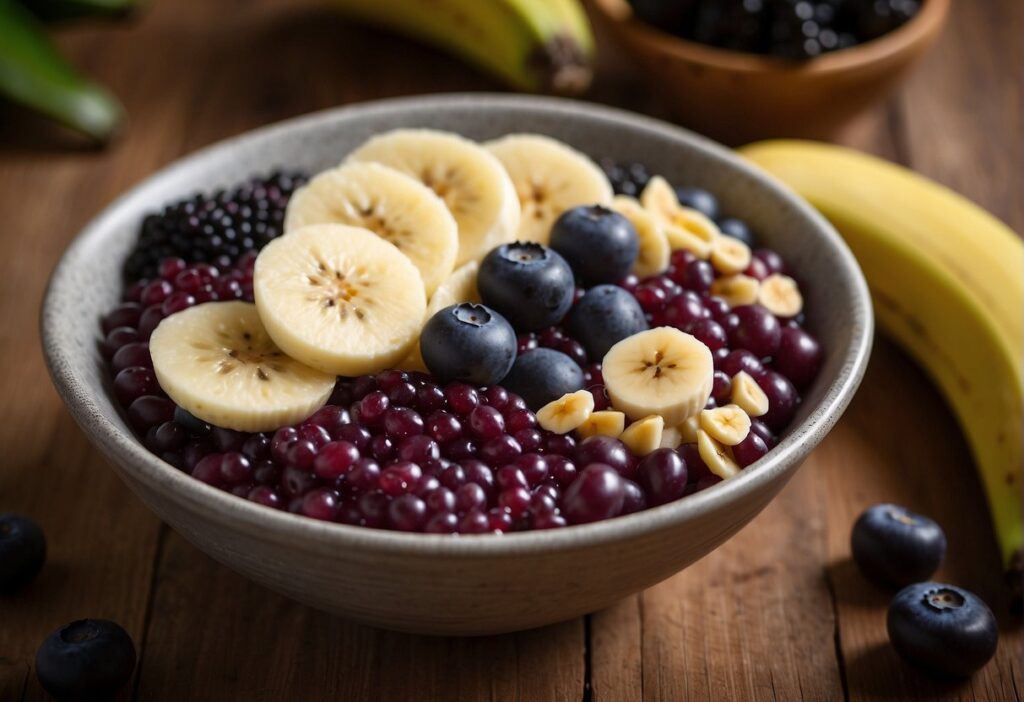
The açaí bowl starts with the açaí berry, a small, deep-purple fruit that grows on the açaí palm tree in the Amazon rainforest of Brazil. For centuries, these berries have been integral to the diet of indigenous tribes in the Amazon, where they’re harvested directly from the rainforest. I believe it’s fascinating how a fruit can link us to a place so rich in biodiversity and culture.
In Brazil, especially in the northern regions, açaí has always been more than just a food item; it’s a piece of cultural heritage. Remarkably nutritious, açaí berries became a staple for the Brazilian diet, traditionally served as a savory dish with tapioca and sometimes fish.
- In recent years, the western version of the açaí bowl has gained popularity, especially among health-conscious folks. This trend is most likely attributed to surfers and athletes who appreciated the sustained energy provided by the high-calorie and antioxidant-rich açaí berry mix.
When talking about the emergence of açaí bowls that we know today, it is often said that Carlos Gracie—the legendary Brazilian Jiu-Jitsu founder—had a significant role. He promoted açaí as part of the Gracie Diet, which is designed to optimize the performance of fighters, making the açaí bowl a vital component of that regimen.
Meanwhile, back in South America, particularly in Brazil, the açaí bowl, called “açaí na tigela”, has been consumed a bit differently, often blended with banana to sweeten the naturally tart flavor of the açaí. This gives just a hint of sweetness, honoring the fruit’s true taste, and keeps it as authentic to the Brazilian way of enjoying açaí as possible.
Frequently Asked Questions
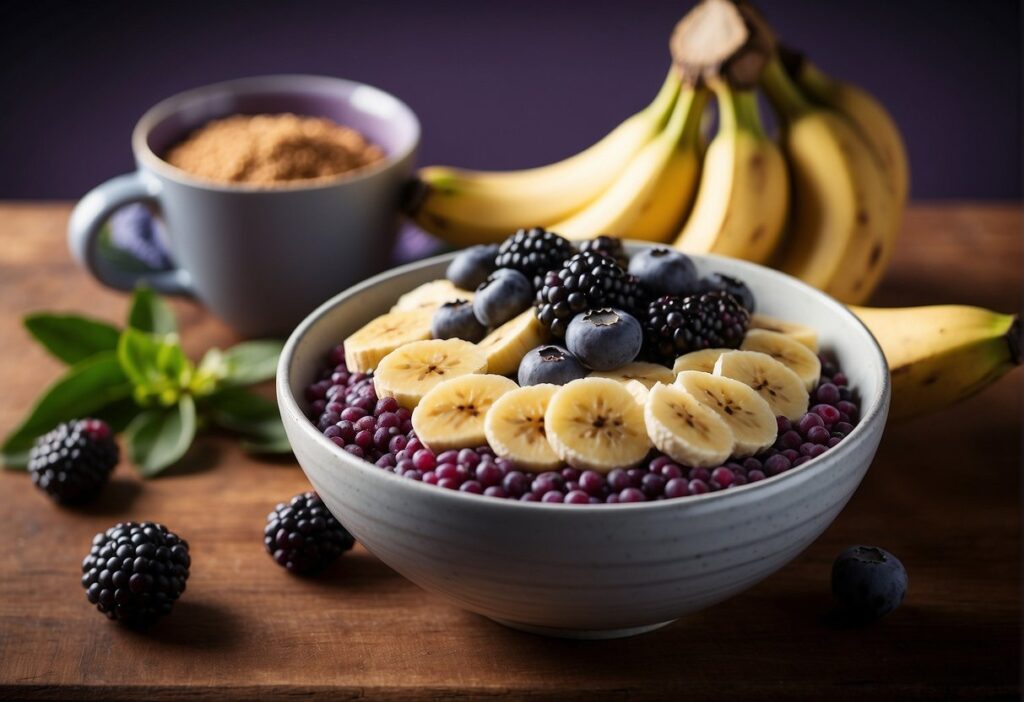
In this section, I cover some of the common questions you might have about making and enhancing acai bowls with bananas. From crafting the perfect homemade bowl to pairing fruits for the best flavor, you’ll find the answers here.
How do I make a homemade acai bowl with banana?
To create your own acai bowl at home, you’ll need a base of frozen acai puree, a banana, and a splash of milk or juice to help blend everything to a smooth consistency. Just process these ingredients until creamy and top with your preferred toppings.
What are the best ingredients to include in an acai bowl with banana for flavor?
Bananas add natural sweetness to acai bowls, but for more nuanced flavor, try mixing in frozen berries or a drizzle of honey. Ingredients like peanut butter or cacao powder also complement the taste profile of acai and banana.
Can you suggest a healthy acai bowl recipe with banana and oats?
Certainly! For a heartier acai bowl, add a scoop of raw oats to the blender along with your acai puree and banana. The oats will provide texture and additional nutrition while making the bowl more filling.
What fruits complement acai when making a banana-included acai bowl?
Mango, blueberries, and strawberries are excellent choices to pair with acai and banana. Their flavors harmonize well, creating a delightful fruit medley in your bowl.
Does including a banana in my acai bowl increase the health benefits?
Bananas are a splendid source of dietary fiber and vitamins like B6 and C. Adding them to your acai bowl boosts the nutritional value, giving you extra health benefits such as improved digestion and energy levels.
How can I calculate the number of calories in an acai bowl that includes bananas?
To figure out the calorie count, sum up the calories of each individual ingredient you’ve used, including the banana. You’ll find most nutritional information on food packaging or through reputable nutrition databases online.